Portuguese
  Spanish


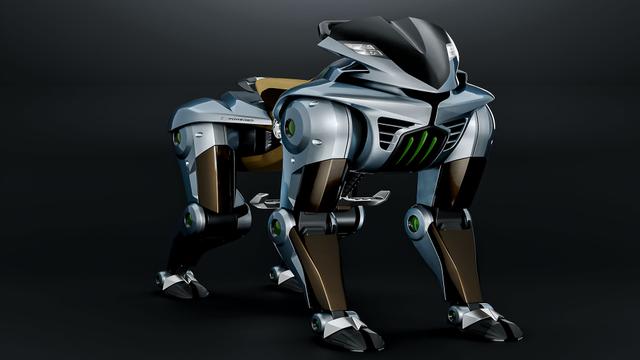

Kawasaki Develops Four-Legged Robot Inspired By Wolves That Carries Rider Over Rough Terrain. Project Combines Innovation And Extreme Mobility
A four-legged robot, powered by hydrogen and inspired by agile animals like deer and panthers, has been unveiled by Kawasaki Heavy Industries. The prototype, named CORLEO, was presented as a futuristic mobility proposal during an event at the Osaka-Kansai Expo 2025.
It is designed to be ridden by humans, like a horse, and promises to navigate uneven terrain with stability and control.
With a look reminiscent of video game characters, the CORLEO represents a new step in the search for alternative vehicles. Kawasaki defines it as an off-road alternative to traditional motorcycles.
-
Global Population Estimates May Be More Inaccurate Than Thought: Study Finds Rural Areas Underestimated in 35 Countries, Sparking Debate Over Earth’s 8.2 Billion Inhabitants

-
From Space, a “Great Solar Wall” Spans 400 km of China’s Kubuqi Desert, Transforming the “Sea of Death” with Giant Panels to Combat Sandstorms and Revitalize the Land

-
New Study Finds Brief Stress Episodes Can Alter Blood and Increase Risk of Clot Formation

-
Ukraine Escalates War Efforts with Plan to Deploy 25,000 Ground Drones, Test Phantom MK-1 Humanoid Robot, Use Armed Mini-Tanks, and Expand Automated Attacks up to 15 km from Frontline


The project is powered by a hydrogen fuel cell and a 150cc engine, with a focus on cleaner transportation solutions.
Robot Inspired By Video Games
The CORLEO draws attention for its design. Its four legs operate independently, with artificial intelligence systems controlling balance and navigation.
Vehicle control is not through levers or pedals, but by the rider’s own body movements. When the user shifts their center of gravity, the robot adjusts its steps in real time.
According to Kawasaki, the model is accessible even to those who have never ridden before. It offers stability and maneuverability, capable of crossing mountainous areas and difficult terrain. The idea is to enable anyone to ride the robot with ease.
The rider also has a heads-up display (HUD), which provides information about hydrogen levels, navigation details, and weight distribution of the vehicle during use.
Even with all these advancements, the CORLEO still lacks detailed technical specifications, such as top speed or battery life.
Future Of Off-Road Mobility
The CORLEO is classified by Kawasaki as a long-term model. The company predicts that the robot may be commercially launched within 25 years. It is part of a larger effort by the company to lead the transition to future mobility.
Kawasaki has a history of such innovation. The previous year, the company unveiled the Ninja H2 HySE motorcycle, also powered by hydrogen.
The test was carried out at the Suzuka Circuit in Japan. Kawasaki’s proposal is clear: to develop vehicles with alternative fuel and contribute to carbon neutrality.
The CORLEO represents a significant advancement in this direction. It not only utilizes a cleaner energy source but also explores new forms of interaction between rider and machine. The company believes that, over time, the CORLEO may even replace traditional off-road motorcycles.
Robotics As New Front For The Company
In addition to the CORLEO, Kawasaki is heavily investing in robotics. The company is also developing the CL series, made up of collaborative industrial robots. These robots are designed for demanding environments, handling tasks such as welding, machine feeding, and heavy material palletizing.
Another ongoing project is Astorino, an educational robot created to be used in classrooms. It aims to bring students closer to the practice of robotics and industrial manufacturing, assisting in learning in an interactive way.
Kawasaki’s history in robotics began in 1989, with the establishment of its specialized division. Since then, the company has accumulated decades of experience and is now considered one of the world leaders in the industrial automation sector.
Partnerships And Cutting-Edge Technology
The company also collaborates with other companies to expand its solutions. One example is the joint project with AMT Precision Parts and Olis Robotics. Together, the companies are developing a state-of-the-art remote monitoring and control system focused on industrial processes.
With the presentation of the CORLEO, Kawasaki reinforces its presence in mobility and robotics innovation. The promise is clear: to transform the way we move, with solutions that combine sustainability, technology, and new forms of interaction between humans and machines.
With information from Interesting Engineering.