Portuguese
  Spanish


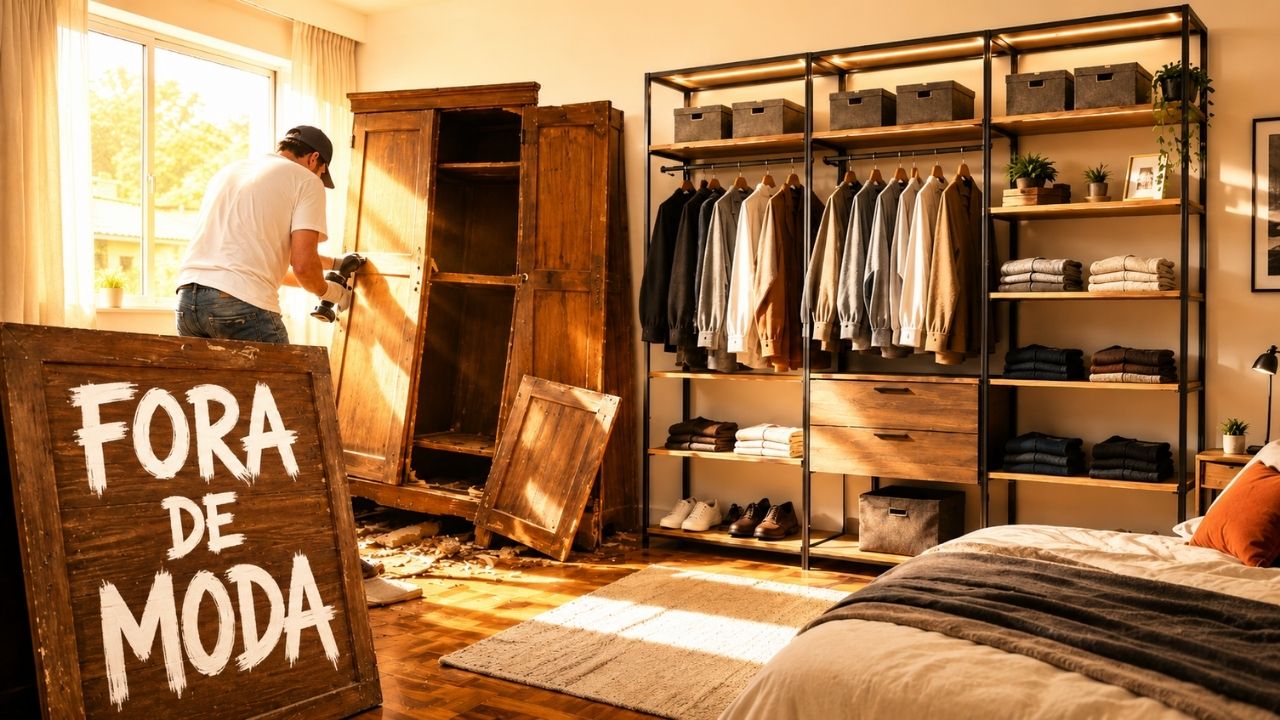


The closed wardrobe began to lose space to steel shelving units that organize clothes visibly, occupy less visual volume, help create the feeling of a larger room, and gain traction as an economic bet in more flexible interior design projects.
The traditional **wardrobe** began to share space with a more open, modular, and economical solution that is gaining traction in 2025 and 2026: **steel shelving units** for clothes. In bedrooms, open closets, studios, and even home offices, these structures have taken the place of closed wardrobes by promising visible organization, better space utilization, and a more accessible cost.
According to the portal Revista Oeste, what makes this change noteworthy is not just the exchange of one piece of furniture for another. The shift lies in the effect these structures have on the environment. By leaving **clothes** visible and eliminating bulky doors and sides, they help create the feeling of a **larger room**, while also consolidating themselves as an **economic bet** for those who want to renovate their home without opting for more expensive custom-made furniture.
The closed wardrobe lost exclusivity in bedrooms and open closets

For a long time, the traditional wardrobe was seen as the automatic choice for organizing clothes, footwear, and accessories. Now, the scenario is beginning to change with more force, driven by interior design projects that value flexibility, visual lightness, and maximum utilization of every centimeter.
-
She bought a used motorhome at 23, refused an expensive renovation, dismantled furniture from the old apartment, and created a home on wheels with compact carpentry and repurposed pieces.

-
At 7 years old, boy swaps toy cars for raising bantams, dreams of becoming a veterinarian, and conquers the internet with his routine in the countryside of Santa Catarina; meet Luiz Miguel, the “Piá do Garnizé”

-
New York removed the tracks from over 2,500 subway cars and dumped everything at the bottom of the Atlantic, and what seemed like trash turned into an artificial reef teeming with fish and divers.

-
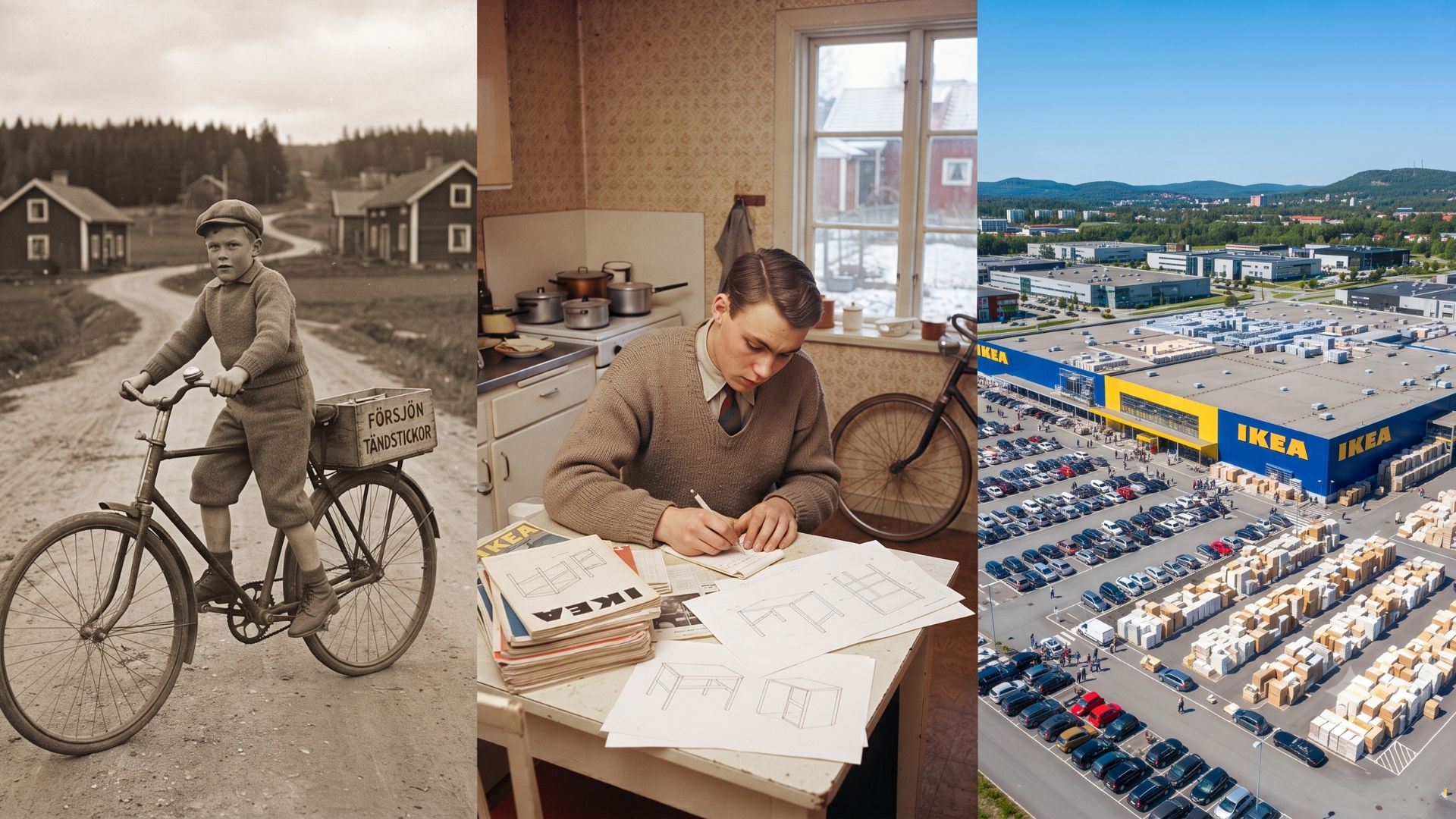
From matches sold by bicycle at age 5 to a global furniture empire: the lumberjack’s son founded IKEA at 17 in his uncle’s kitchen and transformed a small company into the largest furniture retailer on the planet.


Open steel shelving units enter this movement as a practical solution for those who want to escape the closed wooden block and create a more adjustable system. Instead of a single, fixed piece of furniture, the room now features modules composed of columns, crossbars, shelves, and rods that can be adapted to each person’s routine.
This change has special appeal in compact spaces. In smaller apartments, kitchenettes, and studios, any bulky furniture weighs more heavily on the environment. Therefore, replacing the traditional wardrobe with open structures is being seen as a way to reorganize the space without compromising circulation.
Steel shelving units gained strength by combining affordable price, simple assembly, and a light visual aesthetic
The advancement of these structures in 2025 and 2026 is linked to a combination difficult to ignore in the interior design market: **lower average cost**, simpler installation, and an appearance aligned with minimalist and industrial styles that remain popular.
In physical and online stores, the variety of models has increased. There are options with different heights, widths, adjustable bars, non-slip shelves, and rust protection. This has expanded the reach of this type of product, which is no longer seen merely as a utilitarian solution but has also entered the realm of home design.
The logic is straightforward. While custom-made furniture or closed wooden wardrobes usually require a larger investment and offer little flexibility for future changes, steel shelving units provide quicker adaptation. It is precisely this balance between function and cost that helps explain why they have become an economic bet for reorganizing the bedroom.
The most curious detail is that leaving everything visible can make the room appear larger
At first glance, it might seem contradictory to imagine that a system without doors, with exposed clothes, helps create a feeling of more space. But this is precisely one of the points that most drives the popularity of open shelving units.
By eliminating large closed surfaces, the environment becomes visually lighter. Air circulation improves, light encounters fewer barriers, and the gaze moves through the space with more fluidity. In smaller layouts, this contributes to the room feeling less cluttered and more spacious.
This perception changes how many people view organization. Furniture ceases to be merely a storage place for clothes and begins to function as part of the room’s visual composition. When well-distributed, items, boxes, and accessories help create an ensemble that appears more open, functional, and breathable.
Steel resistance and ventilation help explain the change in habit
Another important reason for the rise of this format lies in its practical performance. Good steel structures support high weight and reduce the risk of warping that can occur in wooden shelves overloaded with clothes, boxes, or books.
Ventilation also appears as a central advantage. Since there are no doors or continuous sides, air circulation tends to be greater, which helps reduce odors and prevent the stuffy feeling in fabrics stored for a long time.
Having everything in sight also affects the routine. Choosing what to wear becomes quicker, and the system encourages a more constant curation of what is actually used daily. In this sense, open shelves not only change the look of the bedroom. They also influence consumption and organization habits.
The intelligent use of steel shelving depends more on planning than size

For the solution to truly work, the secret is not just buying a shelf and leaning it against the wall. The space gain comes mainly from planning measurements, heights, and usage zones.
It is important to measure walls, ceiling height, and circulation areas before defining the model. Corners, sections next to the bed, and spaces behind the door can be utilized in “L” shaped compositions or full-wall setups, allowing the system to replace the traditional wardrobe more efficiently.
It also makes a difference to separate the set by function. Bars for hangers at a comfortable height, shelves for folded clothes, boxes for less-used items, a lower area for shoes, and side hooks for bags or backpacks help transform the shelf into a truly functional open closet.
Compact apartments, studios, and integrated environments benefit most from the change
Steel shelves work especially well in compact properties, where excessive visual volume compromises the feeling of comfort. In small apartments and integrated layouts, they help avoid the heavy block effect that many traditional wardrobes create.
In some cases, the open structure can also serve as a light room divider, without completely blocking the passage of light and air. This expands the range of use and means the furniture no longer serves only for clothes but takes on a more strategic role in home organization.
In addition to the bedroom, this type of solution frequently appears in laundries, studios, storage rooms, and home offices. Its versatility reinforces the idea that steel has ceased to be merely a technical material and has come to occupy a prominent place in more adaptable residential projects.
The trend does not eliminate the traditional wardrobe, but shows that consumption is changing
Despite the advancement of open shelving, the trend does not necessarily point to the complete disappearance of the closed wardrobe. What is seen more strongly is the coexistence of formats, with projects that mix open modules and closed niches according to each resident’s lifestyle.
Individuals who value practicality, more conscious consumption, and a visually organized routine tend to identify more with open systems. Meanwhile, those who prefer to hide occasional excesses or protect certain items from light can continue to opt for closed doors and compartments.
Still, the movement is revealing. It shows that consumers have started to pay more attention to furniture that offers flexibility, lower cost, and adaptation to the actual space of the home, instead of just following the traditional model out of habit.
What this exchange reveals about the future of bedrooms and home organization
The rise of open steel shelves is noteworthy because it reveals a larger change in the way people live. The bedroom is no longer thought of merely as a resting space, but also as an environment for intelligent organization, better circulation, and more rational use of every square meter.
When the wardrobe loses some of its prominence to a more streamlined and visible structure, what emerges is a new logic of domestic consumption. It values functionality, visual lightness, modularity, and controlled cost, without sacrificing aesthetics.
Therefore, the trend deserves attention. More than a passing fad, it reflects an attempt to balance budget, organization, and space in homes increasingly challenged by room sizes and lifestyle changes.