






 Portuguese
  Spanish


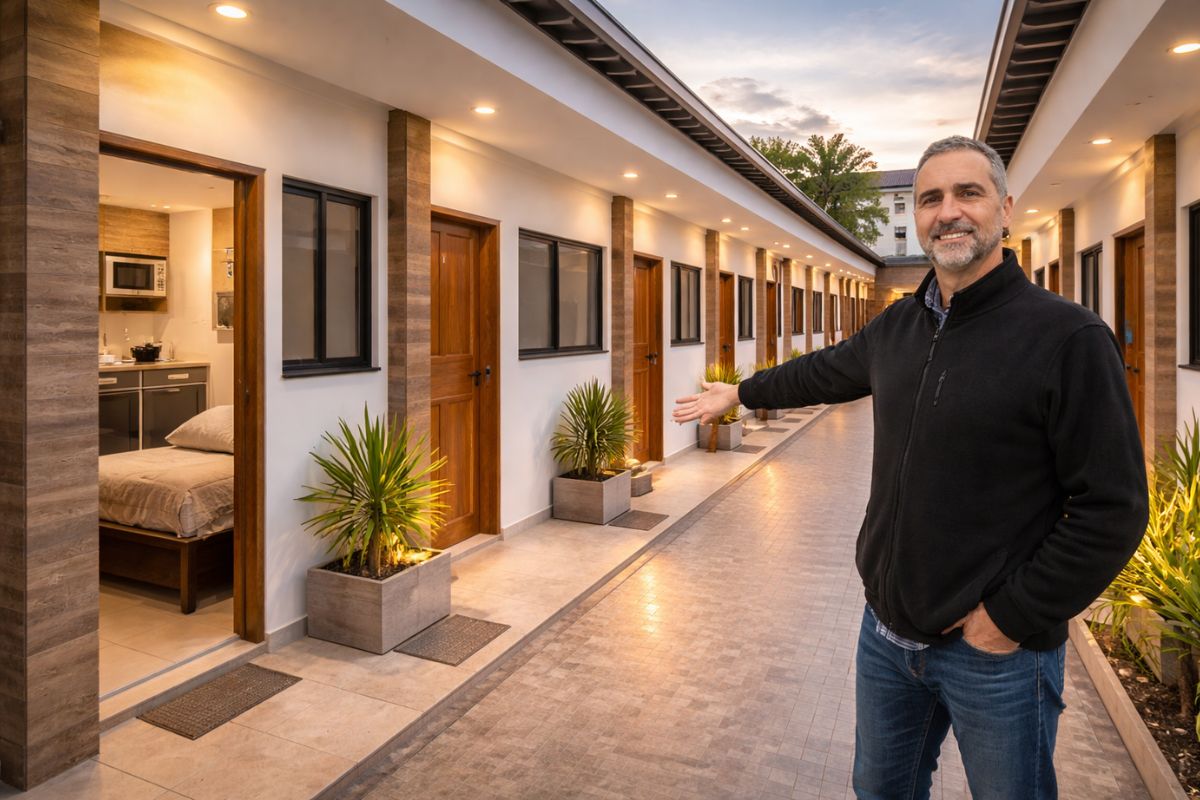


The Apartment Kit Project Led By Alexandre Reused A Degraded 45 M² House, Expanded The Construction To About 360 M², Delivered 12 Units For Rent And Has Already Started Contracts, With A Target Gross Income Between R$ 17 Thousand And R$ 18 Thousand Monthly, In Operation After The Work.
The apartment kits in this project stand out for a simple and concrete reason: the combination of reusing an old house, structured expansion, and a quick entry into rental. Instead of demolishing a 45 m² building, Alexandre chose to renovate, adapt, and expand the property to deliver 12 ready units, with contracts already signed a few days after completion.
The case also gained relevance because it exposes numbers that often generate debate in the rental market. The construction took 15 months, the average reported cost was about R$ 60 thousand per unit without furniture, the first rental was closed at R$ 1,550, and the projected monthly gross income of the project ranged between R$ 17 thousand and R$ 18 thousand, with an estimated net income of about R$ 15 thousand after management.
From Old House To Rental Project With Scale

The central point of the project lies in the decision to transform a structure that many buyers, according to the investor, would likely tear down.
-
Hospital Cook Discovers 1,700-Year-Old Pot of 52,503 Roman Coins Using Metal Detector in Field

-
Salvador’s Acarajé Vendors Turn Used Frying Oil into Income by Selling it for Biodiesel Production
-
Volunteer Revives Dead Lake in Bengaluru Overnight, Doubling Water Capacity and Attracting Kingfishers and Herons
-
1909 Train Car Once Destined for Abandonment Transformed into Luxury Accommodation in the U.S. After $3,000 Restoration



The original house was about 45 m² and was in poor condition, but was kept as a base for an intervention that resulted in four units in the area of the old building, along with expansions at the front, back, and upper floor.
With this strategy, the project reached approximately 360 m² of construction and a total of 12 units.
The scale did not come from an empty lot, but from reading plans, adapting, and structural reinforcement, including footings, columns, slabs, and a complete reorganization of access points.
The project also preserved a free patio area, with plans for landscaping, communal space, and use for bicycles and motorcycles.
Where Is The Commercial Strength Of The Project And Why The Rental Began Quickly

The exact location was not specified, but the description of the surrounding area helps to understand the speed of rental.
The property is located in a residential area with nearby businesses, shops, pharmacies, supermarkets, gyms, linear parks, community centers, and a bus stop right outside.
This package of convenience carries a lot of weight for those looking for compact rentals.
In the resident profile described during the visit, the units are aimed at those who work all day, seek practicality, and prioritize a functional place to sleep, rest, and organize their routine.
This aspect explains why the construction was completed and there were already contracts in progress within a few days, with one resident moved in and new visits occurring during the project’s presentation.
The Construction Standard Of The Apartment Kits And Decisions That Increase Operation
Even with different layouts, the apartment kits follow a standard of finishing and infrastructure.
Units with separate bedrooms and private outdoor areas were shown, studio units on the upper floor, and two solutions in the back, including a larger unit of about 40 m² and a smaller kit with a compact layout.
In all, there are repeated choices such as granite sinks, bathrooms with showers, ventilation, planned electrical points, and service areas.
There is operational care that goes beyond aesthetics.
The project has individual internal energy metering for each unit, individual water meters for consumption sharing, numbering on doors and meters, motion sensors in the corridors, and provisions for solar energy in a reserved space within the technical shelter.
This set reduces billing friction, improves control, and tends to facilitate rental management on a daily basis.
Another significant decision was the use of thermally and acoustically insulated tiles on the upper block, a solution identified as a way to reduce heat and weight on the adapted structure.
The use of wood-patterned PVC ceilings was also presented as a choice for simpler maintenance, with easy cleaning and less frequent need for painting. In compact developments, this type of decision directly affects future conservation costs.
How Much It Costs, How Much It Can Yield, And Where Is The Point Of Attention
The average cost reported by Alexandre was around R$ 60 thousand per unit, considering materials, labor, structure, walls, sidewalks, roofs, paint, taxes, and other stages of the project.
He pointed out that some units cost more and others less, but the average was calculated by dividing the total investment by the number of delivered units.
This detail is important because it avoids glossing over the numbers with partial cuts.
At the revenue end, the first mentioned rental was closed at R$ 1,550.
The overall projection for the 12 units indicates gross income between R$ 17 thousand and R$ 18 thousand per month, with a net entry estimated at around R$ 15 thousand after a 12 percent management fee with guaranteed rent.
In a scenario of expansion to 15 units, the mentioned expectation rises to something between R$ 18 thousand and R$ 19 thousand monthly.
The point of attention, however, also appears clearly. The operation depends on good management of contracts, inspections, tenant replacements, maintenance, and billing.
In this case, the option was to outsource management to a local company, which reduces the owner’s direct work but consumes part of the income. It is an operational model choice, not a universal formula.
Management, Taxation, And Long-Term Vision In The Apartment Kit Model
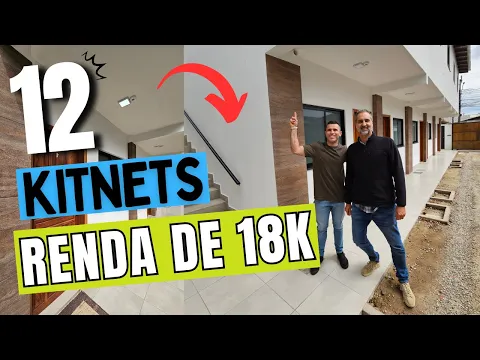

In addition to the construction, the project was structured with legal and tax concerns.
The entrepreneur explained that the property, accounts, and operation were organized in the name of a management company, intending to reduce inheritance issues and classify rental income under corporate tax regimes, seeking lower taxation than individuals in higher brackets.
This aspect often stays outside of more superficial discussions about apartment kits, but it influences the final result as much as the rental price.
It is not enough to raise walls and put them up for rent, because real profitability depends on taxes, vacancy, maintenance, and management time.
The presented case draws attention precisely because it shows construction, operation, and accounts in the same narrative, with cost numbers, timelines, and revenue expectations.
What makes this project relevant is not just the promise of income, but the sequence of decisions that connected difficult renovations, a consistent construction standard, local demand analysis, and professional rental management.
There was reuse of old structures, planned expansions, delivery of 12 units, and quick start of contracts, with the potential for expansion to 15 units on the same lot.
For those following apartment kit projects, the richer discussion may be less about the isolated rental price and more about the complete strategy. Would you bet on a model with more units and outsourced management, or would you prefer fewer units with direct management to preserve margin? Share which format would make more sense in your reality and why.


Quando vc terceiriza a administração chega um momento que a arrecadação não cobre os custos que as imobiliárias apresentam.
Tem que analisar região para fazer kitinets , pois dependendo a região não tem publico para este perfil de imóvel, mas eu faria e terceirizava a administração
Eu apostaria em um modelo com mais unidades e administração terceitizada pois, mesmo perdendo parte do rendimento, esse opção me daria mais tranquilidade e segurança. Além me proporcionar tempo livre para outras atividades.