






 Portuguese
  Spanish


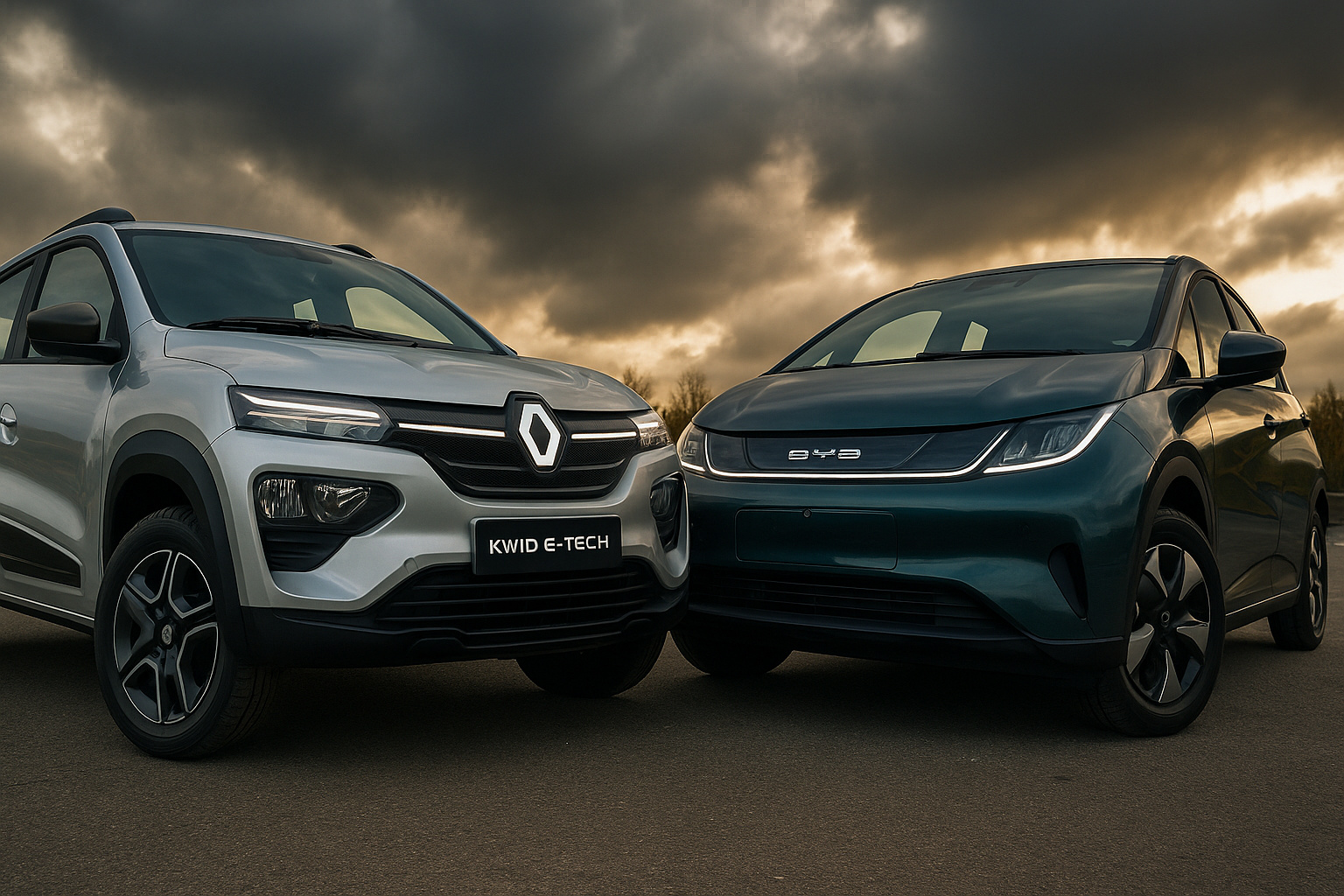

Kwid E-Tech 2026 Arrives Renewed and Cheaper, But Does It Outperform the BYD Dolphin Mini? Check Out the Comparison of the Electric Vehicles.
Kwid E-Tech 2026 Tries to React to the Dominance of the BYD Dolphin Mini
The Brazilian automotive market is facing a new clash among entry-level electric cars. The Kwid E-Tech 2026 from Renault arrives renewed and cheaper to challenge the BYD Dolphin Mini, the absolute leader in sales and performance.
The Chinese model has been stirring the sector since its launch in 2024. With advanced technology and superior range, it has forced competitors to respond. The Kwid E-Tech, which debuted in 2022 for R$ 142,990, needed to lower its price to R$ 99,990.
Even so, the difference still weighs heavily. In September, the Dolphin Mini sold 3,392 units, compared to just 74 for Renault. In light of this scenario, the French brand decided to counterattack.
-
End of the Affordable Car Era: Fiat Argo 1.0 2026 Offers 14.7 km/l Efficiency and Easy Maintenance, but $18,000 Price Raises Cost-Benefit Concerns

-
Honda XR 300L Tornado Special Edition 2026: Off-Road Focused Motorcycle with 293.5cc Engine, 24.3 HP, Priced at $6,200
-
Indian Government Offers Up to $1,000 Incentive for Drivers to Swap Old Cars for Electric Vehicles

-
Tesla Begins Testing Two-Seater Autonomous Robotaxi Without Steering Wheel or Pedals, Featuring Onboard Safety Monitor


Renault Invests in New Design and Safety Technology
The Kwid E-Tech 2026 arrives with deep changes. The model has adopted the design of the Dacia Spring in Europe, with the entire bodywork redesigned — only the roof has been retained.
Additionally, Renault has included ADAS systems for driver assistance, something that the BYD Dolphin Mini does not yet offer. This addition reinforces the model’s safety appeal and can be a strong point in the competition.
Therefore, Renault’s focus is clear: enhance the experience without increasing the price.
Modern Interior, But the Rival Still Takes the Lead
Inside, the Kwid E-Tech 2026 has evolved significantly. It features a 7-inch digital display and a 10” multimedia center with wireless connectivity for Apple CarPlay and Android Auto.
The steering wheel now has height adjustment, and the old selector has been replaced by the modern e-shifter transmission. All aimed at providing more comfort and practicality to the driver.
Still, the BYD Dolphin Mini maintains its advantage. The Chinese model comes with an electric driver’s seat, 10.1” rotating screen, panoramic camera, electronic brake, and automatic air conditioning.
In terms of technology, BYD remains the reference among compact electric vehicles.
Motor and Range: Power vs. Efficiency
In performance, the Kwid E-Tech 2026 retains the same electric setup. The front motor generates 65 hp and 11.5 kgfm of torque, with a 26.8 kWh battery.
According to Inmetro, it travels 180 km per charge, potentially reaching 250 km under ideal conditions. A full charge takes less than 9 hours on a home outlet, 3 hours on a wallbox, and 45 minutes on fast DC charging.
In contrast, the BYD Dolphin Mini GS easily wins. The motor boasts 75 hp and 13.8 kgfm, plus a 38.8 kWh Blade LFP battery, ensuring 280 km of official range.
Thus, those seeking more range and power will still find a superior option in BYD.
Space and Dimensions: Balance Between Size and Lightness
The Dolphin Mini is bigger in almost every aspect. It measures 3.78 meters in length, 1.71 m in width, and 1.58 m in height. Its 2.5 m wheelbase allows for five occupants, which is uncommon among compact electric vehicles.
The Kwid E-Tech 2026, on the other hand, is lighter and more practical. It weighs 969 kg, compared to 1,239 kg for BYD, and has an advantage in the trunk space, offering 290 liters (the Chinese model has 230 L).
This lightness benefits consumption and agility on the streets. Thus, the Renault proves to be more efficient for urban use.
Price and Production: Renault Aims for Cost, BYD Bets on Scale
The Kwid E-Tech 2026 is priced at R$ 99,990, while the BYD Dolphin Mini costs R$ 119,990. The R$ 20,000 difference is significant and may attract those looking for a first electric car.
However, BYD has a significant trump card. The Dolphin Mini is already assembled in Camaçari (BA), which reduces costs and should make it even more competitive.
Thus, the comparison between Kwid E-Tech 2026 and BYD Dolphin Mini shows two opposing paths: low price versus superior technology.
Conclusion: A Battle That Accelerates the Future of Electric Cars
The duel between Kwid E-Tech 2026 and BYD Dolphin Mini symbolizes the advance of the electric automotive market in Brazil.
Renault bets on cost-effectiveness and renewed design. Meanwhile, BYD relies on performance, technology, and local production.
In the end, the consumer is the true winner. The growth of competition makes electric cars more accessible and brings the country closer to the energy transition that is already accelerating worldwide.





Estagiários ****, falam de dolphin mini e colocam a foto do dolphin gs na matéria, até quando eles vão fazer matérias sem alguém revisar 🤷🏾♂️🤷🏾♂️🤦🏽♂️
Matéria fraca e com pouco fundamento, mini e 1000x melhor que o kwid.