Portuguese
  Spanish


Historic Discovery in Tocantins: Buried Jar with Rare Coins from Colonial Brazil Surprises Archaeologists and May Earn Million-Dollar Bonus for the Farmer
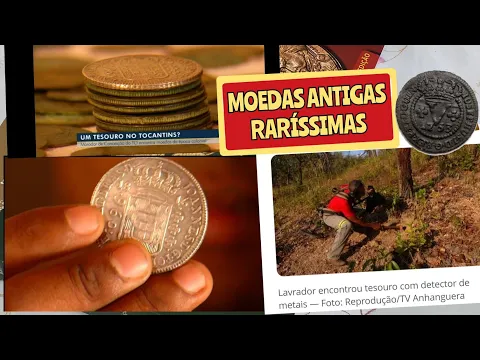
Valdomiro Costa, a simple farmer from Conceição do Tocantins in northern Brazil, did not imagine that his life would change so drastically when he decided to invest R$ 1,200 in a metal detector in early 2024. The purchase was made with hope and intuition: the region where he lives is historically known to have been a secondary route during the Gold Cycle, and many residents still believe that there is hidden wealth beneath the soil.
A Metallic Noise and an Archaeological Surprise
On his first attempt, still inexperienced, Valdomiro heard the alarm of the detector beeping near a tree in the yard. Thinking it was some lost tractor part or metallic waste, he grabbed a hoe and began to dig. What emerged, however, was much more than he expected: an ancient clay jar, with a hardened wax lid and visible cracks due to age.
Upon opening, he found more than 200 metal coins, all with strange inscriptions and symbols he did not recognize. “I thought it was something from an old toy or an ancient farm coin,” he told local press.
-
13-Year-Old Raises Funds to Build Well, Transforming Lives in Cambodian Community Lacking Clean Water

-
Man with Metal Detector Finds Medieval Silver Seal in England, Uncovers 2,000-Year-Old Roman Gem with ‘Richard’s Secret’

-
Thailand Converts 8 Tons of PET Bottles into 3,500 School Backpacks, Showcasing Circular Economy with Over 40 Factories Involved

-
Mysterious Bats Spotted in Paris’s Père Lachaise Cemetery, Drawing Tourists to the “Vampire Cemetery”



From Trash to Bank Vault
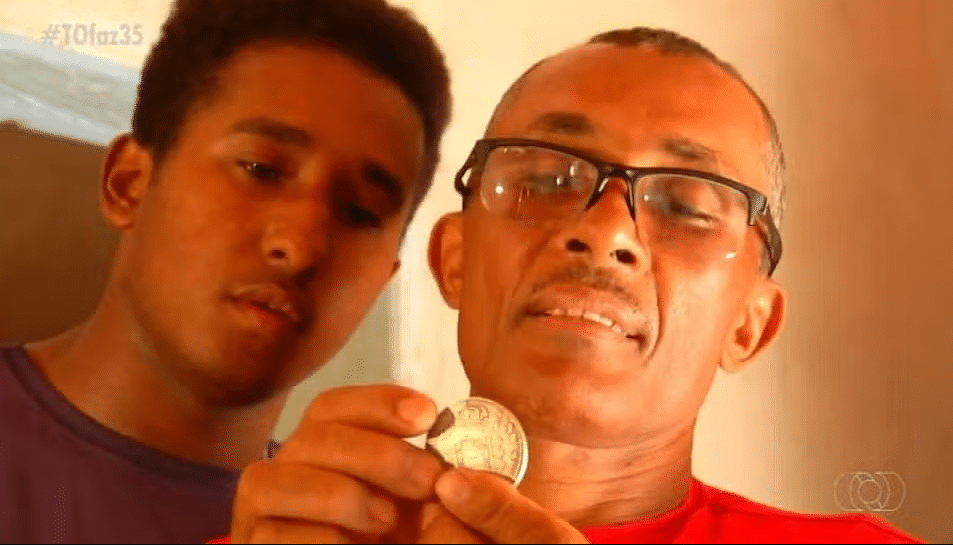
The story only did not have a tragic ending because Valdomiro’s son, Raelson Costa, a high school student, prevented his father from throwing the contents away. “He was going to throw it in the river, thinking it was old trash. I said: Dad, this looks important,” the young man recounted.
Raelson’s history teacher was notified, and within a few days, the discovery reached the ears of archaeologists from the Federal University of Tocantins. After a preliminary inspection, it was confirmed: the coins date from approximately 1690 to 1725, a period when the Portuguese Crown still commanded gold expeditions in Brazilian territory. Some of the pieces bear the coat of arms of D. Pedro II of Portugal and inscriptions from the Mint House of Lisbon.
To prevent theft, the contents were transferred to a bank in the city of Araguaína and are being evaluated by a team from the National Institute of Historic and Artistic Heritage (Iphan).
Rare Coins and Inestimable Value
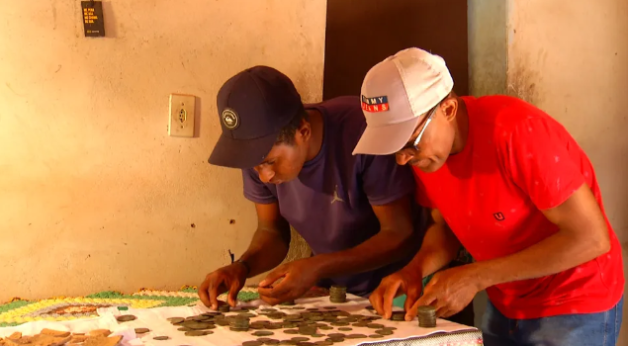
According to specialists, many of these coins are made of a copper alloy with small concentrations of gold, known as colonial patacões. Some, due to their rarity and state of preservation, may be worth between R$ 10,000 and R$ 40,000 each at auctions for collectors and museums.
Archaeologist Fernando Pasquini from UFT stated that this is one of the most significant finds of the 21st century on Tocantins soil. “It is a treasure, but not just for its financial value. It is a time capsule about Colonial Brazil, hidden for over 300 years,” he emphasized.
And the Farmer? Will He Get Anything?
Brazilian legislation states that archaeological finds belong to the Union. However, in cases like this, where there is cooperation and immediate communication from the citizen, the finder may receive a bonus — or even official recognition.
“If he had hidden it or sold it on the black market, he could have faced penalties. But by voluntarily turning it in, he may be compensated or awarded part of the value, in addition to credit for helping preserve national history,” explained a prosecutor from Iphan to the press.
For now, Valdomiro awaits the outcome of the analyses but already feels that his life has changed. “I never imagined the past would be dug up like this. Now I just want to keep planting and let the experts take care of this,” he said.