






 Portuguese
  Spanish
  6 min of reading
  1 comment


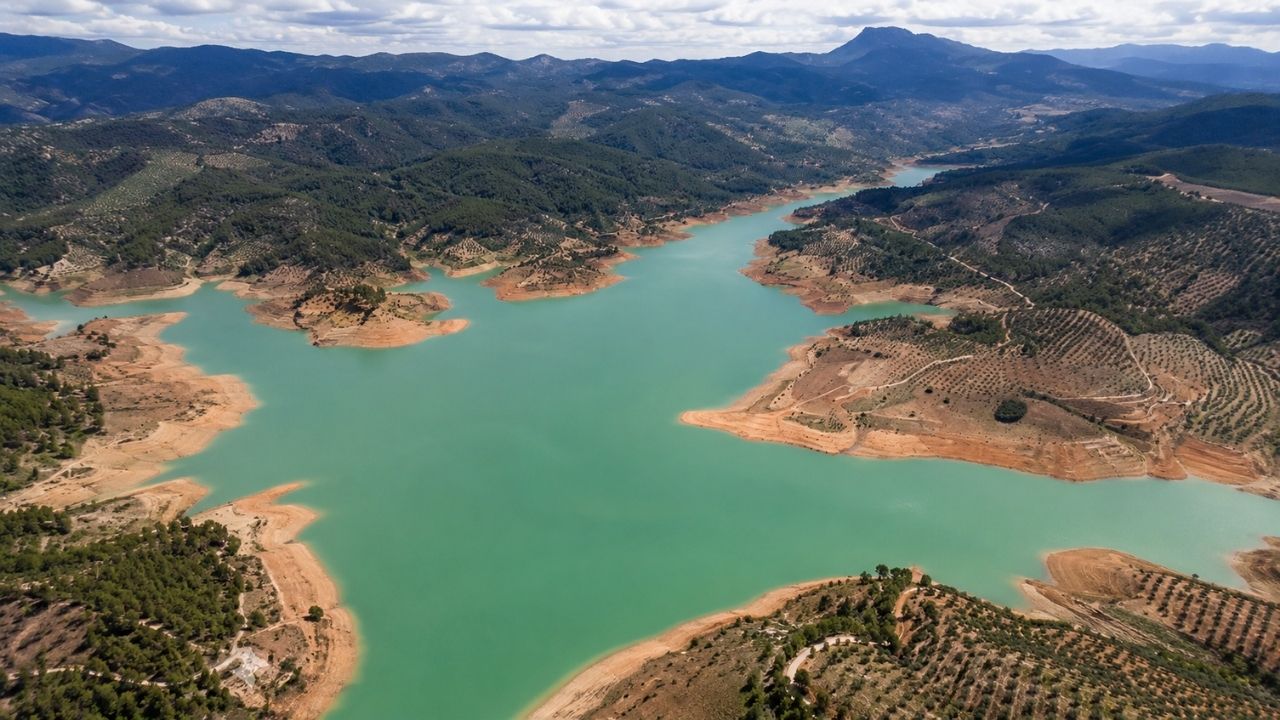


The Siles dam, in Jaén, was inaugurated in 2015, cost 57 million euros, about R$ 330 million, and can store 30 hm³ of water, but still fails to fulfill its agricultural function because the irrigation canals of the Sierra del Segura remain on paper in the region.
The Siles dam, in Spain, still fails to fully fulfill its agricultural function in May 2026, more than a decade after its inauguration in 2015. Built to store up to 30 hm³ of water and help irrigate the Sierra del Segura, in Jaén, the structure still depends on the necessary canals to bring water to the fields.
According to the portal Xataka, the case is noteworthy because the main work was completed, consumed millions of euros, and became part of a landscape marked by drought, water disputes, and pressure on agriculture. The water exists, the structure exists, but precisely the connection that would make the reservoir useful for producers is missing.
Dam ready since 2015 cannot deliver water to the fields
The Siles dam was inaugurated in 2015, with a capacity to store 30 hm³ of water. The work cost 57 million euros, a value equivalent to about R$ 330 million, and was born with the promise of reinforcing the water security of an agricultural region.
-
Bolivian Female Construction Workers Form Association to Combat Discrimination and 38% Pay Gap in the Industry

-
Near Amsterdam, residents buy land and discover they must also build streets, manage drainage, handle waste, and grow food on half their plot.
-
Brazil’s WEG to Open New Factory in China by 2027, Expanding Production of Large Rotating Electric Machines and Low to Medium Voltage Motors in Rugao

-
Chinese Shipyard Secures $1 Billion in Orders for Low-Carbon Container Ships Amid Global Fleet Renewal Efforts


The problem is that the reservoir depends on canals and distribution systems for the water to actually reach the irrigation areas. Without this complementary network, the dam is limited to storing water, but does not solve the bottleneck that motivated its construction.
This type of failure shows how a large project can lose part of its usefulness when the “last stretch” is not delivered. It’s not enough to dam water; a physical path must be created for it to reach the fields.
In practice, the absence of canals transforms a multimillion-euro infrastructure into an example of incomplete planning. For farmers, the problem is not just symbolic: it represents a loss of opportunity in a region that needs predictability to produce.
Lack of canals exposes the cost of an incomplete project
The situation of the Siles dam became even more sensitive in a context of drought and pressure on Spanish reservoirs. In times of scarcity, each volume of stored water gains strategic value, especially for regions dependent on agriculture.
Even so, the structure cannot perform its full expected function. The reservoir exists, but the irrigation network that should carry water to the Sierra del Segura has not been built. The result is an expensive project that does not deliver the complete benefit to those who needed it most.
The cost of the standstill also appears indirectly. When water does not reach the fields, producers lose planning capacity, agricultural areas become more vulnerable, and regional development fails to take advantage of already paid-for infrastructure.
Furthermore, there is an environmental problem. Building a dam alters rivers, ecosystems, and landscapes. When the dam does not fulfill its social and economic function, the environmental impact of the work becomes even more difficult to justify.
Siles case is not isolated in Spain

The Siles dam does not appear alone in this debate. Other Spanish reservoirs also face similar problems, with structures ready or partially available, but without sufficient piping to distribute water as planned.
One of the examples cited is the Rules dam, inaugurated in 2004, in Granada. Even with stored water, the lack of complete piping hinders the full utilization of the reservoir for irrigation and regional supply.
Cases such as Alcolea, in Huelva, Mularroya, in Zaragoza, and Castrovido, in Burgos, are also mentioned. The pattern repeats: the large project attracts attention, but the secondary infrastructure takes years or decades to get off the ground.
This scenario creates a strong contradiction. Spain has many dams, but some of them cannot deliver water efficiently because the distribution, pumping, and treatment systems do not advance at the same pace.
Dispute between governments stalls the so-called last mile
One of the reasons pointed out for this problem is the fragmentation of responsibilities. In many cases, the central government participates in the planning and financing of large dams, while other administrations are responsible for secondary networks and local systems.
It is at this point that disputes arise over who should pay for, execute, and maintain the channels. The main section may be ready, but the so-called “last mile” depends on technical, environmental, financial, and political agreements.
When these agreements do not advance, the dam gets stuck in a kind of limbo. The water is stored, but it does not reach its final destination with the necessary efficiency. The least visible part of the project becomes precisely the most decisive.
As the years go by, the problem tends to worsen. Licenses can expire, projects need to be redone, costs increase, environmental requirements change, and legal disputes make the solution slower and more complex.
Large reservoirs yield political impact, but channels are less visible
Dams usually have strong political appeal because they are large, visible projects that are easy to present as a response to drought. They appear in inaugurations, speeches, and official photographs, reinforcing the idea of concrete action.
Channels, pumping stations, distribution networks, and complementary systems, however, have less public visibility. Still, it is these structures that determine whether the stored water will truly be useful for farmers and local communities.
The Siles dam clearly shows this difference. The most striking part of the project was delivered, but the mechanism that would bring water to the fields remained pending. It’s like building a water source without installing the path to the tap.
This imbalance between the main project and complementary infrastructure helps explain why so many reservoirs can remain underutilized. The problem is not just in building, but in completing the entire system.
Agriculture loses predictability amidst water crisis
Spain is a country with a strong agricultural sector and depends on water security to maintain production, employment, and income in various regions. When a dam cannot distribute water, the impact is not limited to engineering.
Producers who could rely on more stable irrigation remain exposed to uncertainty. In periods of drought, this lack of predictability affects decisions about planting, investment, productivity, and the maintenance of activities in the field.
The Siles case, therefore, goes beyond a stalled project. It reveals how water infrastructure needs to be planned as a network, not as an isolated piece. Stored water without adequate distribution does not solve the insecurity of those who depend on it.
In agricultural regions, every delay can mean accumulated economic loss. The delay in completing channels transforms a public investment into a postponed promise, with direct effects on communities that expected practical benefits.
Million-dollar dam became a symbol of a larger problem
The Siles dam has become a symbol because it brings together elements difficult to ignore: high investment, significant storage capacity, recurrent drought, and the absence of irrigation channels. The project exists, but its agricultural utility remains stalled.
The case exposes an uncomfortable question about public priorities. Is it worth building large structures without simultaneously ensuring the network that will deliver this water to end-users?
The answer seems simple, but reality shows otherwise. When responsibilities are divided, costs accumulate, and decisions are postponed, the infrastructure may only be half-finished.
In the end, the R$ 330 million dam in Siles shows that a water project only works when the entire system is delivered. Do you think the biggest mistake is building reservoirs before channels, or letting political disputes stall a structure that has already cost millions? Comment your opinion.





This is a waste of public funding. Every project should have an “owner” who is responsable for timely and complete delivering the project.