






 Portuguese
  Spanish


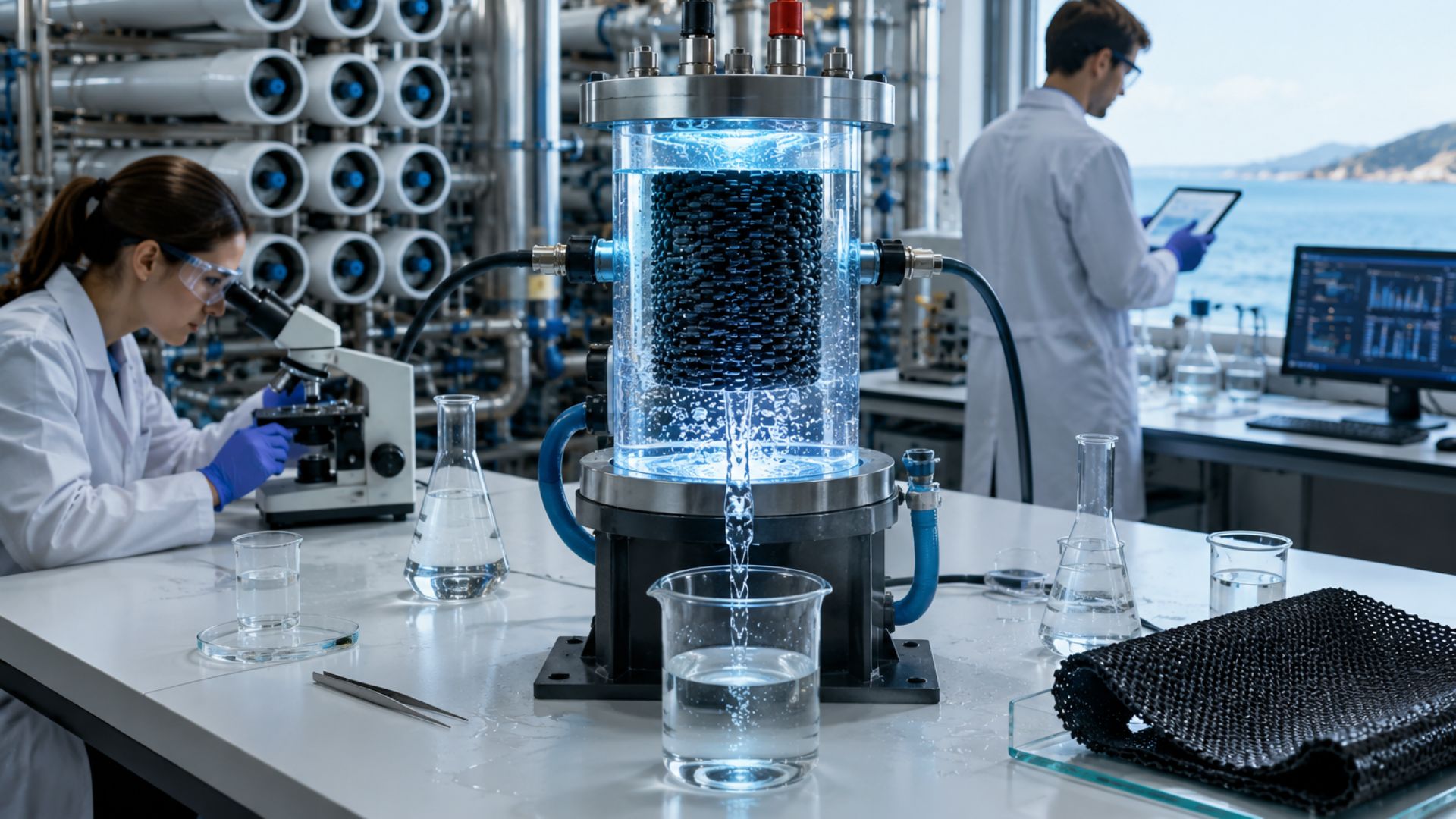


Technology created by US universities targets one of desalination’s most expensive problems by capturing boron with carbon fabric electrodes, reducing chemical dependency and promising to lower operational costs in plants that convert seawater into potable water.
Engineers from the University of Michigan and Rice University have developed a technology with carbon fabric electrodes to remove boron from seawater after desalination, a step that typically requires chemicals, additional energy consumption, and new filtration cycles in plants.
Described in a study published in Nature Water in January 2025, the solution targets a lesser-known problem in the production of potable water from the ocean, as boron can remain in the water at inadequate levels even after salt removal.
Why Boron Challenges Desalination Plants
Although a natural component of seawater, boron becomes treated as a contaminant when it passes through conventional filters and reaches treated water in concentrations above the recommended limits for human consumption and certain agricultural activities.
-
Scientists Convert Food Waste into Aviation Fuel, Successfully Test 50% Blend with Conventional Kerosene to Cut Emissions and Promote Sustainable Flights

-
OnePlus N6 Smartphone to Launch in India with 8,000mAh Battery and 45W SuperVOOC Charging, Lasting Up to Three Days
-
Scientists Plan to Release Air Bubbles Underwater to Protect Antarctica’s “Doomsday Glacier” from Melting

-
Chinese R6000 Drone Combines Airplane and Helicopter Features, Carries Up to 12 People for Multiple Missions
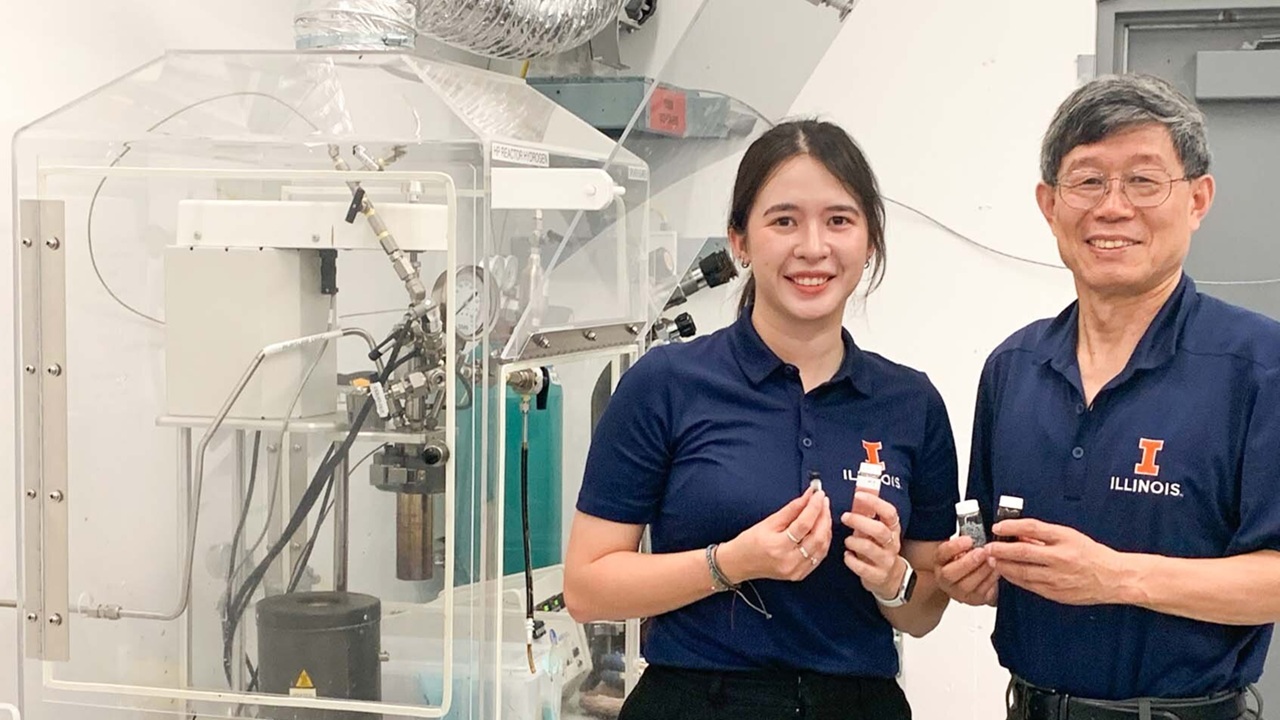



According to the University of Michigan, levels found in the ocean can exceed even the most flexible parameters of the World Health Organization, mainly because boron appears in the form of boric acid, an electrically neutral structure that passes through some membranes.
Since reverse osmosis systems work better against charged particles, some of this element can escape the main filtration, forcing plants to add a chemical base to already desalinated water to transform boron into a more easily retained form.

Subsequently, the water needs to undergo a new reverse osmosis stage before receiving acid to return to the appropriate pH, a process that increases operational costs and boosts dependence on large-scale chemical inputs.
This complementary treatment raises operational costs and increases reliance on chemical inputs.
In large-scale plants, any extra step impacts the budget, because the daily processed volume can reach millions of cubic meters.
How the Carbon Fabric Created by Researchers Works
To overcome this bottleneck, the researchers developed an electrochemical system that replaces some traditional steps and reduces the need to discharge large quantities of chemical reagents during the treatment of water produced by desalination plants.
In this process, electric current separates water molecules and generates hydroxide ions capable of interacting with boron, causing the contaminant to acquire a negative charge and be captured by the pores present in the carbon fabric electrodes.
In addition to high porosity, these structures receive oxygenated groups on the surface, which enhances their selective binding capacity with boron without retaining, in the same proportion, other ions dissolved in the treated water.
Jovan Kamcev, an assistant professor at the University of Michigan and one of the corresponding authors of the study, stated that most reverse osmosis membranes do not remove much boron.
According to him, plants generally require post-treatment, which makes the operation more expensive.
The team states that the new method is relatively scalable and can remove boron with greater energy efficiency than conventional technologies.
The advance does not eliminate reverse osmosis desalination but acts on a specific step that usually makes the final treatment more expensive.
Savings can reach 15% in water treatment
According to estimates released by the University of Michigan and Rice University, the device can reduce boron removal costs by up to 15%, a percentage equivalent to approximately US$ 0.20 per cubic meter of treated water in desalination systems.

The projection was presented by researchers as a potential cost saving for plants that currently rely on multiple chemical steps and new filtration cycles to ensure adequate boron levels in the final water.
Weiyi Pan, a postdoctoral researcher at Rice University and co-lead author of the study, said the device reduces the chemical and energy demands of desalination, with environmental gains and cost reductions.
The projection considers the replacement of steps based on base addition, additional filtration, and acid neutralization.
On a global scale, the difference can be significant.
Global desalination capacity was estimated at 95 million cubic meters per day in 2019, according to data cited by the institutions involved in the research.
With this volume, small reductions per cubic meter multiply rapidly.
Large coastal plants, such as the Claude “Bud” Lewis Carlsbad Desalination Plant in San Diego, are among the examples of facilities that could save millions of dollars per year if such technologies were adopted on an industrial scale.
Race for potable water pressures governments and companies
Pressured by prolonged droughts, urban growth, and the reduction of traditional freshwater sources, desalination has gained ground in countries seeking to expand water security without relying exclusively on reservoirs and rivers.
In coastal regions, governments and utilities have begun to treat these plants as a strategic alternative to reinforce supply, although high operational costs remain one of the main obstacles to large-scale expansion.


The production of potable water from the sea depends on high energy consumption, constant membrane maintenance, chemical control, and reject treatment, a scenario that transforms advances aimed at specific bottlenecks into important factors for the economic viability of projects.
The case of boron shows that transforming saltwater into potable water does not just mean removing salt.
Low-concentration contaminants can require expensive additional processes, especially when quality standards need to meet human consumption and irrigation.
The research also opens the way for future applications.
Scientists indicate that the principle of modified electrodes can be adapted to capture other contaminants, provided that the surface chemistry is adjusted for each substance.
Despite its potential, the technology still depends on scalability tests and industrial partnerships to move out of the research environment.
Adoption in real plants requires proving electrode durability, continuous performance, maintenance costs, and integration with existing systems.
The advance does not represent a complete solution to the water crisis, but it addresses a concrete step in desalination.
By reducing the use of chemicals and simplifying boron removal, carbon fabric can make a process that has already become an important part of water infrastructure in several countries more efficient.




The article summarizes and concludes what is to be done. Requires proving electrode durability, continuous performance, maintenance costs, and integration with existing systems.