Portuguese
  Spanish


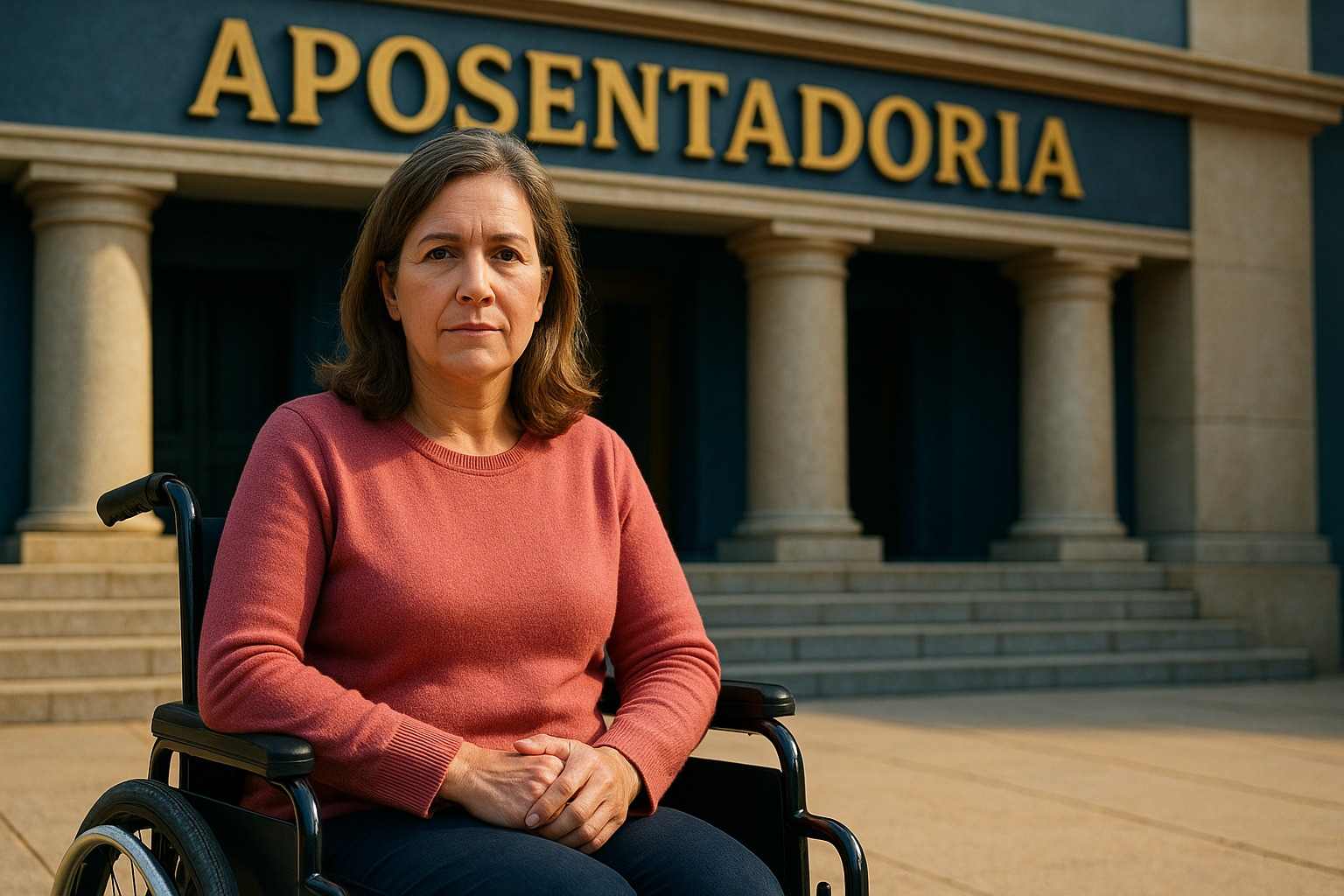

Complementary Law 142/2013 Guarantees Special Retirement for People with Disabilities and Reduces Minimum Age, Offering Early Benefit Alternatives.
An important piece of information has been gaining attention and could change the lives of millions of Brazilian workers. Complementary Law 142/2013, in effect since 2014, guarantees differentiated retirement rules for people with disabilities (PWD).
Studies show that many Brazilians could already be retired by 2025, but continue working because they are unaware of special rules, transition provisions, and alternatives that allow for early benefits.
Transition Rules: The 100% Toll
One of the main paths to retiring earlier is the 100% toll, provided by Constitutional Amendment No. 103/2019, known as the Social Security Reform. This rule applies to those who had a significant amount of contribution time when the reform came into effect in November 2019.
-
Cat banned from roaming in shopping mall wins court case and regains the right to roam freely in the place where it has lived for years.

-
Brazil Approves Proposal to Cap Vehicle Tax at 1% of Car Value
-
Brazilian Senate Approves Bill to Automate Child Support Payments Directly from Debtors’ Accounts

-
Brazilian Congress Advances Bill to Ensure Full Pension Benefits for Families Receiving Reduced INSS Death Benefits



According to the rules:
- Women can retire at 57 years of age with 30 years of contributions.
- Men can retire at 60 years of age with 35 years of contributions.
The condition is to fulfill the toll, meaning to contribute for double the time that was lacking to meet the requirements as of November 2019. This rule is widely used, but it is not the only option available.
Retirement for People with Disabilities
Another option is the retirement for people with disabilities (PWD), regulated by the Complementary Law No. 142/2013.
The law defines disability as any long-term impairment, physical, mental, intellectual, or sensory, that hinders full participation in work or in society.
Examples include people who use wheelchairs, crutches, prosthetics, who have monocular vision (recognized as a disability by the Law No. 14.126/2021), amputations, consequences of accidents, paralysis, spinal issues, intellectual disabilities, and autism spectrum disorders.
The concession is defined by medical examination and biopsychosocial evaluation at the INSS, as provided in LC 142/2013.
PWD by Age
The first option is the retirement by age for PWD. The requirements are:
- Women: 55 years of age and 15 years of contributions as PWD.
- Men: 60 years of age and 15 years of contributions as PWD.
This means that a woman who is 57 years old and has at least 15 years of contributions in this condition can retire without having to wait for the general INSS rule, which only allows retirement at 62 years of age.
PWD by Contribution Time
The second option does not require a minimum age and takes into account the degree of disability. According to the Complementary Law No. 142/2013, the requirements are:
- Severe Disability: 20 years (women) and 25 years (men).
- Moderate Disability: 24 years (women) and 29 years (men).
- Mild Disability: 28 years (women) and 33 years (men).
With these requirements, it is possible to retire immediately, without needing to reach a certain age.
A Decision That Changes Lives
Tatiana Sampaio highlights that many believe they have lost the opportunity for retirement by age, but are unaware that they may qualify under the PWD rules or the toll. These alternatives can not only ensure early retirement but also a benefit amount greater than what would be obtained under the general rules.
She reiterates that retirement for people with disabilities is not a favor from the INSS, but rather a right guaranteed by law.
The Next Step
For those who are 57 years old and think they have no alternatives, the recommendation is to review their contribution history and verify their eligibility for any of these options.
One should not accept that only the INSS defines when and how much will be paid.
Seeking technical guidance can be the decisive factor in transforming years of work into security and peace of mind in the future.