Portuguese
  Spanish


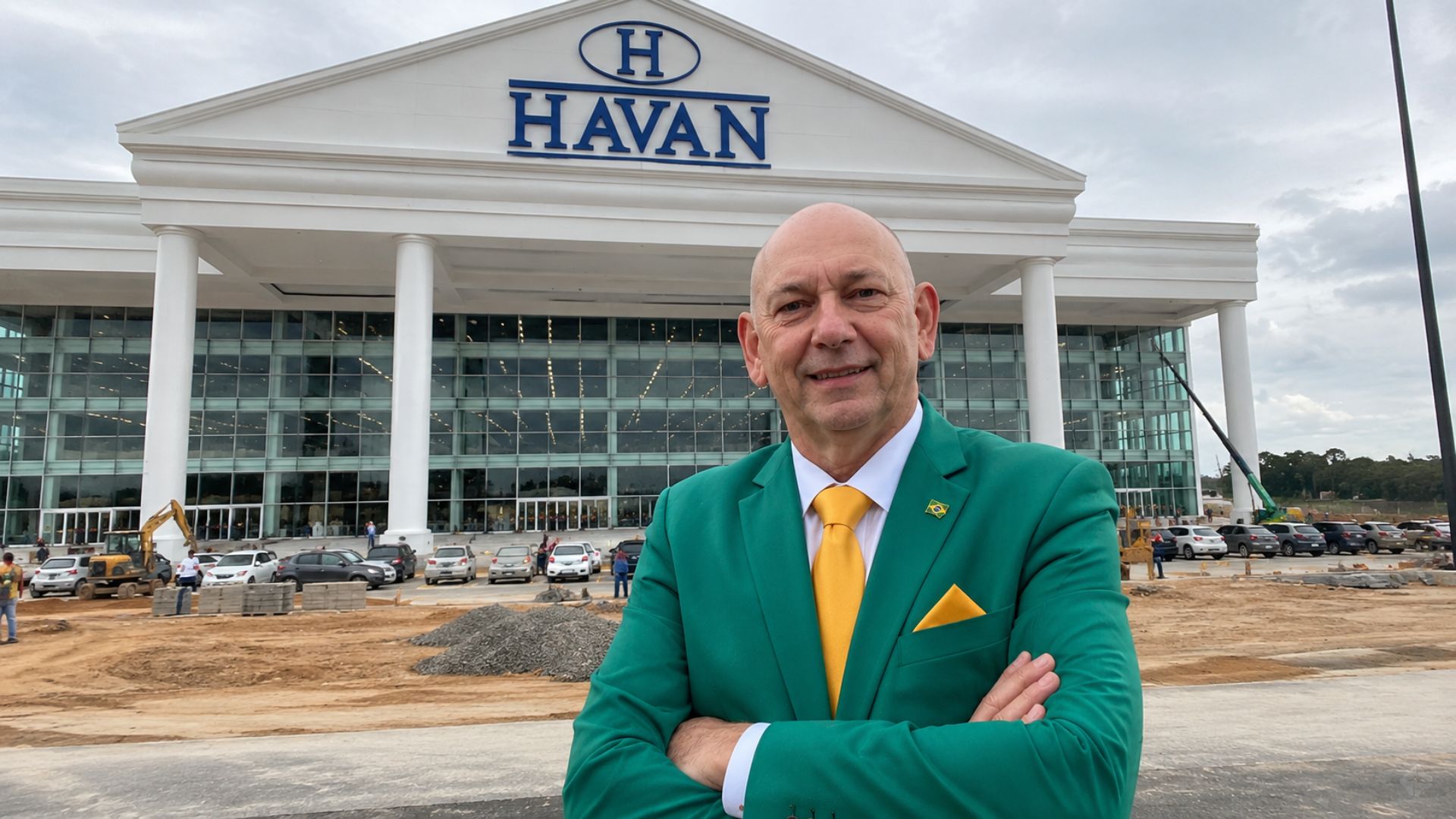

Havan’s expansion targets new cities, reinforces the megastore model, and shows how the network evaluates land, access, and regional potential before deciding where to install units capable of attracting consumers from various municipalities.
Havan plans to open seven new stores in 2026 and move towards the mark of 200 units in Brazil, according to information released by the ND+ portal.
Detailed by Luciano Hang in an Instagram post on Sunday (14), the strategy considers large plots, good visibility, easy access, and cities with regional strength.
The expansion occurs at a time when the retailer is approaching 40 years of history, after consolidating a model of megastores in Santa Catarina with a large structure, ample parking, and presence in high-traffic areas.
-
In the city that the market called “road cockroach,” between Balneário Camboriú and Florianópolis, he launched a planned neighborhood worth R$ 1 billion with a marina for 90 boats and sold 80% of the lots in the first phase in 1 week.

-
At a depth of 5,000 meters, where there is no sunlight, researchers found ancient DNA preserved in the mud of the South Atlantic and discovered signs of organisms that did not match known records.

-
At 77 years old, a retired woman who never tires of learning completes her second degree in design in Ceará and moves people by revealing the help of her 98-year-old mother in the final project.
-
China’s masterstroke: a plant capable of regrowing even when buried by sand helps to recover more than 7,300 hectares of desert with 5 million seedlings, roots over 10 meters deep, and rainfall below 150 mm per year.



How Havan chooses cities for new stores
In the analysis to install a new unit, the number of inhabitants does not appear as the only decision criterion.
According to Hang, Havan evaluates the combination of economic potential, location, consumer flow, road access, and the ability to attract residents from neighboring municipalities.
To enable this format, the company seeks plots between 20,000 and 50,000 square meters, space considered necessary to accommodate large stores, parking, and an operation capable of receiving a large volume of customers.
With this structure, each unit is planned as a regional shopping hub, not just as a store aimed at the residents of the city where it will be installed.
For this reason, areas near highways, busy avenues, and city entrances usually gain priority in the network’s evaluation.
Visibility for drivers and passengers, according to the presented strategy, helps strengthen the brand and expand the commercial reach of the unit.
Interior of Brazil enters the expansion plan
Even with a presence in large centers, Havan also targets interior municipalities that serve as references for nearby regions and concentrate consumers from neighboring cities.
In this expansion model, a smaller city can receive a megastore when it demonstrates economic strength, good access, and the ability to attract consumers from other locations.
Hang claims that there are smaller cities performing better than more populous municipalities because the result also depends on purchasing behavior, disposable income, regional flow, and local consumption habits.
This perspective reduces dependency on capitals and expands expansion possibilities, as the network starts to prioritize regions where access, visibility, and demand appear in combination.
Megastores sustain Havan’s national growth
A central part of Havan’s identity, the megastores gather a wide variety of products, spacious aisles, parking, and a structure designed to serve many people at the same time.
The proposal is to make the unit function as a shopping destination, not just a point of sale.
In many cities, the arrival of a store also boosts the local economy due to construction, hiring, and increased commercial flow.
In 2025, Havan was already projecting to reach 200 stores in 2026, the year it would complete four decades of operation, according to Noticenter.
The same publication reported that the company intended to end 2025 with 190 units and an estimated revenue of R$ 18 billion.
The advancement, however, depends on the selection of cities that meet conditions compatible with the size of the units.
For Havan, the success of a new store is less linked to the isolated size of the population and more to the combination of location, access, income, regional flow, and consumption profile.