






 Portuguese
  Spanish
  6 min of reading
  0 comments


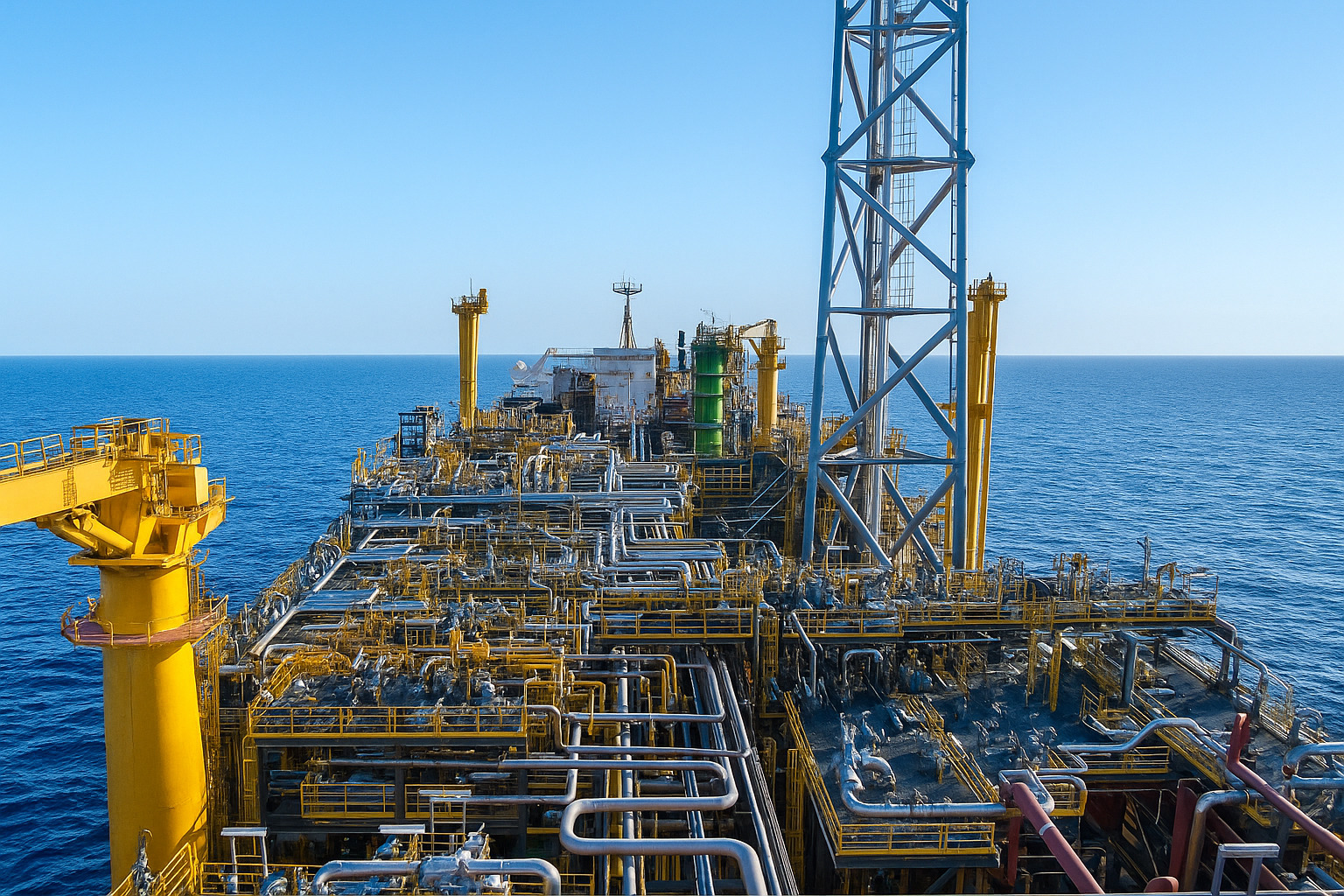
Lula Meets with Shell to Discuss Natural Gas Project and Strategic Investments in Brazil’s Energy Sector.
The Brazilian government has increasingly shown commitment to ensuring the country’s energy security. Recently, President Luiz Inácio Lula da Silva met with representatives from the multinational Shell to discuss a natural gas project, reinforcing the importance of cooperation between the public and private sectors.
Additionally, the meeting took place at the Palácio do Planalto and was attended by Minister of Mines and Energy Alexandre Silveira, and Shell Group Executive Director Wael Sawam.
Brazil has a long history of development in the energy sector, marked by strategic advancements in oil and natural gas exploration. Since the establishment of Petrobras in 1953, the country has invested in indigenous technologies and large deepwater exploration projects, known as pre-salt.
-
Oil production grows in Rio, but reserve replacement raises a warning sign

-
Petrobras is expected to complete the drilling of the Morpho well in the Foz do Amazonas in August 2026, the first well in the Equatorial Margin, an oil frontier that the ANP estimates at more than 30 billion barrels and could redraw the map of Brazil.

-
Oil returns to the center of concerns with tension between the US and Iran

-
IEA reduces forecast for global oil demand in 2026 after impacts of the Middle East crisis



In this context, the Gato do Mato Project, located in the Santos Basin, exemplifies this recent effort. Its relevance increases as the country seeks to diversify its energy matrix and consequently expand the supply of natural gas in the domestic market.
Furthermore, the presence of large international companies in Brazil’s pre-salt directly impacts the technological development of the country. Therefore, the partnership with Shell allows Brazil to incorporate advanced deep-water drilling techniques, environmental monitoring, and efficient production systems. This consolidates the country as a global reference in natural gas exploration.
The Gato do Mato Project and Its Impacts
The Gato do Mato Project is a condensate gas field in ultra-deep water, with depths between 1,750 and 2,050 meters. The consortium includes Shell, with a 50% stake, Ecopetrol (30%), TotalEnergies (20%), and PPSA, representing the Union with 10%.
In March 2025, Shell approved the final investment decision, beginning the development phase of the field. Consequently, the project plans to install a FPSO, a floating production, storage, and offloading unit, capable of producing up to 120,000 barrels of oil per day.
Moreover, it is estimated that the recoverable volumes will reach about 370 million barrels of oil equivalent.
Thus, the exploration of natural gas in Brazil has established itself as an important strategy not only for generating energy but also for controlling domestic prices. Historically, the country depended on imports of fossil fuels, which influenced the final cost of gas for households and industries.
For this reason, President Lula has emphasized on numerous occasions that the high cost of gas is a problem that requires structural solutions. During his term, he reiterated the need to increase natural gas exploration, prioritizing Petrobras, to ensure competitive prices for Brazilians.
In the case of the Gato do Mato, production is expected to begin in 2029. Initially, Shell will reinject natural gas into the reservoir to maintain pressure and increase oil recovery efficiency. Later, the company will transport part of the natural gas to the Brazilian coast, expanding the domestic supply.
Additionally, historically, gas reinjection in the field itself is a technique used worldwide to optimize oil and gas extraction. This practice preserves productivity and ensures operational sustainability.
Furthermore, the project generates significant economic impacts. Besides providing energy, it creates direct and indirect jobs, develops the region, and stimulates local technology and service providers.
Consequently, the presence of Shell and other multinationals ensures knowledge transfer and innovation, essential factors for the sustainable growth of the Brazilian energy sector.
Institutional Meetings and Strategic Alignment
The meeting between Lula and Shell is part of a series of annual institutional meetings that the Brazilian government holds with major companies in the energy sector. Thus, the goal is to discuss natural gas projects within a broader perspective, considering the global evolution of the energy market, the environmental impact of operations, and the need for technological development.
In this way, these meetings reflect a continuous effort to align public policies with the strategic investments of large multinationals. This ensures that the country advances in its energy capacity and economic competitiveness.
Historically, Brazil has faced challenges in the natural gas sector. Among them were limited transportation and distribution infrastructure, price fluctuations, and dependency on imports.
Therefore, since the 1990s, the country has sought to expand its internal production capacity, encouraging partnerships between Petrobras and foreign companies, and promoting investments in deep-water exploration technology. Consequently, the Gato do Mato Project represents the continuation of this effort, uniting international expertise and national investment.
Moreover, the government monitors the social impact of energy. The price of gas, especially for low-income populations, remains a recurring theme in public discussions.
In this context, Lula has stated that the difference between the sale price of Petrobras and the price that reaches the end consumer is “absurd.” For instance, the gas cylinder, sold at R$ 37 to distributors, can cost between R$ 120 and R$ 140 for the consumer.
Thus, projects like the Gato do Mato, which increase natural gas production and reduce bottlenecks in supply, are fundamental to addressing this disparity.
Public Policies and Energy Security
Another important point is the integration of public policies and economic planning. Therefore, the Brazilian government seeks to establish regulation mechanisms and reference prices for gas, through initiatives like the Gas for All project.
The idea is to define resale parameters for LPG in the States, using local price averages or medians, to reduce distortions and ensure greater predictability for the sector. Therefore, large-scale projects, such as the Gato do Mato, support these policies and provide long-term energy security.
Cooperation with Shell also occurs in a global context. Furthermore, multinationals are showing increasing interest in Brazil’s pre-salt due to the quality of the resource and the potential for large-scale production.
Thus, international partnerships allow Brazil to acquire advanced exploration and production technologies, as well as increase economic efficiency. Consequently, foreign investment, combined with consistent national policies, is a key element for the country to strategically address natural gas projects, balancing growth, fair pricing, and sustainability.
Moreover, the expansion of natural gas production strengthens the Brazilian energy matrix, making it more diversified and less dependent on imported fossil fuels.
For this reason, this balance reduces economic vulnerabilities and ensures a stable supply even in scenarios of global instability.
Future Perspectives
The meeting between Lula and Shell demonstrates that Brazil is committed to expanding its natural gas production, reducing domestic prices, and strengthening the national energy matrix.
Moreover, the Gato do Mato Project shows how cooperation between government and private sector can generate economic, social, and environmental benefits. With production expected to start in 2029, the project reinforces the importance of integrated energy planning for the future. This includes considering both economic growth and the quality of life of the population.
Every advancement in the natural gas sector in Brazil has consolidated energy independence and increased the country’s competitiveness on the international stage.
Thus, strategic projects like the Gato do Mato demonstrate that the exploration of natural resources, when conducted with planning, transparency, and technology, can lead to sustainable development, create jobs, and strengthen the national economy.
Therefore, discussing natural gas projects is more than a technical issue: it is a strategic priority that involves economy, politics, and society.
The government’s commitment and companies like Shell show that Brazil is prepared to face historical and future challenges in the energy sector.
Moreover, continuous cooperation and strategic planning allow the country to offer accessible, safe, and sustainable energy, ensuring that both the population and industry benefit equitably.
Thus, the Gato do Mato project is part of the country’s long-term trajectory, reflecting a vision of responsible and innovative energy development.








Be the first to react!