Portuguese
  Spanish


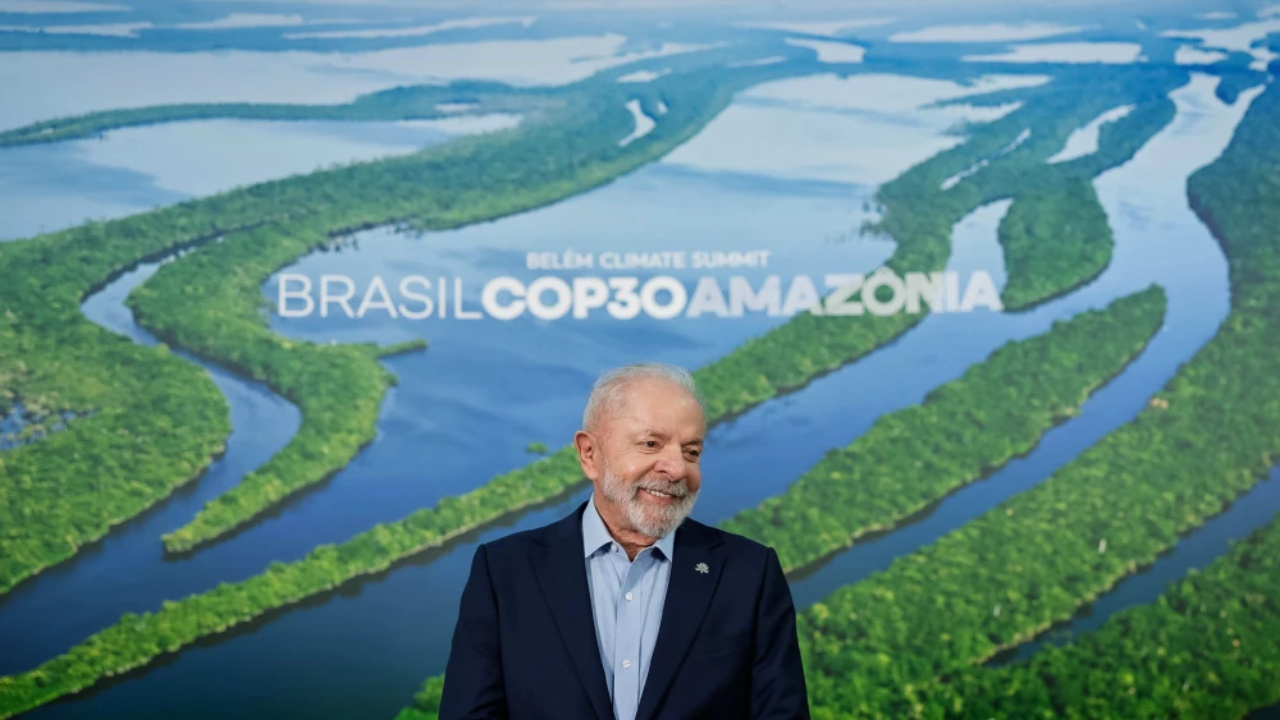


During COP30, in Belém, President Lula defended the end of fossil fuels, but the advancement of Petrobras in oil research in the Mouth of the Amazon reveals tensions and contradictions within the government.
During the opening of the COP30, held in Belém, President Luiz Inácio Lula da Silva reinforced Brazil’s role as a global leader in the energy transition and in the fight against climate change. In an optimistic speech, Lula called for “courage to transform reality” and reaffirmed the country’s commitment to the end of dependence on fossil fuels and the construction of a sustainable development model.
However, the statement, which garnered applause from international leaders, also reignited an internal debate: the contradiction between the government’s environmental discourse and the support for oil exploration in the Mouth of the Amazon, one of Petrobras’s most controversial projects.
Petrobras Advances in Oil Research With Support from the Federal Government
While Lula advocates the need to reduce emissions and accelerate the energy transition, Petrobras continues to operate a drilling rig in the Equatorial Margin, a maritime area that includes the Mouth of the Amazon. The project has the backing of part of the government, especially the Ministry of Mines and Energy, and support from lawmakers from the North of the country.
-
With a record production of nearly 3 million barrels per day, Petrobras resumes importing diesel in July, highlighting the bottleneck in Brazilian refining.

-
Qantas and Airbus Invest in Company Aiming to Convert Unsorted Household Trash into Jet Fuel

-
Brazil’s ANP Opens 86 New Oil Blocks in the Equatorial Margin, Expanding the Amazon River Mouth Frontier

-
OPEC+ Boosts Oil Supply by 188,000 Barrels per Day in July 2026, Leading to Price Drop from $112 to $89 per Barrel in Under Two Months


These sectors see the exploration as a strategic opportunity for revenue and regional development, especially for the state of Amapá, where oil is viewed as a source of resources to fund social programs and even initiatives related to the green economy. However, the issue is far from unanimous within the federal administration.
Ministry of the Environment Maintains Resistance to the Project
In the Ministry of the Environment and Climate Change (MMA), the atmosphere is one of caution and resistance. Since 2023, the ministry, under the leadership of Minister Marina Silva, has expressed concerns about the environmental impact of Petrobras’s project. Ibama, responsible for licensing, has even denied authorization for exploratory drilling, citing technical flaws in the environmental impact studies and risks to marine biodiversity in a region still poorly studied.
Despite the denials, Petrobras resubmitted its request, assuring that operations can be carried out safely and in accordance with international environmental protection standards. The deadlock between the two institutions—Petrobras and Ibama—has become a symbol of the internal division of Lula’s government regarding oil exploration.
Environmental Discourse and Political Practice Clash at COP30
During the climate conference, Lula insisted that Brazil is capable of leading the global debate on sustainability and a fair energy transition. “The world needs courage to change what is wrong. We need to transform the energy system and make the planet fairer and more resilient,” stated the president.
However, environmentalists and civil society organizations found the speech inconsistent with the government’s recent actions. In a statement, organizations monitoring the climate negotiations emphasized that support for oil exploration in the Mouth of the Amazon contradicts the goal of climate neutrality and undermines Brazil’s leadership role in global discussions.
“President Lula’s words about preserving the Amazon and the power of collective mobilization for social justice are true—but they need to be accompanied by courage. There is a profound contradiction between calling the world to protect our common home and approving new oil drilling in the Mouth of the Amazon at the same time. This is, in fact, the ‘COP of truth,’ and this truth demands action,” representatives of climate organizations affirmed.
Environmental License Reignites Debate on Exploration Limits
The impasse took new turns last month when Ibama granted authorization to Petrobras to conduct exploratory research in the Equatorial Margin. The license allows for a study of five months in duration, which will seek geological data about the region’s oil potential.
According to the government, the measure does not mean immediate commercial exploration, but rather a technical and necessary stage to understand the energy potential of the area. In an interview given before COP30, Lula defended the decision and stressed that any commercial extraction will depend on new environmental licensing.
“If I were a false and lying leader, I would wait until after COP to announce,” declared the president, attempting to show transparency about the process.
Between Climate Leadership and Dependence on Oil
The scenario highlights the central dilemma of Brazilian energy policy: the country seeks to establish itself as a global leader in the climate agenda, but still heavily relies on oil as an economic pillar. This contradiction became even more evident at the “COP of truth,” as Lula himself defined the event in Belém.
On one hand, Brazil wants to prove that it is possible to reconcile economic growth and environmental preservation; on the other hand, it needs to face the political and economic pressures from sectors that advocate the continuation of oil exploration. The case of the Mouth of the Amazon has thus become a symbol of the national challenge to balance discourse and practice at a crucial moment for the planet’s energy and environmental future.