Portuguese
  Spanish


The figure needs to be read with a magnifying glass: it comes from sound pulses fired against the seabed, a technique that maps geological formations but does not prove how much oil would actually be recoverable. Russia itself says it is research, it has not yet been independently verified, and no well has been drilled in the region.
Seismic surveys conducted by Russian ships in Antarctica have pointed to estimates of up to 511 billion barrels of oil in the Weddell Sea, a volume equivalent to almost twice the proven reserves of Saudi Arabia. The data, presented to the UK Parliament in May 2024 by the House of Commons Environmental Audit Committee, raised an alert in London about the future of the international treaty that has banned mining on the icy continent since 1959.
The alarm has two reasons. First, the area surveyed is within the so-called British Antarctic Territory, with overlapping claims from Argentina and Chile. Second, the equipment used for geological research is practically the same used in oil prospecting, which makes the evaluation of intentions a sensitive issue, at a time when relations between Russia and Western countries are deteriorated by the war in Ukraine.
What the Russian ships have been doing
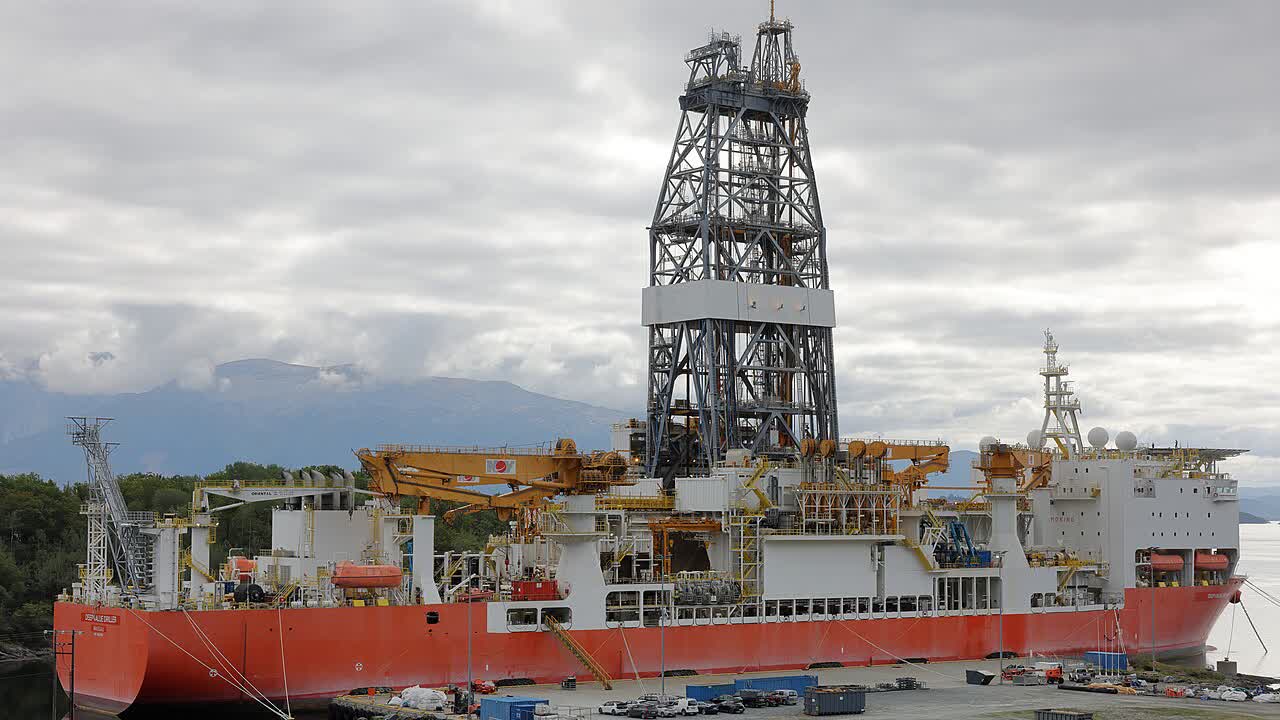
The fieldwork has been conducted by the ship Akademik Aleksandr Karpinsky, operated by the Russian state mineral exploration company Rosgeo. The vessel has participated in several Antarctic expeditions, notably the 65th Russian Antarctic Expedition in 2020. The seismic surveys in the Weddell Sea, according to records presented to the British Parliament, have been conducted since 2011, with intensification between 2020 and 2024.
-
Qantas and Airbus Invest in Company Aiming to Convert Unsorted Household Trash into Jet Fuel

-
Brazil’s ANP Opens 86 New Oil Blocks in the Equatorial Margin, Expanding the Amazon River Mouth Frontier

-
OPEC+ Boosts Oil Supply by 188,000 Barrels per Day in July 2026, Leading to Price Drop from $112 to $89 per Barrel in Under Two Months

-
TotalEnergies Signs 20-Year Deal to Purchase 2 Million Tons of LNG from Alaska, Boosting Project Viability
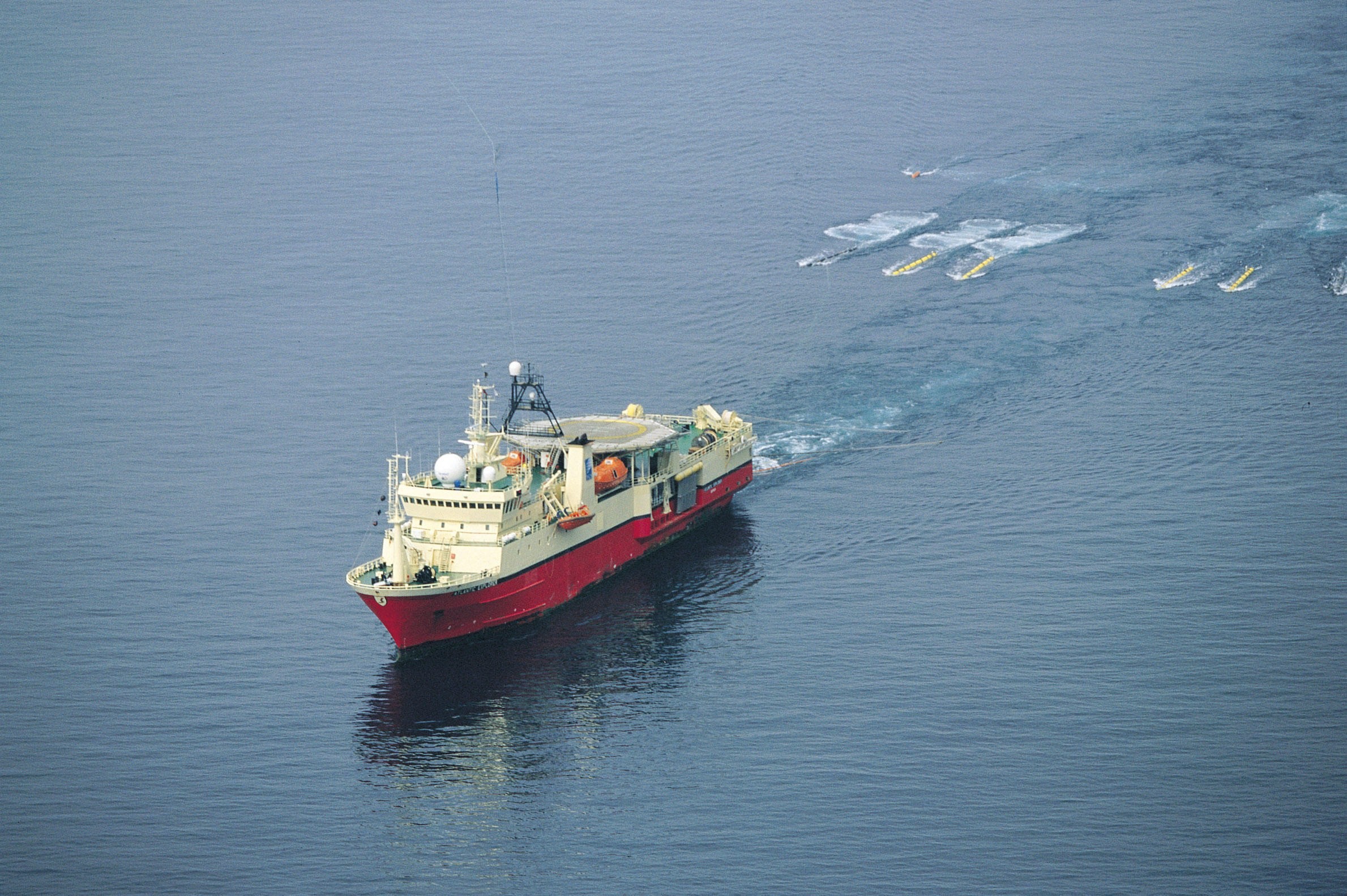
The technique works like this: the ship fires sound pulses against the rock layers below the seabed and sensors capture the echo of these waves. From the reflections, geologists can draw a three-dimensional map of the formations beneath the seabed and identify sedimentary basins with the potential to contain hydrocarbons. It is exactly the method applied worldwide in the search for oil and gas.
Why “discovery” is an imprecise term
It is necessary to be careful with how the topic has been presented in headlines around the world. Seismic surveys alone do not discover oil; they only map geological structures with the potential to contain hydrocarbons. To confirm volumes and quality, it would be necessary to drill wells, which is prohibited by the Environmental Protocol of the Antarctic Treaty, signed in 1991, in Madrid.
Furthermore, the number of 511 billion barrels is an estimate based on Russian data, not yet independently verified in the open scientific literature, and the Russian government itself has never officially announced a discovery. Rosgeo describes the material as the hydrocarbon potential of the southern ocean basins. In other words, there is an indication of favorable geology, but the actual size of any recoverable reserves remains unknown.
The treaty that freezes the continent
The Antarctic Treaty was signed in 1959 by 12 countries and today has 58 signatories. It dedicates the continent to peace and science, prohibits military activities, and freezes any territorial claims. In 1991, the Madrid Protocol expanded protections and expressly prohibited any mineral resource exploration activities not related to scientific research.
Seven countries claim parts of the continent: Argentina, Australia, Chile, France, New Zealand, Norway, and the United Kingdom. Most other nations, including the United States and Russia itself, do not recognize these claims. Moscow, in fact, does not claim territory but maintains five active research stations on the continent, which guarantees it a permanent presence in the region and a voice in treaty decisions.
The fine line between science and prospecting
The most delicate point of the debate is precisely the blurred boundary between geological research and commercial prospecting. In written testimony to the British Parliament, Professor Klaus Dodds, a geopolitics specialist at the University of London, warned that Russian data could be interpreted as prospecting disguised as research, functioning as a precursor to future extraction if the treaty weakens.
On the other hand, British Foreign Office Minister David Rutley told the committee that Russia has repeatedly given assurances that its activities are purely scientific in nature. Article VII of the Antarctic Treaty allows any signatory country to inspect the stations and equipment of other members, but so far, no government has publicly activated this mechanism concerning Russian surveys in the Weddell, opting for the diplomatic route.
The blockade of protected marine areas
The scenario gained another layer of tension in 2022, when Russia and China jointly vetoed proposals presented by other signatory countries to expand protected marine areas in Antarctic waters. Neither country signaled an intention to abandon the treaty or formally challenge the mining ban.
Experts, however, read the veto as part of a strategy to expand influence over how the rules are interpreted and applied. In 2048, the Madrid Protocol can be reviewed, but within strict rules that make significant changes difficult. For Klaus Dodds, the real test will be to know if the international community will be willing to defend the current framework in the face of what he calls silent and deliberate erosion.
Brazil is also in the game
The issue also concerns Brazil, which joined the Antarctic Treaty in 1975 and maintains a presence on the continent through the Comandante Ferraz Antarctic Station on King George Island. The country is part of the Brazilian Antarctic Program and participates in the treaty’s consultative meetings, having a voice in decisions on conservation, research, and governance of the region.
For a country that ranks among the world’s major oil producers, especially with the pre-salt, closely following the debate on potential resources in the southern continent matters for geopolitical, environmental, and economic reasons. Any changes in the rules that apply to Antarctica can affect both the global energy market and the diplomatic balance in one of the last unexplored territories on the planet.
The case of Russian ships in the Weddell Sea shows how Antarctica has ceased to be just a scientific topic to become a central part of the geopolitical dispute of the 21st century. The estimates of 511 billion barrels of oil need to be treated with caution because they come from data not yet independently confirmed, but the mere fact of their existence already reopens the debate on how long the 1959 treaty will be able to withstand the pressure for new resources. The question is no longer hypothetical; it is a silent race for influence in a continent that belongs, for now, to science.
And you, what do you think of this scenario where estimates of billions of barrels of oil in Antarctica begin to test an international treaty of more than 60 years? Do you believe the continent will be able to remain protected from mineral exploration, or will the pressure for resources prevail? Leave your comment, share your opinion on the topic, and share the article with those interested in geopolitics, energy, and the environment.