Portuguese
  Spanish


In the rural area of Pancas, in the Northwest of Espírito Santo, producers from Córrego São Luís decided to rebuild on their own a bridge used for community access and coffee harvest transportation. The work was done in a joint effort, cost R$ 3,950, and exposed an old problem in rural areas where a small crossing can block trucks, fertilizer, and agricultural production.
Residents of Córrego São Luís, in the rural area of Pancas, rebuilt a wooden bridge after years of requests for a solution. The passage is used by community families and producers who need to transport coffee, supplies, and agricultural loads.
The old structure was deteriorated, with compromised beams, and made the crossing unsafe. At times, according to residents, vehicles even had to pass through the stream to get to the other side.
As reported by A Gazeta on May 6, 2026, the work cost R$ 3,950, an amount funded by the community itself. It was R$ 2,800 in wood, R$ 250 in nails, and R$ 900 for tractor rental.
-
The Hidden Function of the Hole in Nail Clippers Reveals a Smarter Design Than You Might Think

-
A Simple Finger Movement Gains Attention for Its Potential Role in Alzheimer’s Prevention
-
World’s Tallest Ferris Wheel Opens in Dubai, Offering Thrilling Heights Over the Persian Gulf

-
Turkey Constructs World’s Deepest Undersea Rail Tunnel Connecting Europe and Asia, Uncovering Largest Collection of Medieval Ships in Byzantine Port



The bridge is on an important route for coffee flow. One of the residents reported that on the other side of the passage, about 5,000 or more sacks are produced, making the wait for public work unfeasible for those who depended on the road.
The crossing became a problem when trucks and producers started to depend on the stream
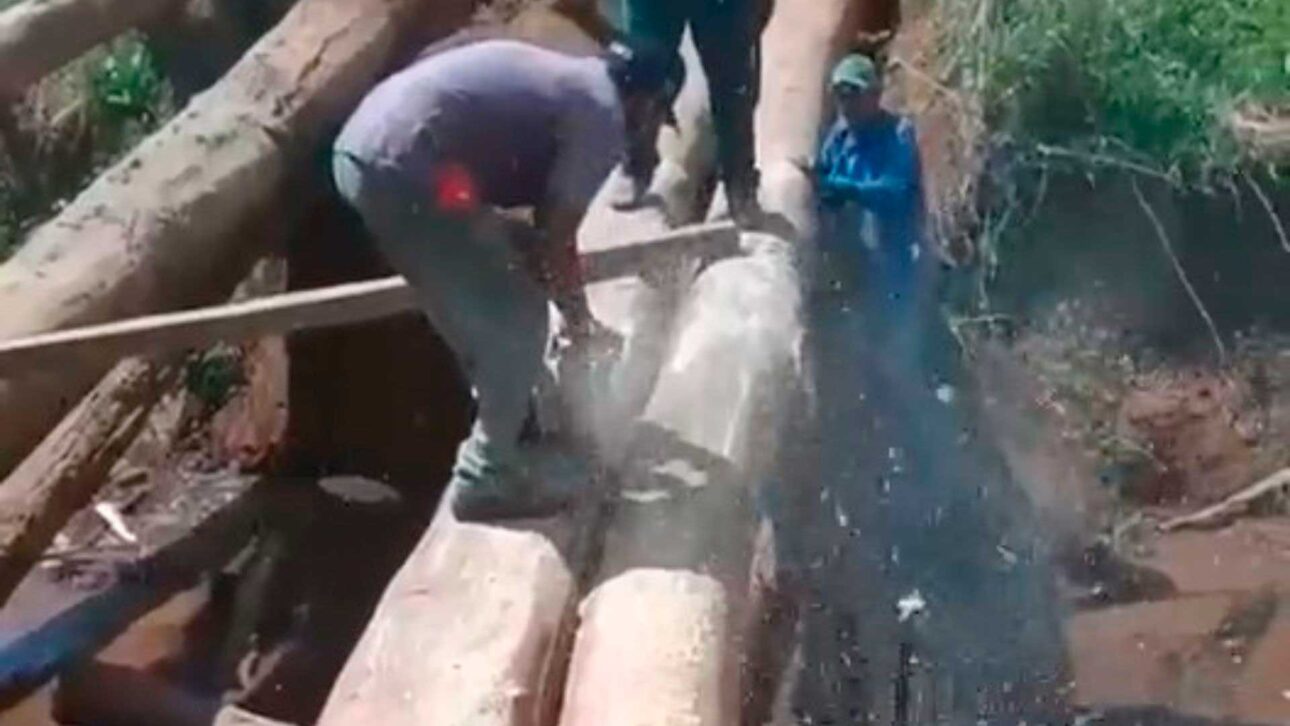
The old bridge had also been built by the community itself about 15 years ago. In 2020, residents had already funded a renovation, but the structure started showing problems again in recent years.
The wear and tear affected the routine of those who live and work in Córrego São Luís. It was not just a passage for small cars. The bridge was used to bring in fertilizer, remove coffee, and maintain access between rural properties.
When a rural bridge is compromised, the problem appears quickly. A loaded truck weighs more, the wood suffers from rain and humidity, and the risk increases when the improvised detour goes through a stream.
For producers, the harvest calendar does not wait. Coffee needs to leave the property at the correct time, and any delay can increase freight costs, hinder sales, and disrupt the work of those who depend on the harvest.
Residents say that the city hall went to the site, measured the bridge, but the work did not happen
According to reports published by the news, residents claim that the Pancas City Hall had informed that they would repair it in 2023. Teams would have gone to the site a few times to look and measure the structure.
Even so, the work was not carried out. A resident stated that there were several technical visits, but no practical intervention. Meanwhile, trucks and residents continued using precarious alternatives.
Tired of waiting, the residents organized a task force on May 1st. They bought the materials, rented the tractor, and rebuilt the bridge to restore the passage.
The Pancas City Hall did not respond to the original report’s inquiries. Later, it published a statement on social media saying that the Department of Works operates within a plan, taking into account demands from various communities, climate, and the operational capacity of the teams.
The case weighs more because Pancas has a strong presence of coffee cultivation
Pancas is a municipality in the Northwest of Espírito Santo with 18,893 inhabitants, according to the 2022 Census by IBGE. The city has a territorial area of 837.842 km², which helps explain the existence of scattered rural communities dependent on rural roads.
In the local economy, coffee cultivation has a direct impact. According to a survey by Incaper, coffee is the main income-generating activity in Pancas and is present in about 93% of rural properties in the municipality. The document also indicates an approximate annual production of 467 thousand bags of conilon coffee and about 12,300 hectares planted.
These numbers help understand why a wooden bridge became a matter of public interest. The structure may seem small, but it connects producers to the transport of the harvest, the arrival of supplies, and the daily movement of families.
In practice, rural roads, bridges, and machinery are not minor details for those who live off the land. They are part of the cost of production. When infrastructure fails, the loss appears in delays, the risk of accidents, and the difficulty of selling the production at the right time.
The work solved the urgency but exposed the fragility of rural roads
The bridge built by the residents addressed the most immediate need. With the structure rebuilt, the community reduced its reliance on crossing the stream and restored a passage used for agricultural transport.
But the case also highlights a larger discussion. Small rural projects often have little space in public debate, even though they support activities that drive the municipal economy.
When a community needs to buy wood, nails, and pay for a tractor to ensure basic access, the solution shows local organization but also reveals the limits of improvisation. Bridges used by loaded vehicles require maintenance, inspection, and technical planning.
In the São Luís Stream, the residents found a solution with their own resources. The question remains, for how long will rural communities continue to undertake projects that directly impact production, income, and safety in the countryside?
Do you think it’s right for residents to fund a bridge used to transport agricultural production when the structure is left without maintenance? Leave your opinion in the comments and share if something similar has happened in any rural community in your region.