






 Portuguese
  Spanish
  4 min of reading
  0 comments


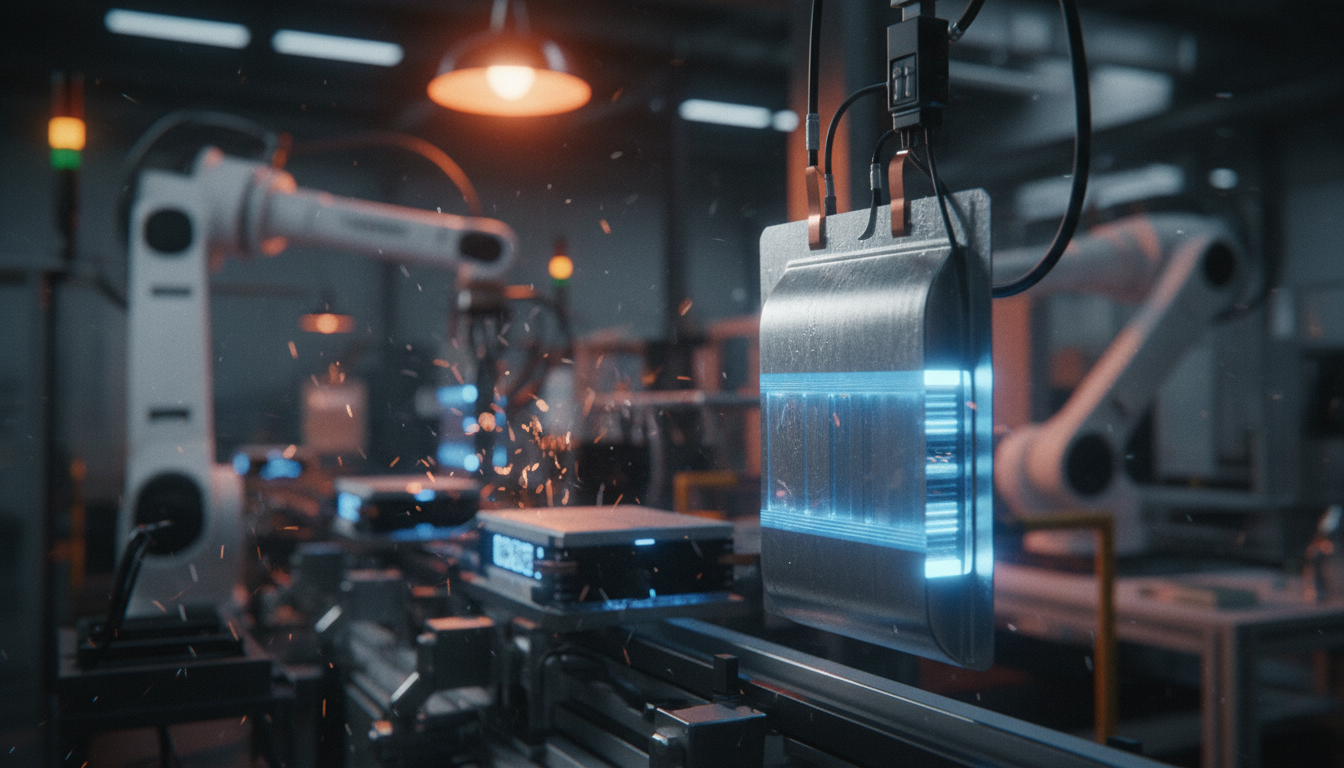
CATL and BYD start mass production of batteries made with sodium extracted from common salt, eliminating lithium, cobalt, and nickel — with a range of 500 km and a lifespan of 5.8 million kilometers
China has just taken a step that could change the electric car market forever. CATL, the world’s largest battery manufacturer, confirmed the start of supply of sodium-ion batteries for passenger cars starting in April 2026.
The technology uses sodium extracted from common salt instead of lithium, cobalt, and nickel. These are abundant and inexpensive materials.
The result is a battery up to 50% cheaper than current lithium ones. And with surprisingly similar performance.
-
Helicopter Drops 180 Tons of Sand and Gravel on Swedish River to Revive Ecosystem Damaged by Decades of Exploitation

-
Brazilian Company Launches Retro Smartphone with 48 MP Camera, T9 Keyboard, and Privacy Features for Social Media-Free Use

-
Self-Taught Chinese Farmer Builds 5-Ton Submarine from Scrap, Launches It in Anhui River
-
Invisible Induction Technology Enables Wireless Power for Blenders, Coffee Makers, and Air Fryers, Reducing Countertop Cables


BYD is also advancing with its third generation of sodium batteries. The focus is on entry-level vehicles with reduced costs.
Global shipments of sodium batteries reached 9 GWh in 2025. This represents a growth of 150% compared to the previous year.

How a battery made from salt replaces lithium
Sodium is the sixth most abundant element in the Earth’s crust. It can be extracted from seawater or mineral deposits.
Unlike lithium, which is concentrated in a few countries, sodium is available almost everywhere on the planet.
The CATL battery achieves 175 Wh/kg of energy density. It is close to lithium LFP batteries, which range between 160 and 200 Wh/kg.
The range reaches 500 km on a single charge. For daily urban use, this is more than sufficient.
In negative temperatures, sodium batteries lose much less capacity than lithium ones. This is an important technical advantage.
Safety is also superior. The risk of ignition is almost zero, thanks to the thermal stability of sodium.
The numbers that explain the revolution
- Cost: up to 50% cheaper than lithium batteries
- Energy density: 175 Wh/kg (CATL)
- Range: up to 500 km per charge
- Lifespan: up to 10,000 cycles (BYD 3rd generation)
- Total mileage: 5.8 million km (CATL)
- Shipments 2025: 9 GWh (+150% vs 2024)
- Mass production: starting April-July 2026
A lifespan of 5.8 million kilometers is impressive. It is equivalent to making 145 trips around the Earth.

CATL and BYD lead the race
CATL launched the first industrial-scale sodium battery in April 2025. The density reached 175 Wh/kg.
The first passenger car with the technology will be the GAC Aion. Mass production starts between April and July 2026.
The company also plans to expand to the Aion Y Plus. The goal is to democratize access to affordable electric cars.
BYD is investing in the third generation of sodium batteries. The focus is ultra-low cost with extreme durability of 10,000 cycles.
Other manufacturers like EVE Energy and Ronbay Technology are also building production lines dedicated to sodium.
CATL is also developing hybrid packs that combine sodium and lithium. The idea is to optimize cost and range in the same vehicle.
What changes in the price of electric cars
Lithium carbonate reached 170,000 yuan per ton in China. This is equivalent to about R$ 130,000 per ton.
The rise in lithium prices was one of the main drivers for the search for alternatives. Sodium emerges as a direct response to this problem.
With batteries 50% cheaper, entry-level electric cars can finally compete in price with combustion models.
The impact also reaches energy storage. Solar and wind plants can use sodium batteries to store energy at a lower cost.
For Brazil, the technology is especially relevant. The country could benefit as a sodium producer on a large scale.

Sodium complements, but does not yet replace lithium
Despite the advancements, the energy density of sodium is still lower. For premium vehicles with high range, lithium remains necessary.
The sodium supply chain is immature. Large-scale production is still under development.
The next two to three years will be decisive, according to the Sodium Battery Industry Chain Forum held in China.
China dominates about 70% of the global market for batteries. The West focuses on lithium due to subsidies like the IRA in the U.S.
Still, sodium opens a window for developing countries. Abundant materials reduce geopolitical dependence.
The information in this article has been compiled from reports by Canal VE and Portal N10. Data on production and costs are based on market projections and may vary.





Be the first to react!