Portuguese
  Spanish


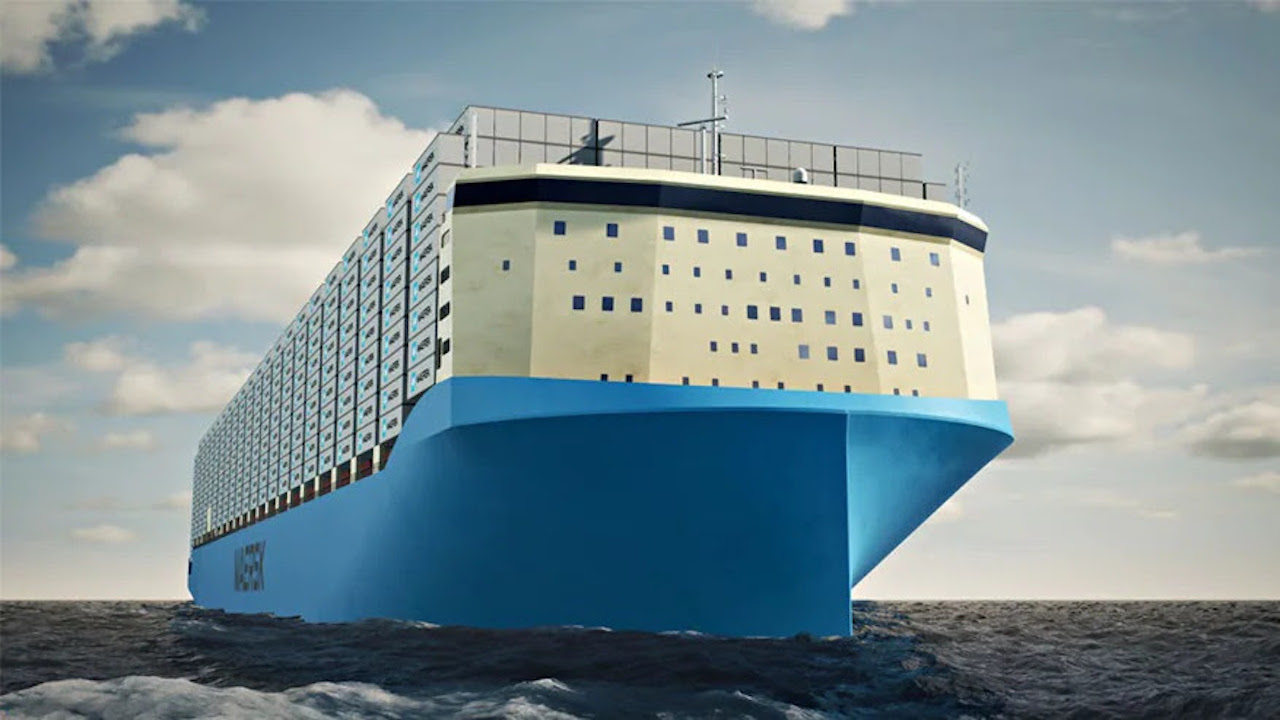

Container Ships Built By Hyundai For Maersk Come With Bi-Fuel Engine That Can Operate On Methanol And Low-Sulfur Conventional Fuel
The design of the world’s first carbon-neutral ship, expected to be operational by 2024, has been unveiled by Maersk. This is the first time the company has shared an image of the design of the fleet made up of eight container ships powered by green fuel. “In designing them, our ambition was to ensure that the new ships could serve our customers in a smarter way, while also contributing to their carbon-neutral transportation goals,” the company emphasizes in a global statement.
Also Read
- The Largest Executive Aviation Company In Latin America Is Hiring Mechanics, Technicians, Engineers, Analysts, Assistants, Helicopter Co-Pilots, And More For Offshore Operations
- Siemens Gamesa Surpasses Giant General Electric And Celebrates Incredible Milestone: The World’s Largest And Most Powerful 14MW Wind Turbine With A 222-Meter Rotor Begins Energy Production
- Helper, Driver, Bricklayer, Foreman, Operator, And Many More Job Openings For Construction Work On The ES Gas Transportation Pipeline Interconnection, On December 13
- Direct Sale Of Ethanol From The Plants Is Approved By The Senate And Promises To Stimulate Competition And Curb The Rise In Gas Prices At Fuel Stations
Exclusive to the sector, the design allows for 20% higher energy efficiency per container transported, compared to the industry average for ships of this size. Additionally, the entire series is expected to save about one million tons of annual CO₂ emissions, providing carbon-neutral transportation at scale in maritime trade.
Maersk Ships Will Be 350 Meters Long And 53.5 Meters Wide
The ships will be 350 meters long, 53.5 meters wide, and will be significantly different from what has been seen before for any larger container ships. Crew accommodation and the bridge will be located at the bow to allow for increased container capacity. The funnel will be at the stern and only on one side of the vessel, providing more space for cargo. This separation between accommodation and funnel also improves port efficiency.
-
French Brand Transforms 6 Million Brazilian PET Bottles into Sustainable Sneakers for Global Fashion Market

-
Abandoned Factory in Rio’s North Zone Becomes Urban Hazard with Standing Water and Debris

-
The U.S. Navy Conducts Submarine Tests in Idaho Lake to Detect Underwater Noises Hidden by the Ocean
-
British Factory Transitions from Mechanical Parts to Producing 420,000 Electric Power Units Annually, Supplying 70% of Ford’s Electric Cars Sold in Europe


The project manufacturing took nearly five years, while Maersk traversed uncharted naval design territory. To enable this new design, several challenges had to be faced. First, crew comfort had to be ensured with accommodations placed in this more exposed location.
Furthermore, the proper hull strength was also an important parameter to be preserved, with the accommodation block typically serving as a “stiffener” to the hull when placed further back. New arrangements for lifeboats and navigation lights had to be developed, along with new cameras to support the captain’s visibility during navigation.
The Vessels Will Be Able To Make A Full Round Trip, Such As The Asia-Europe Route, Using Green Methanol.
The series, built by Hyundai Heavy Industries, comes with an innovative bi-fuel engine configuration that can operate on methanol and low-sulfur conventional fuel. With fuel capacity, the vessels will be able to make a full round trip, such as the Asia-Europe route, using green methanol.
The first vessel is scheduled to enter service in early 2024. “We look forward to taking these vessels across the oceans of the world and continuing our work in creating new solutions to enhance the efficiency of our customers’ future supply chains,” highlights Maersk.