






 Portuguese
  Spanish


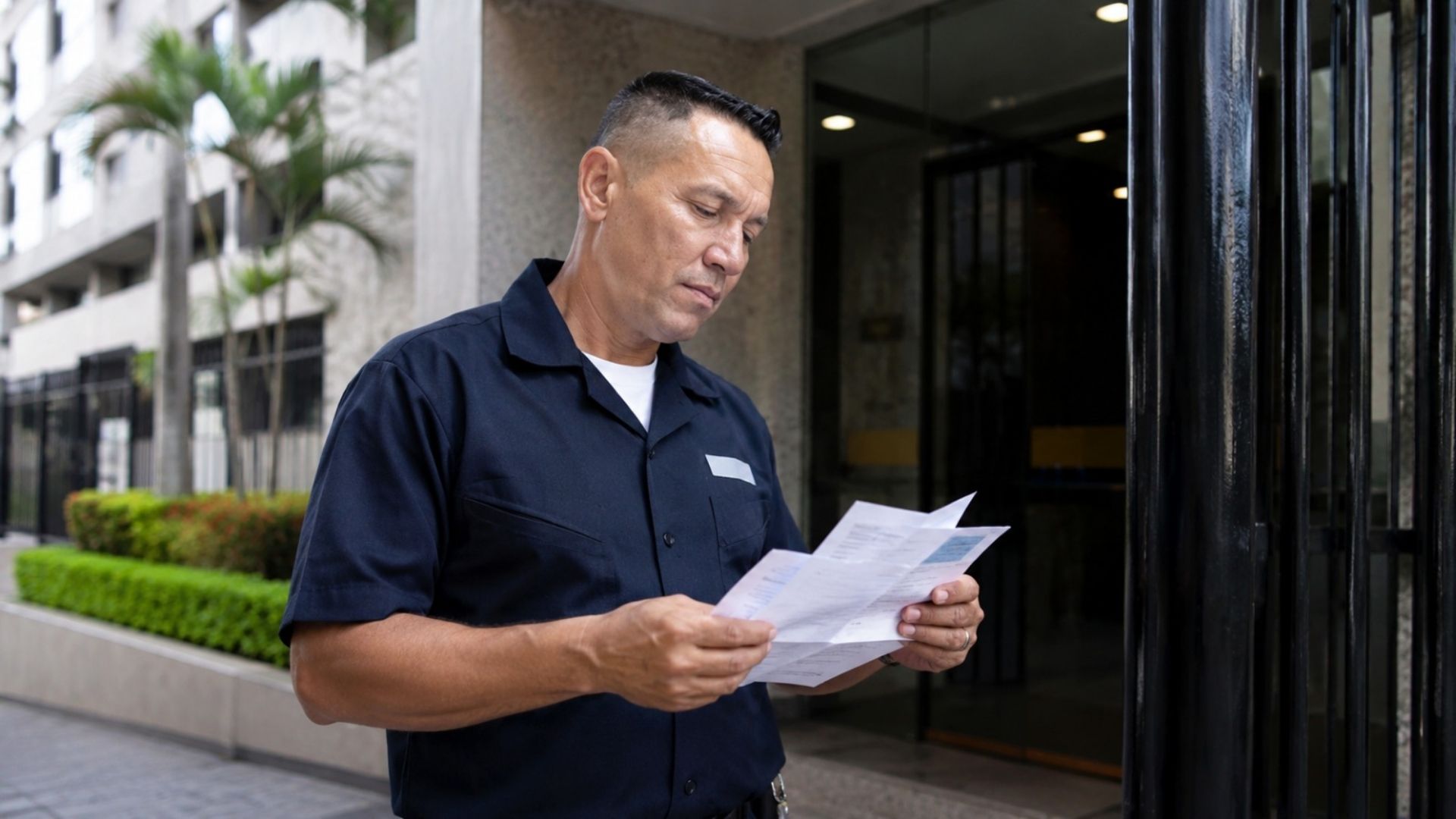

47-year-old doorman who lives with his wife and two children in a single room at his father-in-law’s house in Pirituba, North Zone of São Paulo, says he discovered he was listed as a partner in five companies, with millionaire transactions, a debt exceeding R$ 8 million, suspected fraud, and digitally reproduced signatures.
A doorman for eight years, Roberto Luiz de Oliveira says he realized something was wrong in 2019 when he saw his salary of R$ 1,620 blocked. From then on, he claims to have discovered that his name appeared in the Federal Revenue Service’s registry linked to at least five companies in São Paulo, all with financial transactions he does not recognize and unpaid taxes that helped form a millionaire debt.
according to the Domingo Espetacular channel, what makes the story bigger than a bureaucratic irregularity is the size of the chasm between real life and the business trail attributed to him. While living with his family in one room and working night shifts to support the household, the doorman tries to prove that he was used as a front in a scheme that allegedly opened companies, issued invoices, and even handled event contracts with signatures that, according to the expert report mentioned in the case, appear to have been copied and pasted.
The most striking detail lies in the clash between the doorman’s salary and the debt of over R$ 8 million

The most striking point in the case is the brutal disproportion between the worker’s income and the liability that arose in his name. Roberto claims to receive R$ 1,620 as a doorman, but became responsible for a debt exceeding R$ 8 million, linked to companies he says he never managed, commanded, or even truly knew.
-
Brazil to Issue “Panda Bonds” in China, Aiming to Raise Up to 5 Billion Yuan at Lower Interest Rates Than Dollar Debt
-
NATO Faces Internal Tensions as U.S. Pushes for Increased Defense Spending, Targeting 5% of GDP by 2035, with Warnings for Countries Near 2% Level

-
Brazil to Introduce B16 Diesel with Increased Soybean Oil Content for Trucks by 2026
-
Brazil’s July Bolsa Família Payments May Include Extra $150 and $50 for Families with Children, Pregnant Women, and Updated CadÚnico Registration


This difference completely changes the weight of the story. It is not about a person who started businesses, failed, and went into debt. What emerges is the image of a low-income worker, with a common routine and modest life, trying to understand how his name could have been used in business structures capable of moving millions in just a few years.
The curious twist is that the five companies were allegedly opened with identical signatures

The most unusual detail of the case lies precisely in how the fraud was allegedly orchestrated. According to the doorman‘s defense, the suspicion is that an old signature was obtained from the time he opened an individual micro-enterprise years ago and then digitally reused for the opening of new companies.
The expert report mentioned in the case concluded that the signatures used in the documents were exactly identical, which reinforces the thesis of artificial reproduction. It is this point that makes the story move from the realm of indebtedness into the territory of a more sophisticated fraud, with indications of repeated use of the same signature in contracts and powers of attorney.
The case broadens the discussion about frauds involving companies opened in the name of ordinary workers
The doorman‘s story is not only noteworthy for its personal drama. It also exposes how ordinary people’s data can be used in suspicious business structures without the true owner immediately realizing what is happening. In Roberto’s case, the impact only became evident when the salary blockage raised the alarm.
The investigation also indicates that he might not have been the only one affected. The inquiries mentioned in the case indicate the existence of another alleged partner, a self-employed worker from São Paulo’s countryside who is also suspected of having had their data used improperly. This broadens the understanding of the episode and suggests that the **doorman** may have been just a visible piece of something larger.
Why this could change how business scams and identity theft are viewed


Cases like this shift the debate about fraud beyond bank accounts and cards. What appears here is a much deeper use of the victim’s identity, involving the opening of companies, issuance of invoices, formal transactions, and the creation of large-scale tax debt.
This changes the understanding because it shows that the damage is not restricted to a bad credit score or isolated collection. For the **doorman**, the suspicion involves subpoenas, judicial pressure, income blockage, and the continuous need to prove that he did not participate in what was done in his name. When fraud reaches this scale, the victim begins to fight not only against the debt but against a false version of themselves created on paper.
What still needs to be confirmed is who set up the scheme and how the data was used
Despite the evidence raised by the defense and the expert analysis mentioned in the case, there are still decisive open points. Roberto says he doesn’t know who used his name, how the documents would have circulated, or who profited from the companies that were opened with his identification.
The investigations remain confidential, with monitoring by state and federal authorities, but the **doorman** is still awaiting more concrete answers about authorship, the extent of the fraud, and the accountability of those involved. It is precisely this lack of conclusion that keeps the case in a state of prolonged anguish, where the victim tries to clear their name without being able to definitively point to who caused the nightmare.
Ultimately, the **doorman**’s story exposes one of the harshest forms of fraud: one where the victim continues to lead a simple, tight, and honest life, while on paper they appear as the owner of millionaire businesses that never existed for them. Between a blocked salary, an impossible debt, and signatures that seem serially reproduced, the case reveals how someone can be thrust into the center of a scheme without even knowing when they stopped being just a worker to become an involuntary character in a criminal mechanism.







