





 Portuguese
  English
  Spanish
  3 min of reading
  4 comments


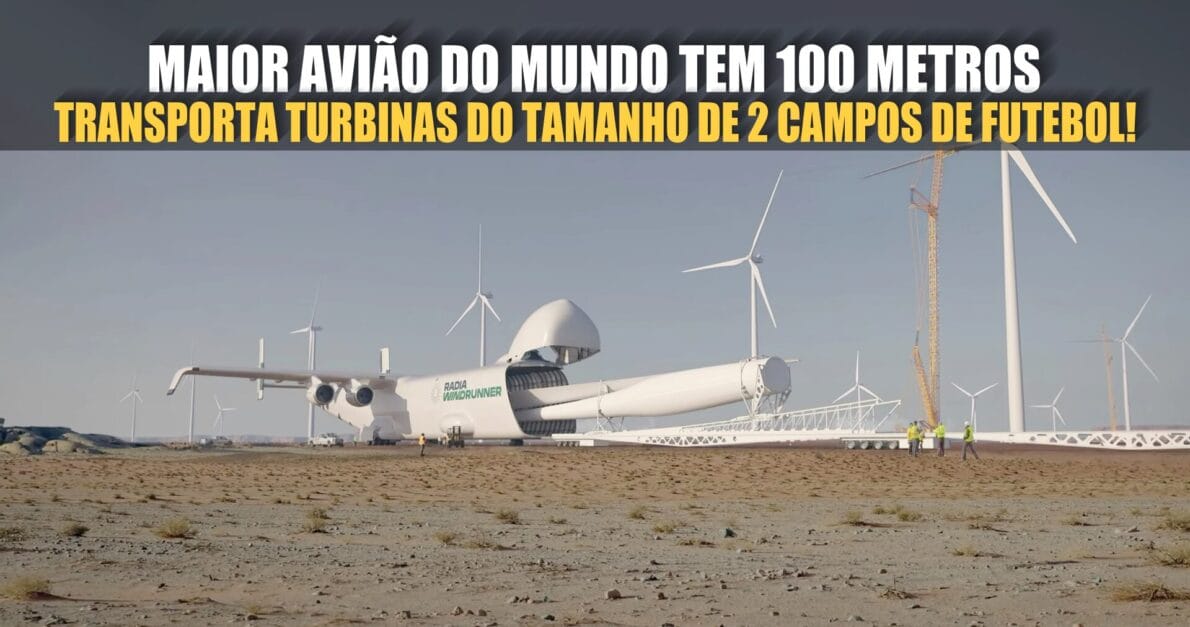

Revolution In The Transportation Of Wind Turbines: Plane Promises To Deliver Giant Wind Generators To Offshore Wind Farms Built In Remote Locations
The future of clean energy is about to take off, literally. An innovation is on the way, with Radia, an American startup, leading the way. They are developing the largest airplane in the world, the WindRunner, specifically for the transport of enormous wind turbines. This project is a game changer, aimed at equipping offshore wind farms with turbines as large as football fields.
This revolutionary approach promises to enhance clean energy generation, addressing the logistical challenge of moving colossal-sized components.
Get To Know This Giant That Promises To Change The History Of Turbine Transportation In The World!
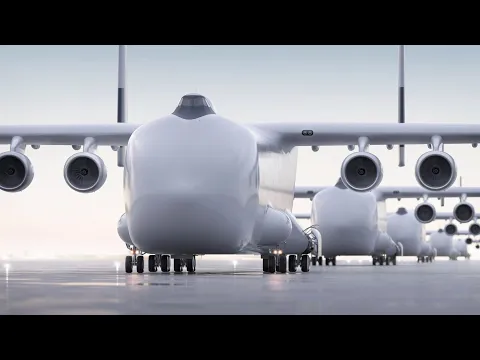

Plane Will Be Over 100 Meters Long And Will Be Powered By Sustainable Aviation Fuel
The equation is simple: larger turbines mean more energy. However, the size of these turbines poses a significant logistical challenge, as they are too large for conventional road transport.
-
USA covers canal with 2,556 solar panels and transforms irrigation into a clean power plant in the middle of a drought-stricken region

-
In a historic decision, Aneel regulates the use of batteries in the Brazilian electrical system and lays the groundwork for large-scale energy storage, reducing waste, enhancing energy security, and attracting new billion-dollar projects.

-
Brazilian researchers develop a catalyst made with abundant metals that increases the efficiency of green hydrogen production and can replace expensive materials, creating a promising alternative to expand the use of clean energy worldwide.
-
New Fiat EV, priced at R$ 77,000, will bring a reinterpretation of the 147 and a consumption equivalent to 70 km/l.




The solution from Radia? An airplane over 100 meters long, powered by sustainable aviation fuel. This air colossus will be capable of transporting a giant wind energy turbine or four conventional blades at once, opening new horizons for energy efficiency.
Volume Of The Plane Will Be Equivalent To 12 Boeing 747s, A True Feat Of Aeronautical Engineering
In addition to its impressive size, the WindRunner also stands out for its ability to operate on relatively short runways. Once completed, the volume of the airplane is expected to be equivalent to 12 Boeing 747s, a true feat of aeronautical engineering. This feature is crucial, as it allows for the delivery of turbines in remote locations, further enhancing the reach of wind energy.
Currently, the WindRunner is an ambitious concept, but initial tests promise to turn it into reality by the end of 2027. Radia has already demonstrated the viability of the project with a scaled prototype that was successfully tested in a wind tunnel. Now, the search for suppliers and partners for the plane’s manufacturing is in full swing, marking the beginning of a new era in the installation of wind farms.
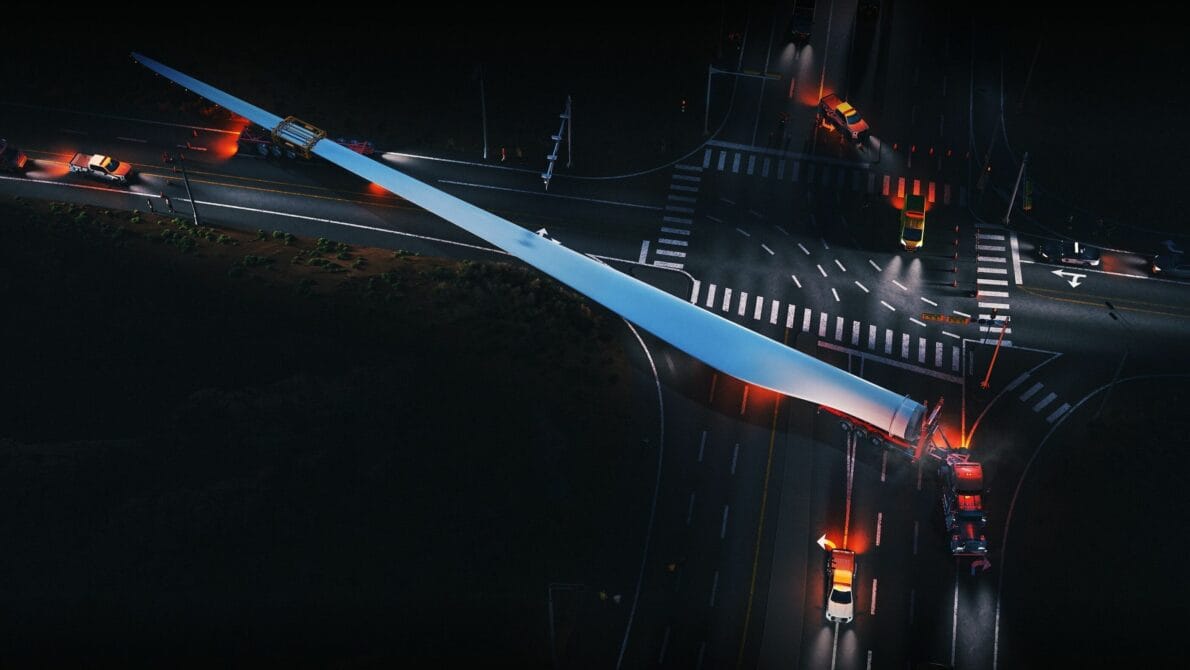
Giant Wind Turbines May Cause Issues Such As Noise, Deforestation, Soil Erosion, And Impact On Local Wildlife.
Wind energy, besides being a clean and sustainable source, offers significant economic advantages. It reduces energy costs for consumers and increases profitability for power plant owners. However, it is not without environmental impacts. Wind turbines, especially large ones, can cause issues such as noise, deforestation, soil erosion, and impact on local wildlife.
The development of giant turbines brings with it the potential to maximize clean energy production but also amplifies existing environmental challenges. Therefore, it is essential that the expansion of wind farms is accompanied by in-depth studies on the effects on the environment and the lives of local communities, ensuring that the advancement of wind energy is sustainable in every sense.








100 mt é apenas o tamanho de um campo de futebol e não de dois.
E as emissões de CO²? 🤣🤣🤣🤣🤣, energia limpa construída a base de combustíveis fósseis poluentes.
E vai conseguir pousar onde?
Congonhas