






 Portuguese
  Spanish


The project in Arizona shows how irrigation canals can gain a new function in dry regions: besides transporting water, the structure starts to produce renewable electricity and create shade to reduce evaporation losses in the desert.
In a region where every drop of water has become a strategic issue, the United States has implemented an idea that seems straight out of a futuristic laboratory: covering an irrigation canal with 2,556 solar panels to generate clean energy and, at the same time, reduce evaporation caused by extreme heat.
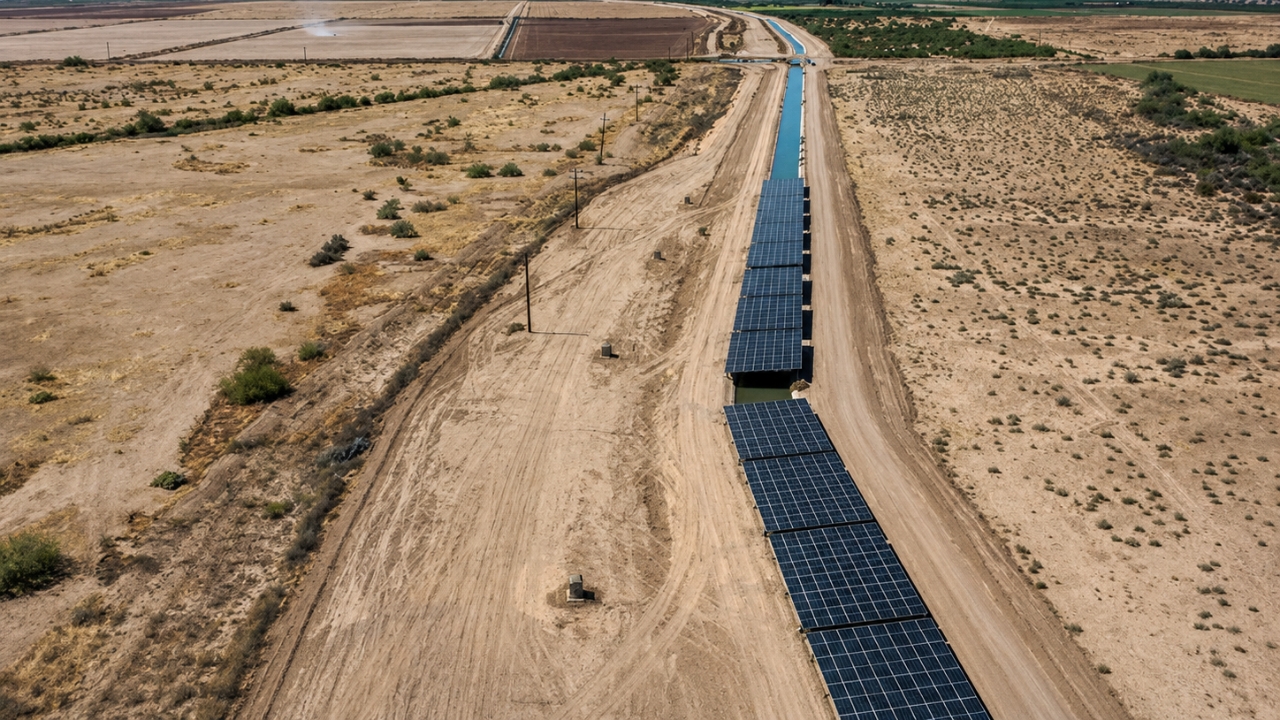
The project was installed on the Casa Blanca Canal, within the Gila River Indian Community, in Arizona, an area marked by drought, high temperatures, and a strong dependence on irrigation systems. According to the Bureau of Reclamation, the structure covers 2,782 linear feet of canal, equivalent to approximately 848 meters, and is expected to generate 1.31 MW of clean energy.
In practice, what was once just a canal transporting water for irrigation has also started to function as a kind of suspended solar power plant over the water. The installation is expected to produce at least 2.26 million kWh of electricity per year, providing renewable energy to the community itself and paving the way for similar projects in other dry regions.
-
In India, thousands earn about $2.50 an hour cooking and cleaning with a phone strapped to their heads, as every move is recorded to train humanoid robots for jobs they might one day replace.

-
Nuclear Fusion Study Proposes Transforming Mercury into Gold Using Tokamak Neutrons, but Real-World Application Remains Uncertain

-
Brazilian Researchers Develop Floor Tiles That Convert Student Footsteps into Electricity to Reduce University Energy Costs

-
Cambridge Scientists Achieve Solar-Powered Plastic Recycling, Converting Waste into Valuable Chemicals Without Fossil Fuels, Paving the Way for a Low-Carbon Circular Economy



Irrigation canal becomes a solar power plant in Arizona
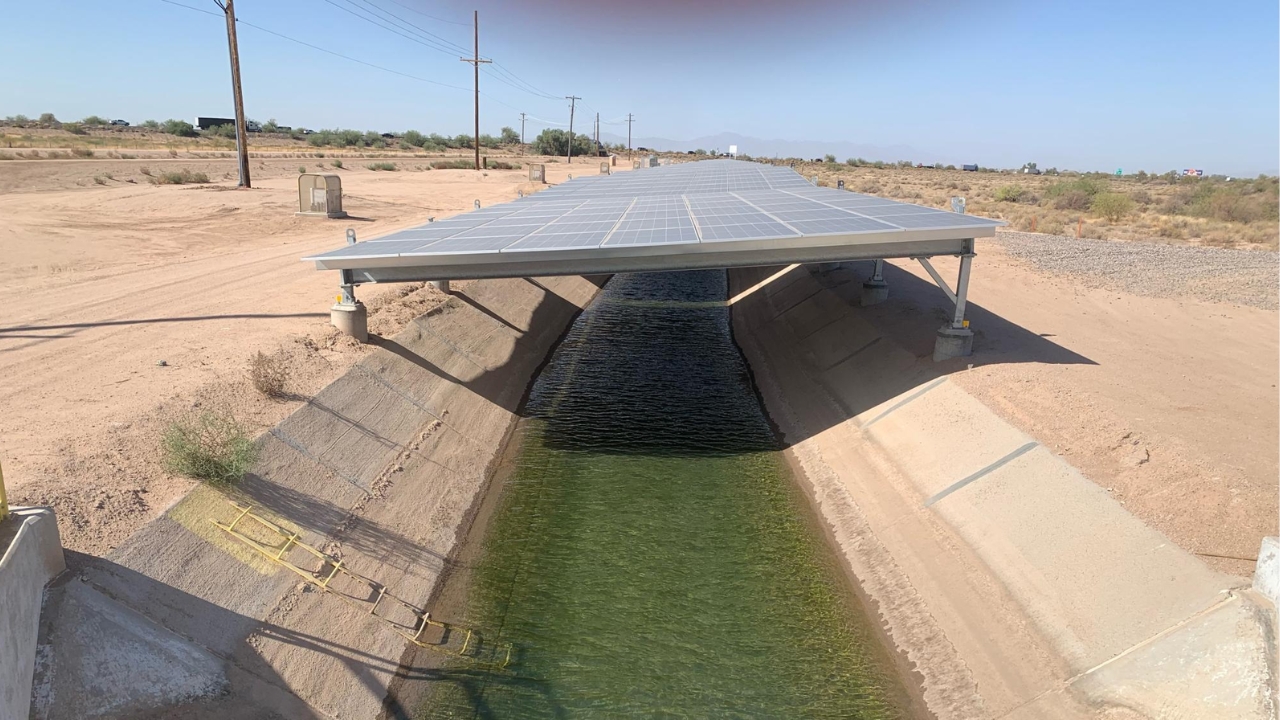
The great differential of the project lies in the use of an already existing infrastructure. Instead of occupying large areas of land with a conventional solar power plant, the panels were installed directly over the canal, creating a cover that takes advantage of the space and protects the water from direct sun exposure.
This combination makes the project particularly appealing. On one hand, the panels generate clean solar energy. On the other, the shade formed over the canal helps reduce water loss by evaporation, a critical problem in arid areas of the American West.
In regions like Arizona, where intense heat accelerates evaporation and pressures water systems, this type of solution can have a much greater impact than it seems at first glance. The technology combines renewable energy, water conservation, and climate adaptation in a single structure.
2,556 solar panels over the water
The scale of the project is one of the most striking points. There are about 2,556 solar modules installed over nearly 850 meters of canal, forming a metal cover capable of transforming an irrigation section into a source of electricity.
The estimated power is 1.31 megawatts, enough to generate at least 2.26 million kilowatt-hours per year. Although it is not one of the largest solar plants in the United States, the project stands out for its unusual proposal: producing energy without occupying new agricultural, urban, or environmental areas.
This detail is important because large solar plants usually require extensive land. In the case of the Gila River Indian Community, the project uses the space over the canal, an area that would normally have no energy function.
Less evaporation in a drought region
Besides energy generation, the project has another decisive goal: conserving water. By covering part of the canal, the panels reduce the direct incidence of the sun on the water surface, helping to limit evaporation.
This effect is especially relevant in the context of the Arizona desert, where extreme heat and water scarcity turn canals, reservoirs, and irrigation systems into essential pieces for the survival of communities and agricultural activities.
The logic is simple but powerful: the same canal that carries water for irrigation starts to produce electricity and also helps to preserve part of the water it transports. It is a solution that transforms a traditional structure into a multifunctional platform.
Indigenous community leads technology that can inspire other projects
The Gila River Indian Community, formed by the Akimel O’otham and Pee Posh peoples, emerges as the protagonist of an initiative that can serve as a model for other regions of the United States.
The project received US$ 5.65 million in funding from the Inflation Reduction Act, an American legislation aimed, among other points, at investments in climate, clean energy, and drought resilience.
More than an isolated installation, the system was conceived as a pilot project. This means that data on electricity generation, evaporation reduction, maintenance, and efficiency can be used to assess future expansions in other channels.


A solution that unites climate, water, and energy
The project arrives at a time when the western United States faces increasingly tough debates about water use, especially in areas dependent on the Colorado River and large irrigation systems.
In this scenario, covering channels with solar panels emerges as an alternative with high visual and strategic impact. The technology does not solve the water crisis alone, but it shows how old structures can be rethought in the face of new climate pressures.
There is also a strong symbolic appeal. A channel built to transport water in a dry region now comes to represent a new frontier of infrastructure: irrigation, clean energy, and evaporation control working together.
The beginning of a new trend?
Solar projects over channels are still relatively rare in the United States, but they are gaining attention precisely because they tackle two problems at once: the need to generate renewable electricity and the urgency to conserve water.
If expanded to larger sections, this technology could transform irrigation networks into solar generation corridors. Instead of just transporting water, the channels could produce energy for communities, pumping stations, farms, and public structures.
In the case of the Casa Blanca Canal, the impact is already concrete. There are thousands of solar panels, almost 850 meters of covered canal, more than 2 million kWh per year, and a clear message: even an irrigation canal can become a key piece in the energy transition.
A common canal that became a symbol of future infrastructure
The project by the Gila River Indian Community shows how the race for climate solutions is moving away from relying solely on large dams, giant plants, or technologies distant from the population.
Sometimes, innovation appears precisely where no one expected: over an irrigation canal, in the middle of a dry region, with solar panels casting shade over the water and transforming a common structure into a clean, functional, and strategic plant.
In times of drought, extreme heat, and competition for natural resources, the image is powerful: the USA covered a canal with 2,556 solar panels to generate energy and protect water at the same time. And this could be just the beginning of a new way of viewing water infrastructure.


