Portuguese
  Spanish


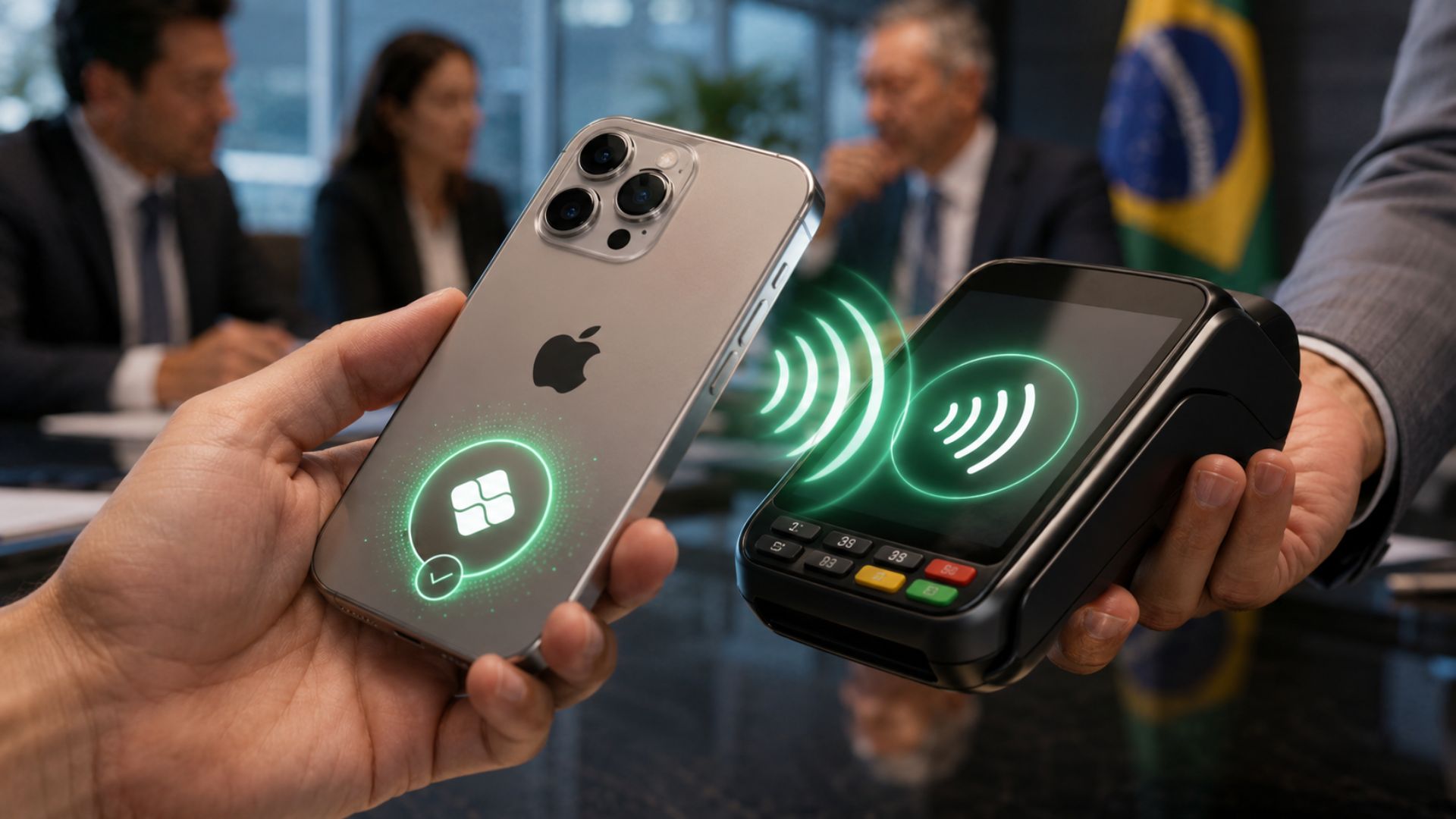

Apple signaled to Cade willingness to make an agreement and release Pix by proximity without charge on iPhones, according to Lauro Jardim’s column in the newspaper O Globo. The change would open access to the NFC chip, currently restricted, ending a long competition dispute.
iPhone users may soon finally be able to make Pix payments by proximity without barriers. Apple signaled to Cade, the Administrative Council for Economic Defense, that it is willing to make an agreement to release Pix by proximity, without charge, on iPhones. The information was revealed by journalist Lauro Jardim’s column in the newspaper O Globo.
The signal comes in the context of a competition investigation conducted by Cade. According to the column, the dispute between Apple and the agency has been ongoing for about four years. The central point is access to the NFC, the chip that allows proximity payments and is currently controlled by the company. For now, it is a willingness to negotiate, not a closed agreement.
Why Apple charges and Android releases Pix by proximity
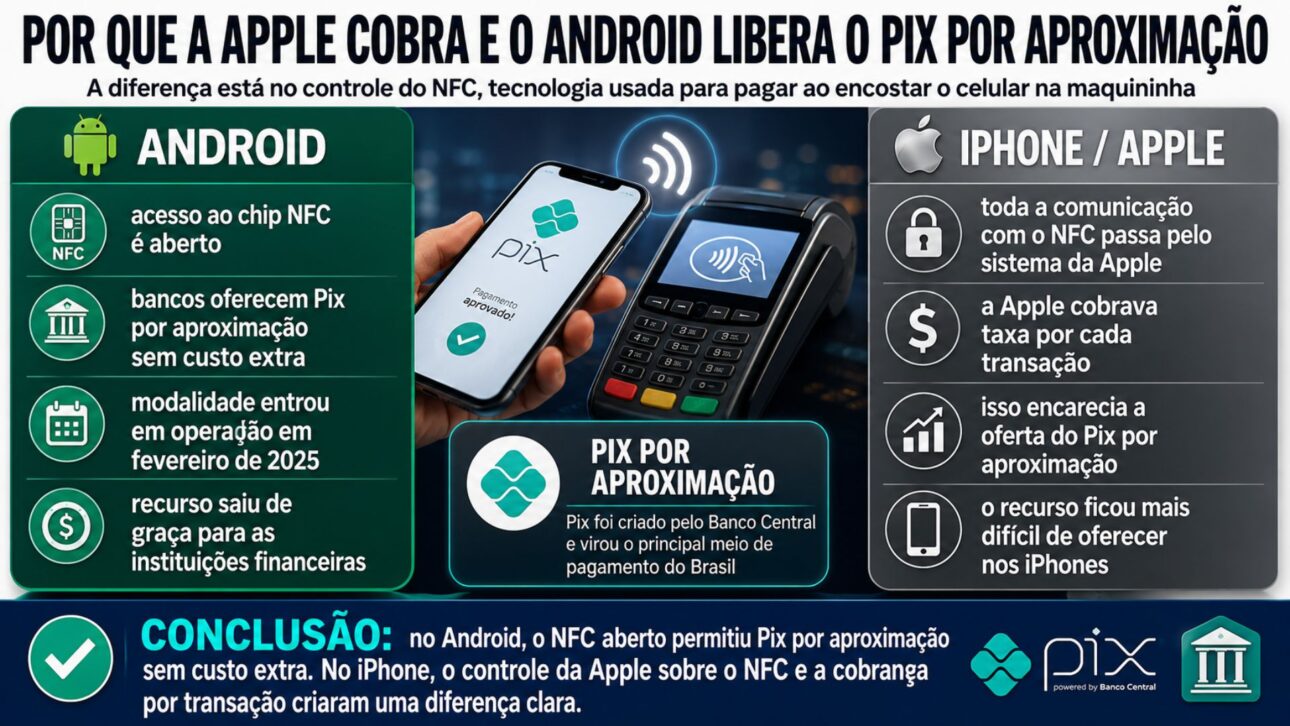
According to the portal Brasil 247, the root of the problem lies in how each system handles NFC, the technology that enables payment by tapping the phone on the machine.
-
U.S. Attempted to Tame Hurricanes with Silver Iodide and Aircraft for Nearly 20 Years

-
Teen Inventors Win $50,000 for Pen-Sized Device Using Ultrasound to Remove 94% of Microplastics from Water

-
Ultra-Black Car Paint Absorbs 99.9% of Light, Making Vehicles Look Like “Black Holes” on Wheels

-
Ancient Maya City Discovered in Remote Mexican Area with 12-Meter Pyramid, Palaces, Canals, and 14 Preserved Monuments



On Android, access to this chip is open, and banks started offering Pix by proximity for free since February 2025, when the modality began operating in Brazil.
Pix, it is worth remembering, was created by the Central Bank and has become the main means of payment in the country.
On the iPhone, the situation is different. All communication with the NFC must go through Apple‘s system, which charged a fee for each transaction made.
In practice, this charge made it more expensive and difficult to offer Pix by proximity on the brand’s devices, creating a clear difference compared to Android, where the feature was released without extra cost to financial institutions.
Cade’s investigation and the competition dispute
It was precisely this difference that caught the attention of Cade. The agency is investigating whether Apple created anti-competitive barriers by controlling access to the NFC of its devices.
Among recent milestones, the company presented a formal defense in February 2026, and Cade opened an inquiry on the subject in March 2026, summoning the company to detail tariffs, technical requirements, and contracts made with developers in Brazil.
The pressure comes from banks and fintechs, who claim that the charge makes a service that should be free, like Pix, unfeasible.
Although the specific front on proximity payment is recent, the relationship between Apple and Cade is marked by friction: in December 2025, the two had already reached an agreement in another case, related to the App Store.
Now, the signal to negotiate Pix by proximity may close another chapter in this competition dispute.
Apple’s arguments
On the other side, Apple builds its defense. The company maintains that its model, based on its own hardware and Apple Pay, offers a superior level of security compared to the solutions used on Android. Furthermore, it argues that Pix by proximity still has low adoption: in January 2026, there were about 1.05 million proximity transactions, compared to 2.7 billion made by QR Code, which, in the company’s view, shows that NFC is not an indispensable input to compete in the Brazilian market.
Apple also resists being classified as a Payment Transaction Initiator, a figure that would bring obligations of openness and interoperability. The company often reminds that the iPhone represents about 10% of the smartphone market in Brazil and that more than 40 banks have been offering Apple Pay since 2018. These are the points that support the thesis that there would be no significant damage to competition.
What changes for iPhone users if the agreement is reached
For the consumer, the practical effect depends on the outcome of the talks. If negotiations progress and an agreement is indeed signed, iPhone users will be able to use Pix by proximity without the charge linked to the technology, equating Apple devices to Android models. It would be the end of a disadvantage that bothers those who have an iPhone and want to pay just by tapping the phone.
Even so, it is important to remain cautious: for now, there is only a willingness to negotiate, with no signed agreement or defined date. The Brazilian case follows a global movement, where regulators, such as those in the European Union, have been pressuring large technology companies to open access to NFC. If successful, the understanding between Apple and Cade could become a reference in the debate on competition in mobile payments.
Releasing Pix by proximity without charge on iPhones would be a victory for the consumer or just the end of a charge that should never have existed?
Tell us in the comments if you miss Pix by proximity on your iPhone and what you think of Apple’s stance.