






 Portuguese
  Spanish
  5 min of reading
  0 comments


China Advances In Africa With Payment System That Pushes Countries Away From The Dollar And Paves The Way For A Global Alternative Financial Network.
The US dollar, which has dominated international trade for decades, is starting to face a quiet but growing movement on the African continent. In recent weeks, new signals indicate that African countries are expanding the use of alternative payment systems, directly stimulated by initiatives from China. The arrival of an international plan led by Beijing to strengthen the use of local currencies and, gradually, consolidate the yuan as a trade settlement instrument, is opening the door to an unprecedented scenario: the construction of a financial network parallel to the dollar.
This transformation, although gradual, has profound implications for the global economic balance. If consolidated, it could accelerate a process that has been referred to for years as “de-dollarization” — an attempt to reduce dependence on the dollar in international transactions. The epicenter of this change today is Africa, a strategic region both for its natural resources and its geopolitical position.
The Advancement of China In African Trade


China’s presence in Africa is not new. Over the past 20 years, Beijing has become the continent’s largest trading partner, moving more than US$ 282 billion in 2023, according to official data. The flow involves not only the purchase of oil, minerals, and agricultural commodities but also investment in infrastructure, loans, and technology.
-
Israel finds Hezbollah militarized tunnel over 200 meters long under village, with 4 missile launch shafts, 12 chambers, anti-tank missiles, drones, and weapons depots at a depth of 25 meters.

-
Ukraine launches largest drone attack on Moscow since 2022, Russia claims to have intercepted nearly 200 aircraft near the capital, Kapotnya refinery targeted again, and offensive reignites alert about war reaching the Russian energy heart just a few kilometers from the Kremlin.

-
Truck drivers, freight, and fines from 2022 take center stage in politics: Chamber approves MP with amnesty, mandatory tracking by CIOT, million-dollar penalties, and new minimum wage for those who spend more than 24 hours on the road.

-
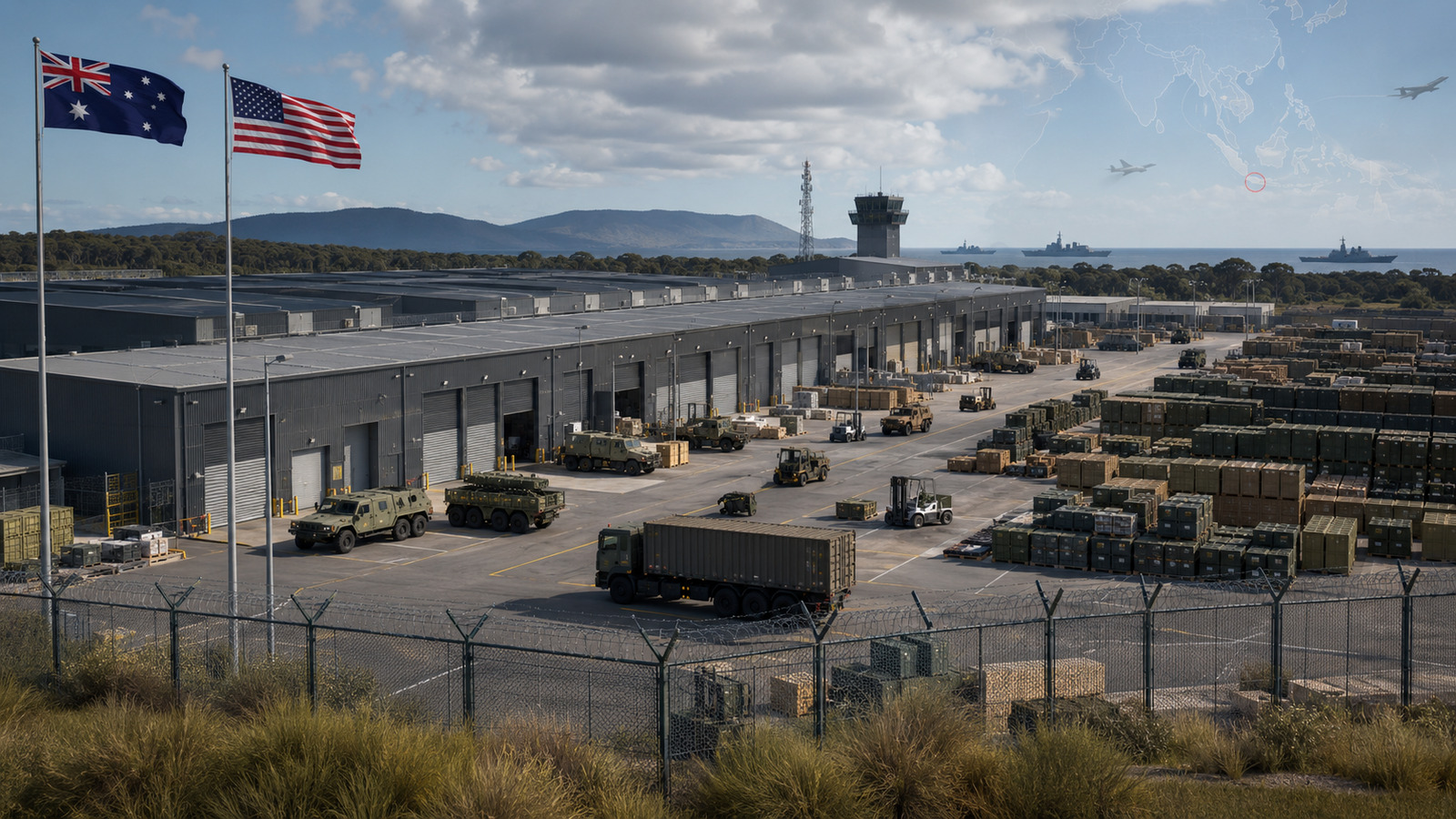
China off the radar: US plans mega $30 million weapons depot in Australia, out of reach of most Chinese missiles, with full capacity expected by 2028



In this scenario, relying on the dollar for all transactions has become a bottleneck. The volatility of the US currency, combined with financial sanctions imposed by Washington on strategic countries such as Zimbabwe and Sudan, has opened the door for China to offer an alternative: settling contracts in local currencies or directly in yuan.
In 2024, this initiative gained momentum with the establishment of financial compensation mechanisms between African banks and Chinese institutions, avoiding the need to go through the SWIFT system — dominated by the West. This model, which resembles a “International Pix”, allows African countries to make instant payments that are cheaper and do not depend on American banks.
Countries That Have Already Joined The Alternative Network
The trend is not limited to one or two countries. Nigeria, Kenya, Ethiopia, and South Africa are some examples of nations that have already signed agreements with China to expand the use of local currencies and the yuan in a portion of their transactions.
In Nigeria, the Central Bank has started to expand swap agreements with the yuan, enabling importers to pay for Chinese goods without resorting to the dollar. In Ethiopia, which is facing a severe external debt crisis, the use of yuan in contracts for Chinese-funded projects has become a way to reduce currency conversion costs.
South Africa, a BRICS member, has even more incentives: in 2023, the bloc announced studies to create a common currency or integrated payment systems, reinforcing the trend that intra-BRICS trade is increasingly distancing itself from the dollar.
The Impact On Global Trade
The distancing from the dollar in Africa may seem, at first glance, limited to the continent. But the impacts are much broader.
Africa is now one of the regions with the fastest population and economic growth on the planet. It is estimated that by 2050, the continent will have 2.5 billion inhabitants and will be key in food production and clean energy.
If African countries consolidate an alternative payment network, the movement could spread to other emerging regions that already have strong partnerships with China, such as Latin America and Southeast Asia. This would mean reducing the role of the dollar not only in small contracts but in entire chains of strategic commodities, such as oil, gas, copper, and grains.
The Reaction Of The United States
It is clear that this movement has not gone unnoticed by Washington. In recent months, American authorities have intensified warnings about the “systemic risk” of de-dollarization, pointing to the expansion of the yuan as a direct geopolitical challenge.
The State Department is closely monitoring the creation of new payment systems outside the western orbit. Although the dollar still accounts for almost 60% of the world’s international reserves and more than 80% of global currency transactions, the gradual erosion of this dominance is concerning.
For the US, China’s advancement in Africa is not just economic. It is also strategic: each contract settled in yuan means less reliance on the American financial system and, consequently, less leverage through sanctions.
The Parallel With The BRICS “Global Pix”
China’s movement in Africa directly relates to another ongoing initiative: the construction of an integrated payment system by BRICS, often nicknamed “BRICS Pay”. This mechanism seeks to facilitate trade among member countries of the bloc without going through the dollar, settling in local currencies or yuan.
In practice, what China is testing in Africa may be a prototype for this broader model. By providing technological infrastructure, creating yuan compensation centers in African cities, and establishing bilateral agreements, Beijing is laying the groundwork for a global network that could expand to dozens of countries in the future.
What Changes For Africa?
For African countries, the main advantage is cost reduction. Today, transactions in dollars incur high banking fees, long timelines, and sanction risks. With alternative systems, settlement is faster and cheaper, encouraging local companies to increase trade with China.
Moreover, financial diversification reduces vulnerability to the dollar. During times of appreciation of the American currency, as occurred in 2022, many African economies were suffocated by dollar-denominated external debts. If part of these obligations can be settled in yuan or local currencies, the pressure decreases.
On the other hand, critics warn that this growing dependence on China could create a new form of vulnerability. Instead of being tied to the dollar, African countries may become excessively reliant on the yuan, strengthening Beijing’s political and economic influence on the continent.
More countries in Africa are indeed distancing themselves from the dollar. And this movement bears the clear mark of China, which, pragmatically, has been offering technological and financial alternatives to accelerate the transition. Although still far from replacing the dollar in global trade, this initiative opens a unique precedent: for the first time, an entire continent may adopt, on a large scale, payment systems led by Beijing.
This process represents much more than just economics. It reflects a competition for financial hegemony and the capacity to shape the international order. If Africa consolidates as the stage for this transformation, the dollar could face one of the greatest challenges in its history — and China, with its “International Pix”, may be about to change the rules of the game.





-

-

2 people reacted to this.