






 Portuguese
  Spanish
  5 min of reading
  0 comments


The French Navy intercepted the Russian tanker Tagor in the Atlantic, linked to the phantom fleet used by Moscow to evade sanctions and finance the war in Ukraine. The captain disobeyed, the ship did not prove its flag and was diverted to a port. Russia classified the seizure as illegal and akin to piracy.
The French Navy boarded a Russian tanker targeted by sanctions over the weekend in international waters of the Atlantic, identified as Tagor, which had departed from the port of Murmansk, in northwest Russia. The announcement was made by President Emmanuel Macron on Monday, June 1, 2026, who framed the action as part of the Western effort to prevent vessels from financing the war waged by Moscow against Ukraine.
According to French authorities, the operation took place more than 740 kilometers west of the tip of Brittany, with support from the United Kingdom. The boarding became necessary because the captain refused to comply with the Navy’s orders and the vessel did not prove its nationality nor displayed a valid flag. The Prosecutor’s Office of the city of Brest opened a criminal investigation, while Moscow reacted harshly, calling the seizure illegal and comparing it to international piracy.
How the Russian tanker was approached in the Atlantic
According to the Atlantic Maritime Prefecture, the Russian tanker was sailing on the high seas when it was intercepted, far from the European coast. According to information from the G1 portal, the operation aimed to verify the nationality of a vessel suspected of using a false flag. An inspection team boarded, examined the documentation, and confirmed the suspicions about the irregularity of the hoisted flag. Therefore, and at the request of the Public Prosecutor’s Office, the ship was diverted to a port.
-
Ukraine launches largest drone attack on Moscow since 2022, Russia claims to have intercepted nearly 200 aircraft near the capital, Kapotnya refinery targeted again, and offensive reignites alert about war reaching the Russian energy heart just a few kilometers from the Kremlin.

-
Truck drivers, freight, and fines from 2022 take center stage in politics: Chamber approves MP with amnesty, mandatory tracking by CIOT, million-dollar penalties, and new minimum wage for those who spend more than 24 hours on the road.

-
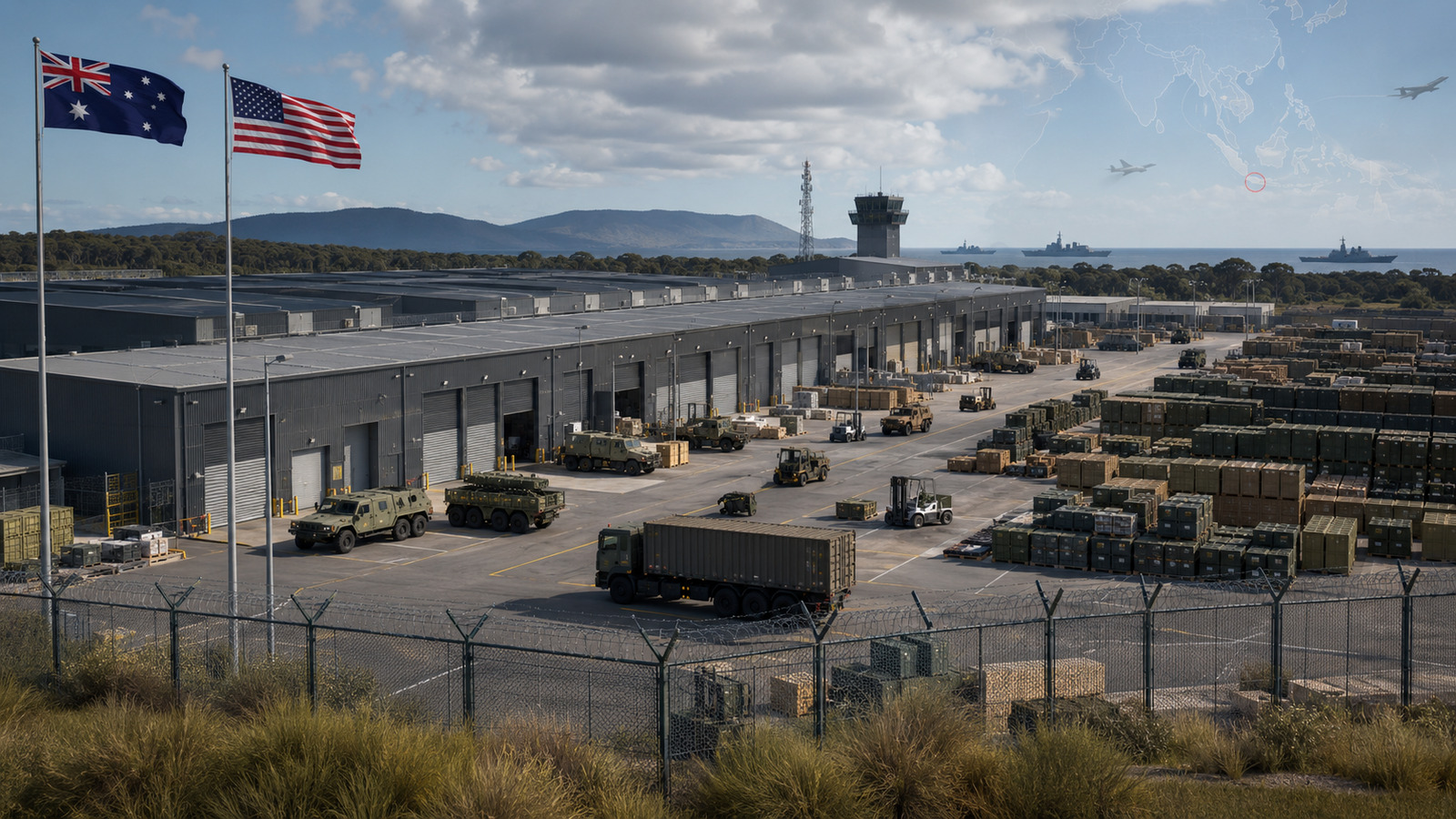
China off the radar: US plans mega $30 million weapons depot in Australia, out of reach of most Chinese missiles, with full capacity expected by 2028

-
Trump’s wall advances at a rapid pace: government promises to complete a barrier of over 3,000 km by 2027 while drones and cartels turn the US border into a new field of technological dispute



In his post on the social network X, Macron stated that the intervention occurred in strict compliance with maritime law and involved the collaboration of several partners, including the United Kingdom. For the French president, it is unacceptable for ships to circumvent international sanctions and help sustain a war that has lasted more than four years. The vessel came from Russia and was destined for Africa, which reinforced the authorities’ suspicion about the tanker’s route and documentation.
Criminal investigation and the captain’s refusal
The Brest Prosecutor’s Office reported that the vessel was intercepted precisely because the captain refused to obey the instructions of the French Navy. Based on this, a criminal investigation was opened for lack of proof of the ship’s nationality, absence of a flag, and disobedience to orders. According to prosecutor Stéphane Kellenberger, taking control of the vessel became necessary due to the refusal to cooperate.
The commander, in turn, declared himself to be of Russian nationality, according to the French Public Prosecutor’s Office. The Russian embassy in Paris stated that it had requested information from the French authorities about the possible presence of Russian citizens among the crew but said it had not yet received a response. This point is likely to gain weight as the investigation progresses, as it directly involves the diplomatic relationship between the two countries.
Moscow’s reaction: illegal and on the verge of piracy
The Russian response was immediate and harsh. Kremlin spokesman Dmitry Peskov described the seizure of the Russian tanker as an illegal act, which, according to him, was bordering on international piracy. Peskov added that Russia is taking measures to ensure the safety of its cargo, without detailing what those measures would be.
Moscow’s interpretation contrasts sharply with that of Paris. While France maintains that it acted within international law and at the request of the judiciary, the Russian government treats the operation as a violation of freedom of navigation. This clash of narratives summarizes the legal impasse surrounding the interceptions: on one side, the argument that sanctions need to be practically applied; on the other, the claim that high-seas approaches exceed legal limits.
The phantom fleet and the western naval blockade
The Tagor is identified as part of the so-called phantom fleet, a network of old tankers, often registered by shell companies and under flags of convenience, allowing Russia to continue exporting oil despite sanctions. Estimates from maritime broker Clarksons indicate that there are about 1,500 ships associated with this system worldwide, of which between 300 and 600 are linked to Moscow. Experts also warn of the environmental risk, as many of these vessels are old and operate without adequate insurance.
The seizure is also not an isolated case. France had already intercepted other tankers in recent months, such as the Grinch in January and the Deyna in March, and both Paris and London have promised to make it difficult for these ships to pass through their waters. British Prime Minister Keir Starmer even authorized in March for UK military personnel to board vessels of the phantom fleet. Even so, navigation data shows that dozens of sanctioned ships continue to cross British waters, highlighting the scale of the challenge.
Seizure occurs amid new escalation with NATO
The interception of the Russian tanker occurs at a time of growing tension between Russia and the West. On the previous Friday, May 29, the crash of a Russian drone on a residential building in the city of Galati, Romania, left two people slightly injured and caused a fire. Being a member of NATO and the European Union, the country treated the episode as a serious escalation: it mobilized F-16 fighters, summoned the Russian ambassador, and convened its defense council under the presidency of Nicusor Dan.
The international reaction was widespread. NATO condemned what it called Russian irresponsibility and indicated that Romania could trigger the alliance’s security consultation mechanisms. The President of the European Commission, Ursula von der Leyen, stated that Moscow had crossed another line and announced the preparation of the 21st sanctions package against Russia. Putin, on the other hand, denied responsibility for the attack and challenged Romania to hand over the drone wreckage for a possible investigation, further fueling the climate of distrust.
The Tagor episode highlights a dispute that goes beyond a single ship: how far Western countries can go to enforce sanctions at sea, and where, in Moscow’s view, the violation of international law begins.
Tell us in the comments if you consider the seizure of the Russian tanker a legitimate measure of pressure against the war or if you agree with Russia that the operation borders on piracy.


Be the first to react!