






 Portuguese
  Spanish


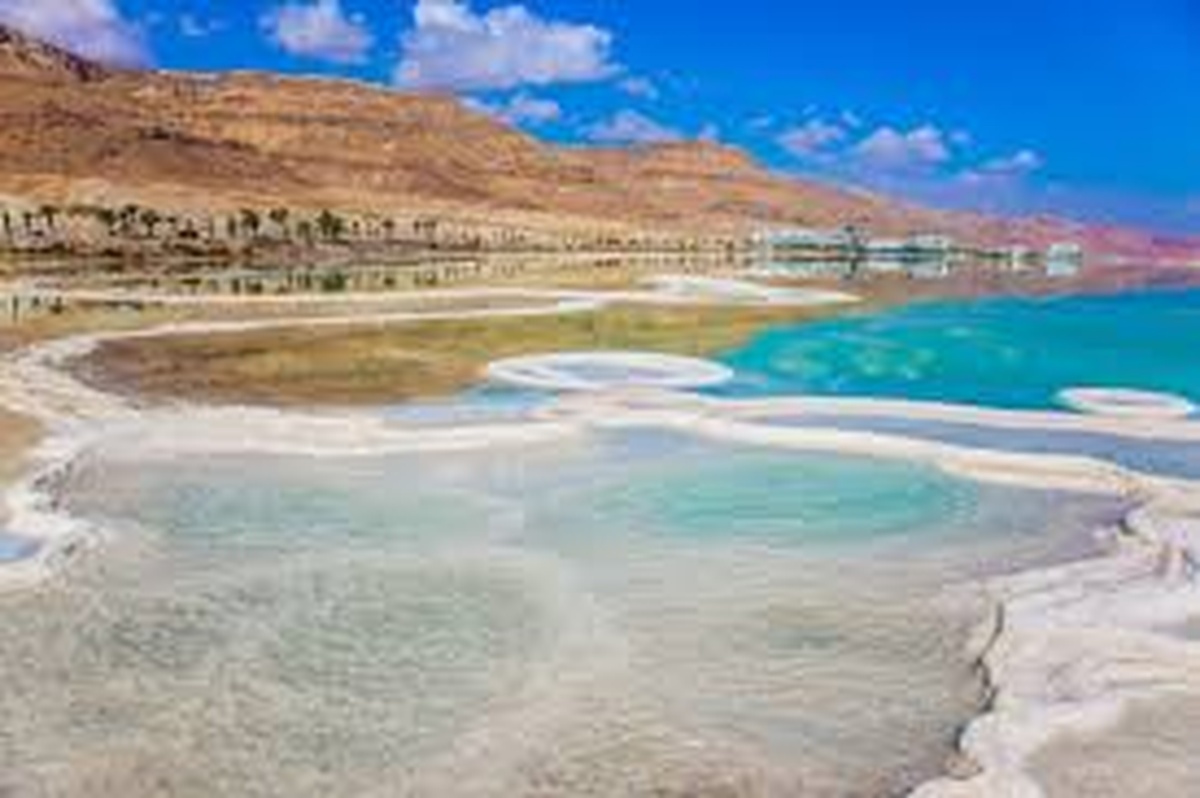


Understand Why The Dead Sea Is Considered One Of The Saltiest Bodies Of Water On The Planet And Why Its Name Still Provokes Historical And Religious Questioning
The Dead Sea has returned to the center of international discussions. It is one of the saltiest bodies of water in the world. Its extremely high salinity has always sparked scientific and cultural curiosity. For decades, it was believed that no form of life could thrive in its waters. However, this interpretation does not summarize the whole story.
Why Is The Dead Sea Named This?
First, the name Dead Sea is directly related to its very high salt concentration. Consequently, for a long time, the location was associated with a total absence of life. Still, this perception has been culturally consolidated over the centuries.
Moreover, since the 20th century, scientific analyses and academic records have begun to describe the environment as extreme. According to studies widely published in geography journals, the salinity level of the Dead Sea ranks among the highest on the planet. Therefore, the idea that it would be impossible to sustain life gained historical strength.
-
Former Atacadão Employee Turns Online Cake-Baking Lessons into a Confectionery Brand with Factory, Store, Delivery, and Nearly $400,000 in Revenue

-
Brazilian Startup Sells Nearly 9 Million Surprise Bags of Near-Expiry Food, Prevents Thousands of Tons of Waste, Aiming for $42 Million Revenue by 2026
-
How to Prevent Brown Recluse Spider Bites: Common Hiding Spots and Free Tips to Reduce Risks

-
Natto: The Unusual Japanese Superfood Gaining Popularity on Social Media and Driving Record Exports





Extreme Salinity And The Perception Of Absence Of Life
On the other hand, although the environment is considered hostile, the narrative of “absolute deadness” was built primarily based on the difficulty of survival in highly saline waters. Thus, the term “dead” became symbolic, representing the biological limitation imposed by salinity.
Consequently, the reputation of the Dead Sea has crossed borders. Over the decades, it has been described as a unique natural phenomenon. Still, the literal interpretation of the name has not always matched the scientific reality.
Historical References And Interpretations
In addition to the geographical explanation, religious readings have emerged. In this context, the Dead Sea has also been associated with biblical references. Specifically, the prophet Ezekiel, in the Old Testament, mentioned scenarios linked to the so-called “End of Days.”
Thus, throughout history, part of popular imagination connected the location to omens and symbols. However, it is important to highlight that these interpretations belong to the religious realm. Therefore, they do not constitute scientific consensus.
Still, historically, these associations have increased global interest in the Dead Sea. Thus, it has been analyzed both from an environmental perspective and from cultural and theological viewpoints.
What Does It Mean To Say That The Dead Sea Is “Waking Up”?
At the same time, the idea that the Dead Sea is “waking up” should be understood as an interpretative expression. That is, it is a metaphor indicating the renewed debate about its historical, scientific, and symbolic significance.
Therefore, there is no promise of an extraordinary phenomenon. On the contrary, what exists is the reopening of already known discussions, now revisited under new analyses and questioning.
Finally, when asking “What does this mean for the world?”, the answer involves multiple dimensions. On one side lies the scientific perspective. On the other, the cultural and religious aspect remains. Thus, the Dead Sea continues to be a point of convergence between science, history, and belief.
Which Interpretation Of The Dead Sea Remains Most Consistent When Observed With Rigor And Balance?







