






 Portuguese
  Spanish


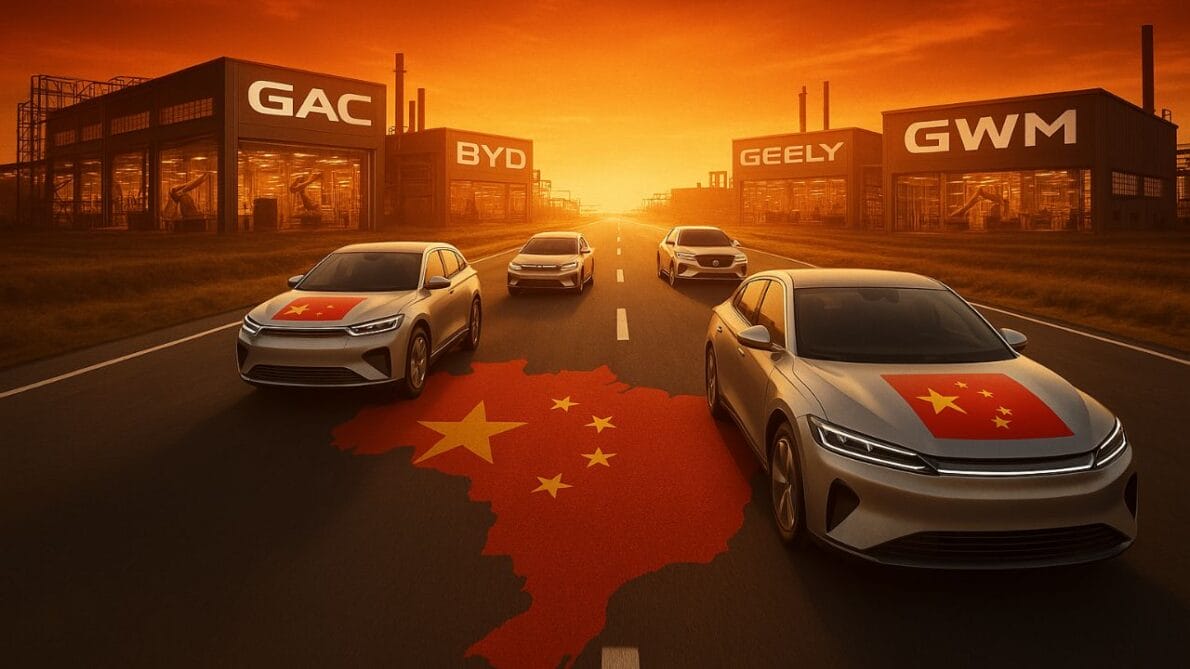

GAC, BYD, Geely, and GWM Lead Movement of Chinese Brands Heavily Investing in the Brazilian Automotive Market
The Brazilian automotive market is undergoing an accelerated transformation with the arrival and strengthening of Chinese brands investing in local production, launching electric models, and expanding service networks. With names like GAC, BYD, Geely, and GWM, the country is becoming a strategic hub for these automakers, bringing technological innovation, modern design, and competitive prices. The information comes from Rádio Tupi, with data confirmation from outlets like O Globo and Folha de S.Paulo.
GAC Motor Invests R$ 5.7 Billion to Establish Itself in Brazil
GAC Motor, one of the Chinese giants in the automotive industry, announced an investment of R$ 5.7 billion over five years to establish a complete factory in Brazil. According to Rádio Tupi, the facility will be responsible for producing combustion, hybrid, and fully electric vehicles.
The brand will initially bring its electric division Aion, highlighting models like the Y Plus and the Hyptec HT, positioning itself as a national alternative to imported electric cars.
-
2027 Toyota Corolla Cross Unveiled: New Design, Enhanced Fuel Efficiency, Reduced Maintenance Costs, Advanced Technology, Connected Services, and Up to 10-Year Warranty

-
Fiat Cronos Precision 2018: Affordable Sedan with Spacious Trunk and Reliable Maintenance
-
Volkswagen to Cut Production by 1 Million Cars by 2030, Reducing Jobs and Platforms, Focusing on More Profitable Models

-
Toyota Launches First 100% Electric Car in Brazil: bZ4X with 343 HP, All-Wheel Drive, 361 km Range, Priced at $419,990 BRL, Limited to 99 Units



BYD Expands with Luxury Brand and Local Production


Already established in Brazil, BYD expands its presence with the arrival of the Denza brand, aimed at the premium segment. Models such as the hybrid SUV Bao 5 and the electric sports car Z9 GT are planned.
According to a report published by O Globo, BYD will start local production of electric vehicles in 2025, which is expected to reduce costs, boost sales, and consolidate the company’s leadership in the national electrified segment.
Geely Arrives in the Country with Support from Renault
Geely, which already operates indirectly in Brazil through Volvo and Zeekr, has confirmed it will bring its own brand to the country. According to Rádio Tupi, the automaker has formed a partnership with Renault, utilizing its manufacturing and dealership structure to launch hybrid and electric models under the Geely banner.
The joint strategy aims to accelerate market entry time and optimize operating costs.
GWM Starts Operations in Iracemápolis with Hybrid Haval
Another Chinese brand making a strong bet in Brazil is Great Wall Motors (GWM). The automaker announced that its factory in Iracemápolis (SP), acquired from Mercedes-Benz, will officially open in May 2025.
According to O Globo newspaper, the first produced model will be the hybrid Haval H6, with a launch expected in the second semester. GWM also promises to bring 100% electric models by 2026.
A New Scenario for the Automotive Sector with the Entry of Chinese Brands
The massive entry of these Chinese brands into Brazil is reshaping the automotive landscape. In addition to offering more options to consumers, these automakers are pressuring traditional brands with more competitive prices and cutting-edge technology, especially in the hybrid and electric segments.
This movement reinforces the trend toward energy transition and positions Brazil as a new center of interest for Asian manufacturers, who already dominate the global electric vehicle market.








