Portuguese
  Spanish


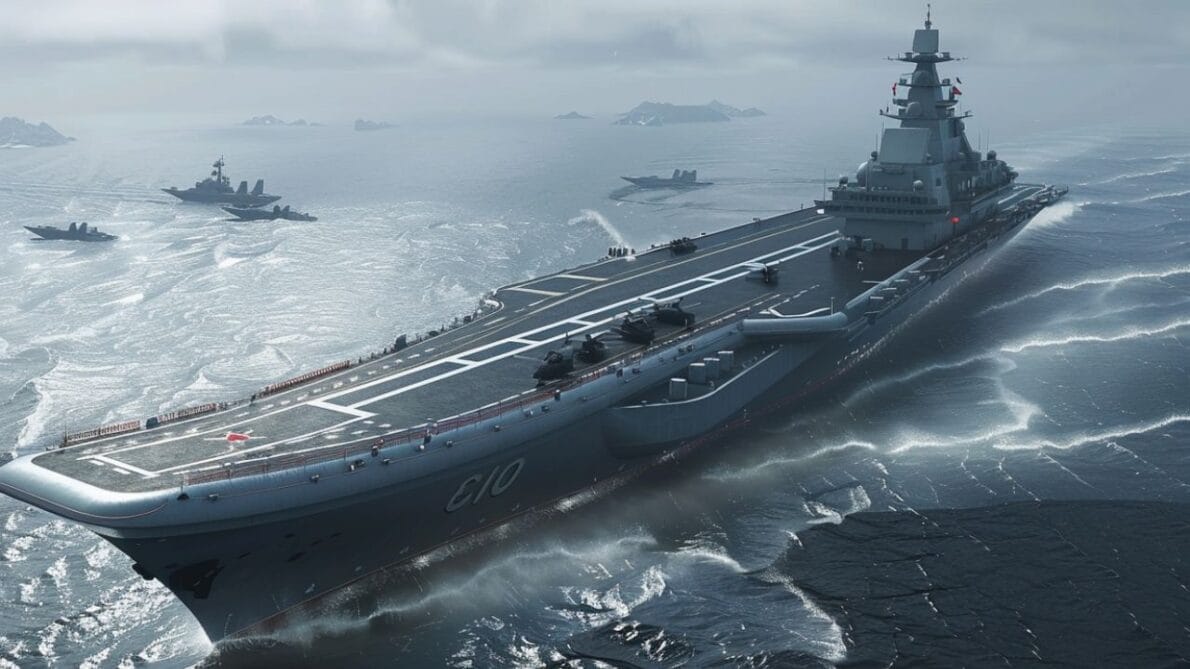

The Type-003 Aircraft Carrier “Fujian”, with its advanced electromagnetic catapult technology and innovative design, symbolizes a qualitative jump for the Chinese Navy, positioning it as a direct competitor to the naval capabilities of the United States.
In a striking demonstration of technological and strategic advancement, the Chinese Navy presented the Type-003 aircraft carrier “Fujian” a year ago, establishing a new standard in its naval capability. This super aircraft carrier, which is comparable in size and capability to the giants of the United States’ Ford class, is the third and most sophisticated ship of its kind in the Chinese fleet.
Equipped with state-of-the-art electromagnetic catapults and designed with innovations that reflect decades of development and research, the “Fujian” not only expands China’s power projection at sea but also serves as a central pillar in its strategy to become a military superpower by 2030. With the launch of this aircraft carrier, China reaffirms its commitment to military expansion and strategic presence in the contested waters of the South China Sea amidst rising regional and global tensions.
The “Fujian” Aircraft Carrier Represents the Pinnacle of Naval Modernization of the Chinese Navy
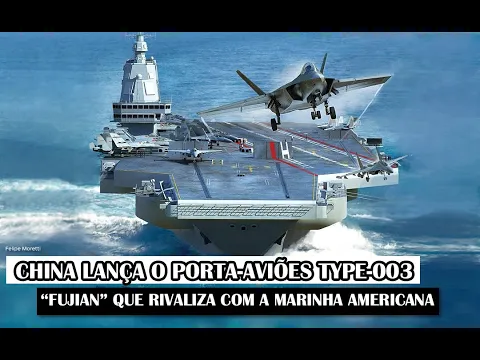

With the use of electromagnetic catapults (EMALS), the aircraft carrier can launch aircraft more quickly and efficiently than traditional steam systems. This system not only reduces wear on aircraft but also allows for a greater variety of missions due to the capability to launch heavier, fully equipped aircraft.
-
They exchanged the idea of a large house for a 35 m² warehouse, spent US$ 12,000 on the structure, and created a tiny house in Colorado with space to live and work.

-
While modern cities rely on pumps and electricity, in Iran, ancient tunnels carried water through the desert using only slope and gravity.
-
Instead of sending families far from the city, a project in Chile intentionally created incomplete houses on expensive urban land and left technical space for each to grow.
-
General Motors Replaces Over a Thousand Workers with 50 Cobots at Electric Vehicle Plant, UAW Union Criticizes Move Amid Industry’s Automation Push


The design of the “Fujian” is an evolution of its predecessors, incorporating features of super aircraft carriers with a series of technological improvements. Equipped to operate the new J-35 fighter, the Chinese version of the F-35C Lightning II, the “Fujian” substantially enhances the combat and air defense capabilities of the Chinese Navy.
In addition to being a power projection platform, the “Fujian” is also a symbol of China’s growing military and economic power, which seeks to achieve global supremacy by the centennial of the People’s Republic in 2049. The aircraft carrier is seen as a crucial component in transforming the Chinese Navy into a blue-water force capable of global operations, directly challenging the maritime hegemony of the United States.
The Expansion of Support Infrastructures
To support its long-range operations, the Chinese Navy has been expanding its naval bases in the South China Sea, such as those in Sanya and Yulin, which are being equipped to accommodate and maintain its growing aircraft carrier strike groups. The enhanced infrastructure includes expanded dry docks and upgraded air bases, essential for the logistical support of naval and aerial operations.
With the “Fujian” now operational, China not only reinforces its military presence, but also establishes a new standard for future developments. Analysts predict that the next generation of Chinese aircraft carriers may include nuclear propulsion, further increasing the range and combat capability of future Chinese naval strike groups.