Portuguese
  Spanish


The McDonald’s ice cream machine is made by Taylor, has a cleaning cycle that locks with difficult error codes, and for a long time only authorized service could fix it, an arrangement that became a flag for the right to repair
It became a worldwide joke: you arrive at McDonald’s craving ice cream and hear the classic phrase, “the machine is broken.” But behind this joke lies a story of engineering and money. The McDonald’s ice cream machine is not out of order by chance, and the explanation involves a complicated design, a single manufacturer, and a maintenance model that many call abusive.
Almost all of these machines, which prepare the cone, milkshake, and McFlurry, come from a single American company, Taylor. The device has such a demanding cleaning cycle that it locks itself, displays messages on the screen that the average employee cannot decipher, and for years, only authorized service could unlock it, which turns each defect into an expensive and time-consuming call.
Why McDonald’s ice cream is often unavailable
The problem is rarely that the device is actually broken. Most of the time, the device simply goes into lock mode after a failure in an internal process and refuses to function until someone qualified releases it. For the customer, “broken” and “locked” mean the same: no ice cream.
-
Brazilian Driver Accidentally Becomes Millionaire for 7 Hours, Returns $25 Million and Now Seeks $2.5 Million Reward in Court

-
WD-40’s Secret Formula: How a $620 Million Business Thrives Without a Patent

-
Lonely? This Chinese humanoid robot with soft skin and AI offers 24/7 conversation and stress detection.

-
Advanced Crash Test Dummies with Fake Bones and Organs Can Cost Up to $1 Million, Mostly Produced by U.S. Firm Humanetics


This behavior stems from the way the equipment was designed. The machine prioritizes food safety in such a strict way that, at the slightest deviation, it shuts down as a precaution, even when the cream would be perfect. The result is a powerful device in the factory, but fragile in operation, frustrating employees and customers all the time.
A cleaning cycle that locks everything
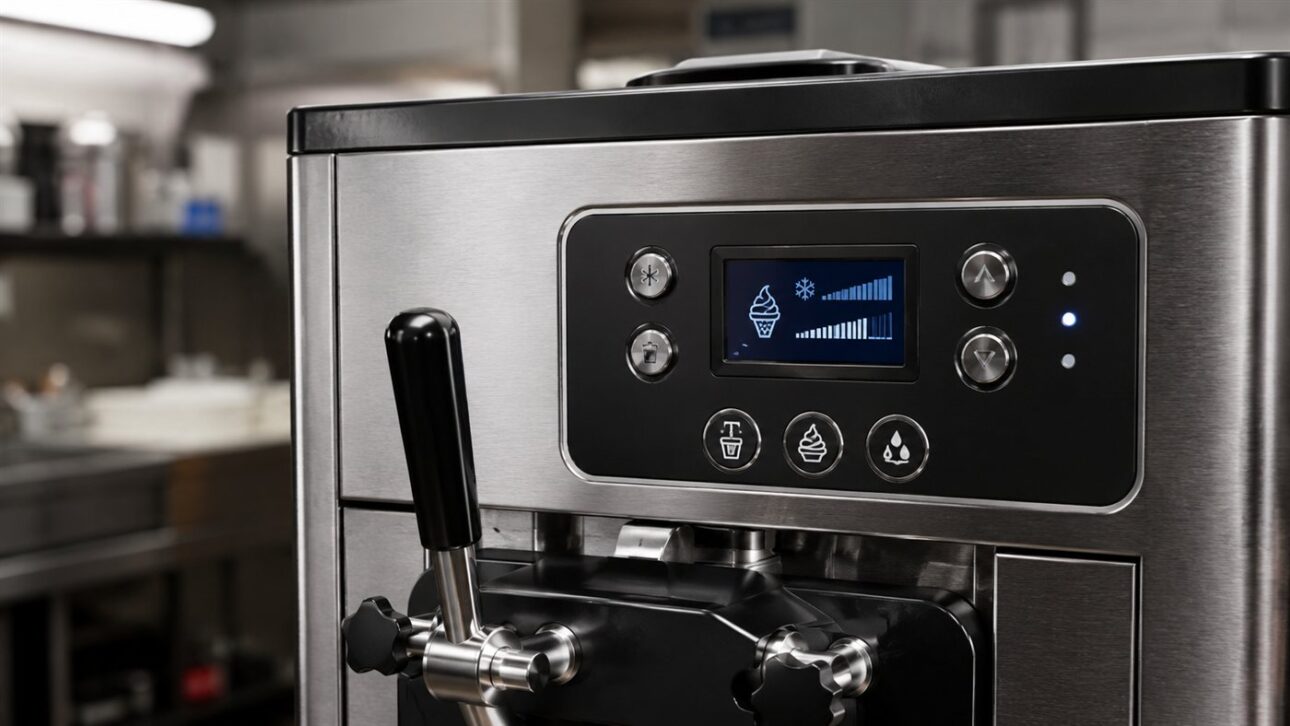
The heart of the problem is sanitation. To avoid contamination, the equipment goes through a long cycle of heating and pasteurizing the cream, which usually runs overnight. According to Hackaday, the device has “a pasteurization element that should keep the already dispensed cream safe for use the next day,” and it is during this heating that many errors appear on the screen.
Since this procedure runs at night, the team often only discovers the failure the next morning, with the machine already locked. A single unsuccessful cleaning cycle can leave the ice cream unavailable for an entire day, until the problem is resolved. It’s an engineering that prioritizes sanitary standards over availability.
Error codes that lock the device
When something goes out of parameters, the panel shows a code. A technical guide from the parts supplier Parts Town explains that “these fault code instructions apply to ice cream models C602, C712, and C713,” exactly the line of machines present in McDonald’s stores. These are messages like “BEATER OVERLOAD” or “BARREL THERMISTOR FAIL,” which are not very intuitive for those at the counter.
In practice, those serving do not know if the defect is minor or serious. Without understanding the error code on the screen, the manager often has no choice but to call for assistance, even for a simple failure. It was this difficulty that opened the space for a famous commercial dispute.
Only authorized assistance could repair
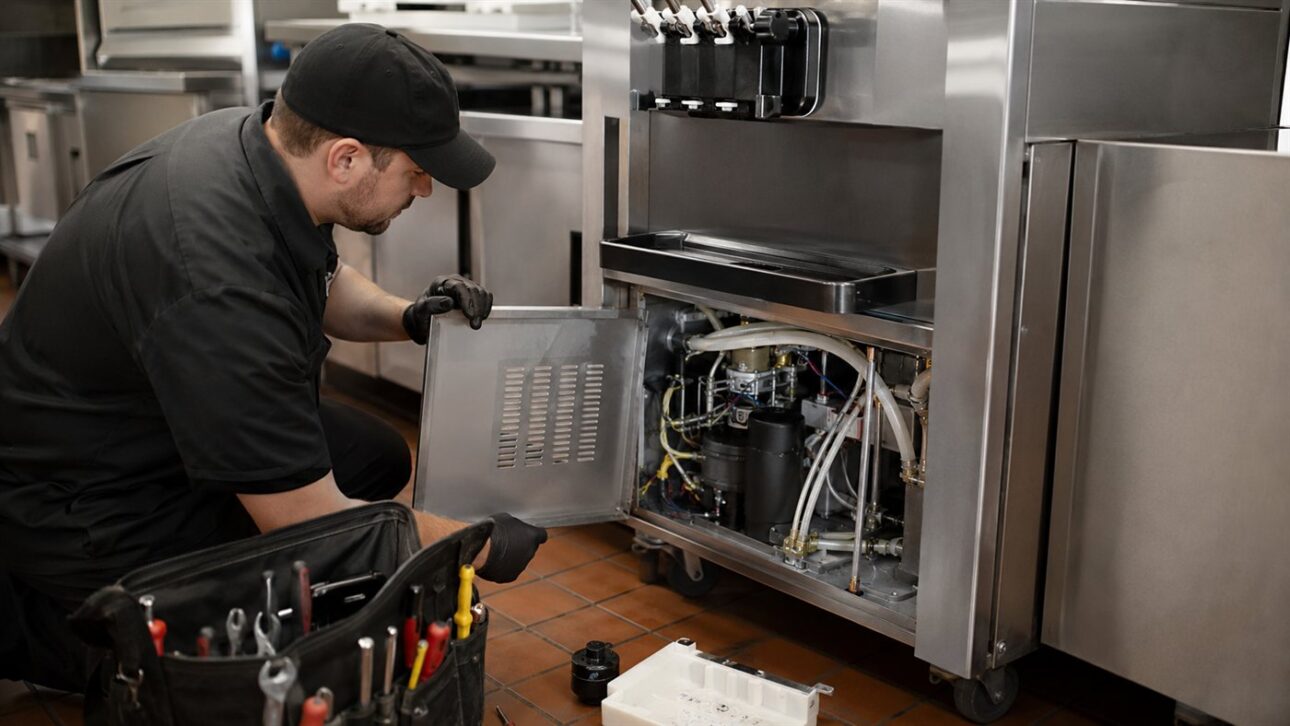
Here is the point that generates the most outrage. For a long time, only those with the manufacturer’s certification could access the protected service menu and unlock the machines, and each visit is costly. The restaurant owner could not simply repair their own equipment, being tied to an external service.
Critics point out that this arrangement creates a perverse incentive: the more the device locks, the more is earned from maintenance. Turning repair into an exclusive service ensures recurring revenue but traps the customer in a dependency relationship, the model that the right to repair movement fights against. This McDonald’s device became the perfect symbol of this battle.
The manufacturer and the position of almost sole supplier
The strength of the model lies in its scale. Thousands of McDonald’s stores operate with the same equipment from the same brand, which concentrates enormous power in a single manufacturer. When practically an entire global network uses your machine, you don’t just sell the device: you also sell all its maintenance for many years.
The manufacturer itself has changed hands several times over the decades. As Hackaday notes, “the Taylor Company has been repeatedly bought and sold to other companies since 1967,” and today it belongs to the Middleby group. The change of ownership did not alter the business logic: whoever controls the software controls the repair, and the repair is where the money accumulates.
The startup Kytch and the friction with the manufacturer
The commercial tension became public when a small company called Kytch created a device that connected to the machine, translated the panel messages into simple language, and allowed owners to monitor and, in many cases, unlock the equipment themselves. It was a quick success among franchisees tired of expensive service calls.
The reaction was harsh: the network warned franchisees that the accessory could void the warranty. Kytch took the case further, alleging unfair competition, and the commercial dispute exposed to the general public what was behind the joke of the machine being out of order. The episode showed that the bottleneck was not just technical, it was a revenue model built around repair.
The right to repair changes the game in 2024
The controversy gained institutional weight. In 2024, the United States Copyright Office allowed third parties to bypass the software locks of these devices and legally repair them. According to Hackaday, the permission “is not specific to McDonald’s, it applies to retail food preparation equipment in general, which includes ice cream machines.”
The change recognizes that the owner of equipment should be able to repair it instead of being held hostage by the manufacturer. Still, Hackaday itself notes that franchisees are probably not going to “pick up screwdrivers,” but rather use the rule to lower the cost of service contracts. The ice cream machine saga has become an emblematic case of a larger discussion, involving cell phones, tractors, cars, and almost every modern device filled with software.
Why an ice cream became a symbol of the right to repair
In the end, the story of this McDonald’s machine shows how an apparently silly problem hides serious issues of technology, market power, and consumption. A device that locks itself and for years only the manufacturer could unlock is the portrait of a model that many people want to change.
The next time you hear that the machine is broken, it’s worth remembering that maybe it’s not exactly broken, but rather locked by a system designed that way. Shouldn’t the customer and the business owner have the right to simply unlock what is theirs?