The American Avery Dennison was born from the self-adhesive label created by Stanton Avery in 1935, leading labels and barcodes in more than 50 countries and becoming a reference in smart labels that track products and clothing
You peel off dozens of stickers a week without thinking: the price on the package, the seal on the fruit, the tag on the new clothes, the label on the spice jar. Almost all use a technology invented by a man in a Los Angeles workshop in 1935. The largest label manufacturer in the world was born there and has dominated this silent market for decades.
The story begins with a simple and brilliant idea. According to Avery Dennison, it all started in 1935 with a few used parts, a brilliant idea, and a $100 loan. That’s how Ray Stanton Avery set up, in a downtown Los Angeles workshop, the first machine that produced labels that already came with glue and only needed to be peeled and stuck, without wetting anything. From that invention, an empire was born that generates $8.8 billion a year and operates in more than 50 countries.
How the largest label manufacturer conquered the world
The secret was turning a small detail of commerce into a universal necessity. Before the self-adhesive label, sticking a label required liquid glue, a brush, and patience, a messy and slow process. The new label, which peels off a waxed paper and sticks instantly, changed everything.
-
Amazon Fish Mimics Floating Leaf to Evade Predators and Catch Prey Effortlessly

-
A Tiny Belgian Village Factory Produces Nearly 80% of the World’s Billiard Balls Using a Secret Resin for Decades-Long Durability

-
Glacier Express: The World’s Slowest Train Offers Spectacular Views of the Swiss Alps, Crossing 291 Bridges and 91 Tunnels Over 219 km
-
Asian fruit related to lychee gains popularity on a São Paulo farm, attracting attention for its sweet taste and unique appearance, turning a little-known crop in Brazil into a distinctive rural investment.




With the growth of retail, packaging, and logistics, demand exploded. Every product sold needs a label, price, information, and identification, and that means billions of units per day, on a global scale. The company knew how to lead this wave from the beginning, dominating not only the final product but also the adhesive material that other manufacturers use as well.
The invention that dispensed with wet glue
The clever trick of Stanton Avery was the pressure-sensitive adhesive. Instead of a glue that needs to dry, he created a material that sticks only with the pressure of a finger and stays attached to a base until it’s time to use it. It’s the same principle as any modern adhesive that you peel and stick.
This technology seems trivial, but it solved a huge practicality problem. Peeling and sticking has become such an automatic gesture that no one notices the engineering behind it, with layers of adhesive, silicone paper, and materials calculated to stick just right. The original name of the business, Kum Kleen, already promised to remove the label without leaving a mark.
The adhesive that became invisible infrastructure
After conquering the label, the adhesive spread to everything. It’s on the warranty seal, the seal, the shipping label, the wall sticker, the price tag, and even in medical and industrial applications. It’s a material that became the invisible infrastructure of consumption.
This variety of uses gave the company a gigantic and diversified customer base. When a product needs to communicate anything through a stuck-on label, it’s very likely that the material comes from the same source, even with different brands on the front. It’s the same logic as other hidden giants: dominate the input and let the customer appear.
Barcode, price, and label
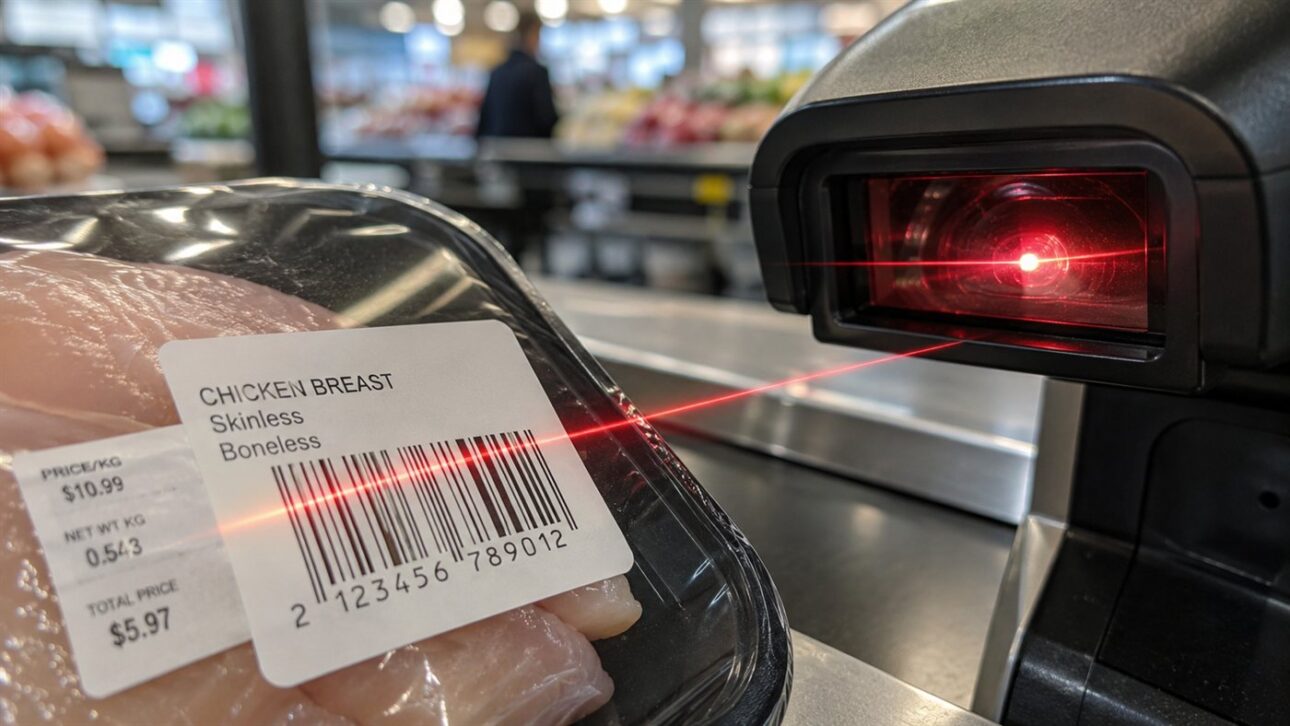
A decisive use was the barcode. The labels that carry those black stripes, read by scanners at supermarket checkouts worldwide, depend on high-quality self-adhesive material that doesn’t peel off or smudge. Without this, modern automated retail wouldn’t function.
The same goes for price tags, expiration dates, and tracking in warehouses and shipping companies. Global logistics, which moves billions of packages, relies on a label stuck on each box, saying where it goes and what’s inside. A simple adhesive became a central piece of how the world buys, sells, and delivers, and those black stripes were the trigger for this shift.
The label that became a chip: RFID
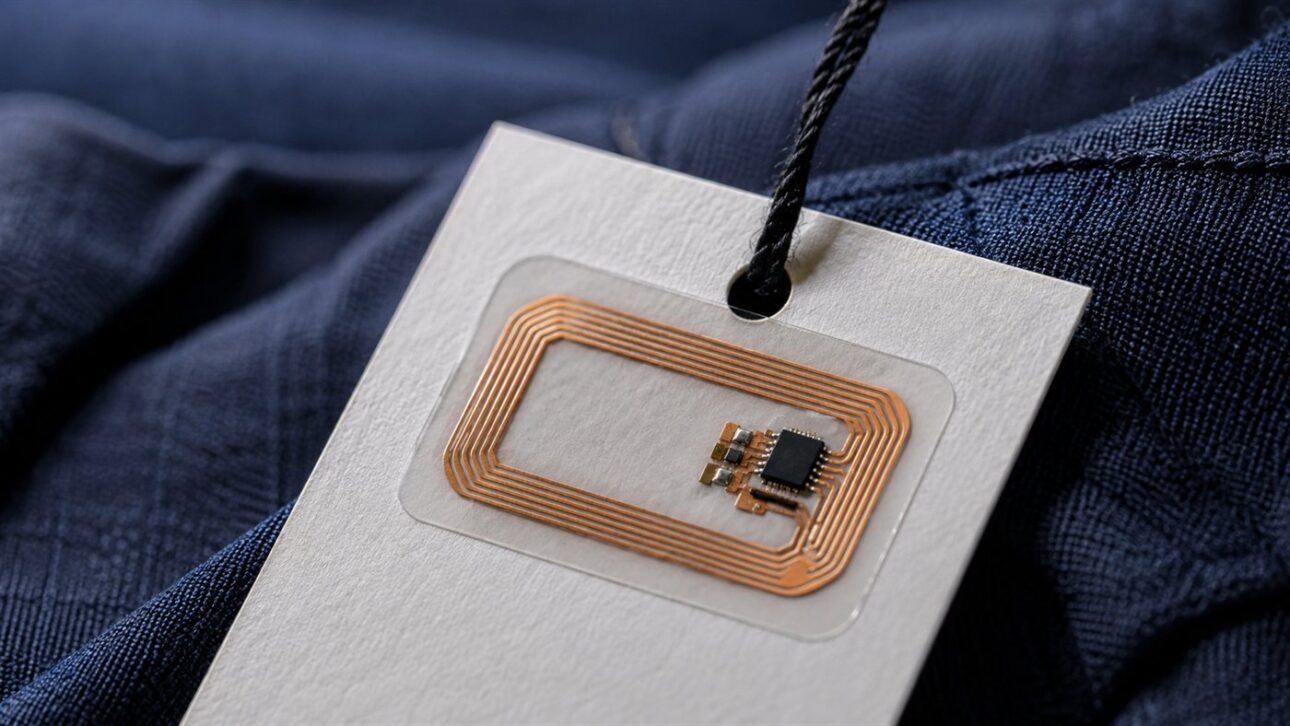
The most advanced frontier of the sector is smart labels. The company is one of the references in RFID tags, small chips embedded in adhesives that allow identifying and tracking a product by radio waves, without needing to pass through a nearby reader.
This is transforming clothing retail and inventory control. In the 2024 financial results report, published on the official Avery Dennison website, the company describes its solutions as inlays and radio frequency identification tags that connect the physical world to the digital. Every t-shirt in a modern store can carry a tag that knows where it has been and where it is going, a leap from the paper sticker to the digital memory sticker. The old label has become information technology.
Billions in revenue and presence in over 50 countries
The numbers confirm the size of the business. According to Avery Dennison, the annual revenue was 8.8 billion dollars in 2024, with an increase of 4.7%, and the company employs about 35,000 people in more than 50 countries, divided between the production of adhesive materials and identification solutions for retail and industry.
Few imagine that labels move so much money. But it is a market that grows along with consumption, logistics, and e-commerce. The more the world buys, packs, and ships, the more labels it consumes, and this constant tide sustains the industry leader. The adhesive is cheap per unit, but summed up by billions, it becomes one of the most solid and silent businesses that exist.
Why the label is a key part of retail
The label does much more than decorate packaging. It informs price, validates, identifies, tracks, and connects the physical product to the store’s digital system. Without this link, the checkout doesn’t beep, the inventory doesn’t match, and the order gets lost. It is a small component with a critical function.
Therefore, a failure in the label can halt an entire retail or logistics operation. Entrusting this essential piece to someone who has mastered the technology for almost a century is a decision of efficiency, not detail, and explains the loyalty of major brands. The label has become infrastructure as vital as it is invisible in modern commerce.
Why a sticker changed commerce
In the end, the trajectory of the largest label manufacturer shows how a discreet invention can reorganize the entire economy. The banal gesture of peeling and sticking a label, repeated billions of times a day, supports retail, industry, and logistics worldwide.
It’s another case of a giant hidden behind the obvious, born from the simple idea of dispensing with wet glue. Next time you peel off the price from a package or the label from clothing, remember the workshop of 1935 where it all began. Did you imagine that such a common sticker held such a big story?