Portuguese
  Spanish


The German Heidelberg, founded in 1850, is the world leader in sheetfed offset presses with more than 40% of the market and maintains, in the city of Wiesloch, what is considered the largest press factory on the planet
Look at the box of any product in your kitchen, at the label of a jar, or at a magazine on the newsstand. It is very likely that all of this was printed on a machine from the same German company that almost no one outside the industry knows. The largest manufacturer of printing machines in the world is a German company that silently dominates a large part of everything printed on the planet.
The numbers explain its significance. According to Heidelberg, the company is “the leading supplier of sheetfed offset machines, with a market share of over 40 percent.” It is the hidden giant behind packaging, posters, books, and labels you see every day.
How the largest manufacturer of printing machines became invisible
The reason for the invisibility is simple: the German company does not sell to the end consumer, but to printing companies. When you buy a packaged product or flip through a magazine, you don’t see the machine that printed it, only the result. The brand remains hidden one link back, on the factory floor of printing companies worldwide.
-
Rare Phenomenon in Brazil: Hundreds of Spiders Appear Suspended in the Sky, Astonishing Residents with Giant Webs

-
After 53 Years, the U.S. May Reopen Skies to Supersonic Passenger Jets, but Success Hinges on Quiet Technology and Overcoming Challenges That Grounded the Concorde

-
China Overhauls Universities, Cuts 12,200 Outdated Courses to Focus on AI, Robotics, and Chips as 12.7 Million Young People Enter Workforce
-
Goodbye Wireless Earbuds: Gen Z Brings Back Wired Headphones as a Trend in 2026




But it is precisely this link that supports the entire printing industry. Without high-precision presses, there is no colorful packaging, clear label, or well-finished magazine, and a large part of these machines comes from the same German source. The German leader in the sector is one of those essential suppliers that drive entire sectors without ever appearing to the public.
More than 40% of all offset presses in the world
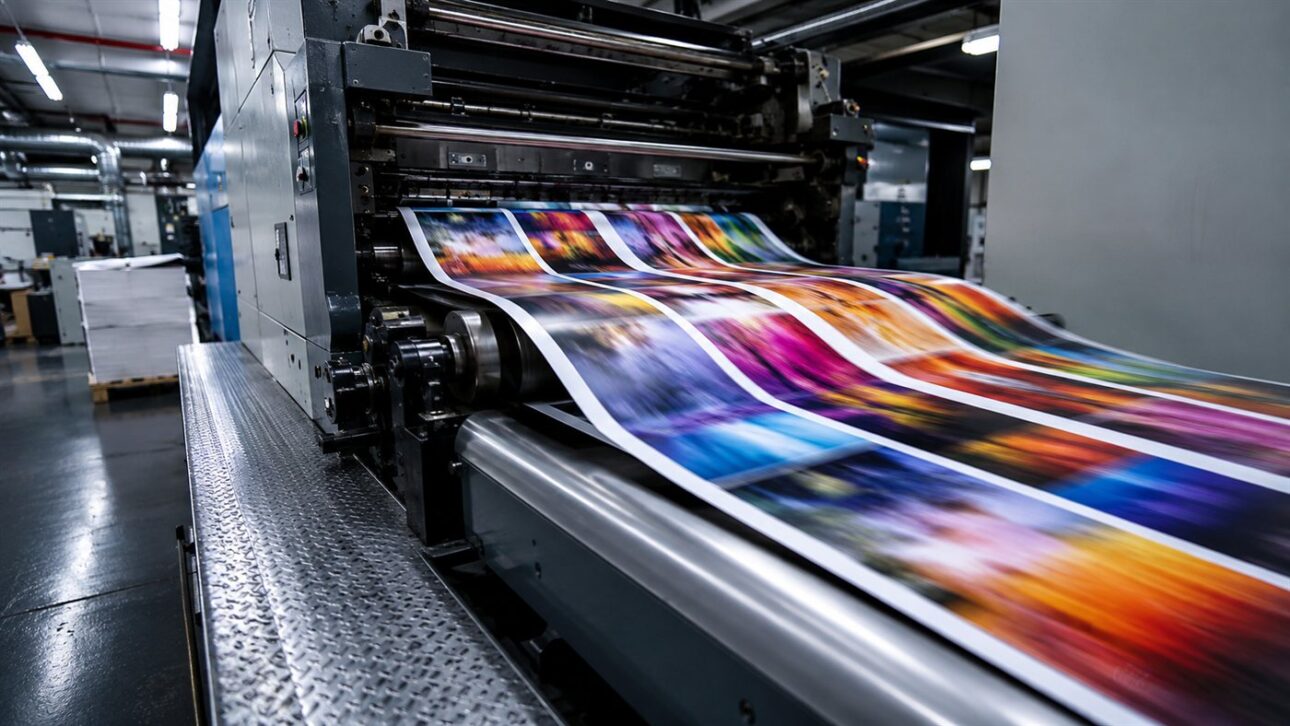
Dominating more than 40% of a global market is an enormous concentration. It means that a good portion of the planet’s professional printing houses print on equipment from the same brand, which gives the company tremendous power to set technical standards and the pace of innovation in the sector.
This leadership was built over more than a century and a half of specialization. Manufacturing a press capable of printing thousands of sheets per hour, with perfect color registration, is a highly precise engineering, mastered by very few companies. Large-scale offset printing has practically become synonymous with this manufacturer’s technology.
What is offset printing and why it dominates
The technique that sustains this empire is called offset. In it, the image is transferred from a plate to a rubber cylinder and only then to the paper, which ensures very high quality and allows printing large volumes at a low cost per unit. It is the method behind almost everything that is mass-printed.
Being fast and cheap on a large scale, offset printing dominates packaging, magazines, newspapers, books, and advertising material. When it’s necessary to print millions of identical and well-made copies, offset is still unbeatable, and the machines that do this best bear the signature of the German leader. The modern printing industry was built on this combination of speed and quality.
The factory that is considered the largest on the planet
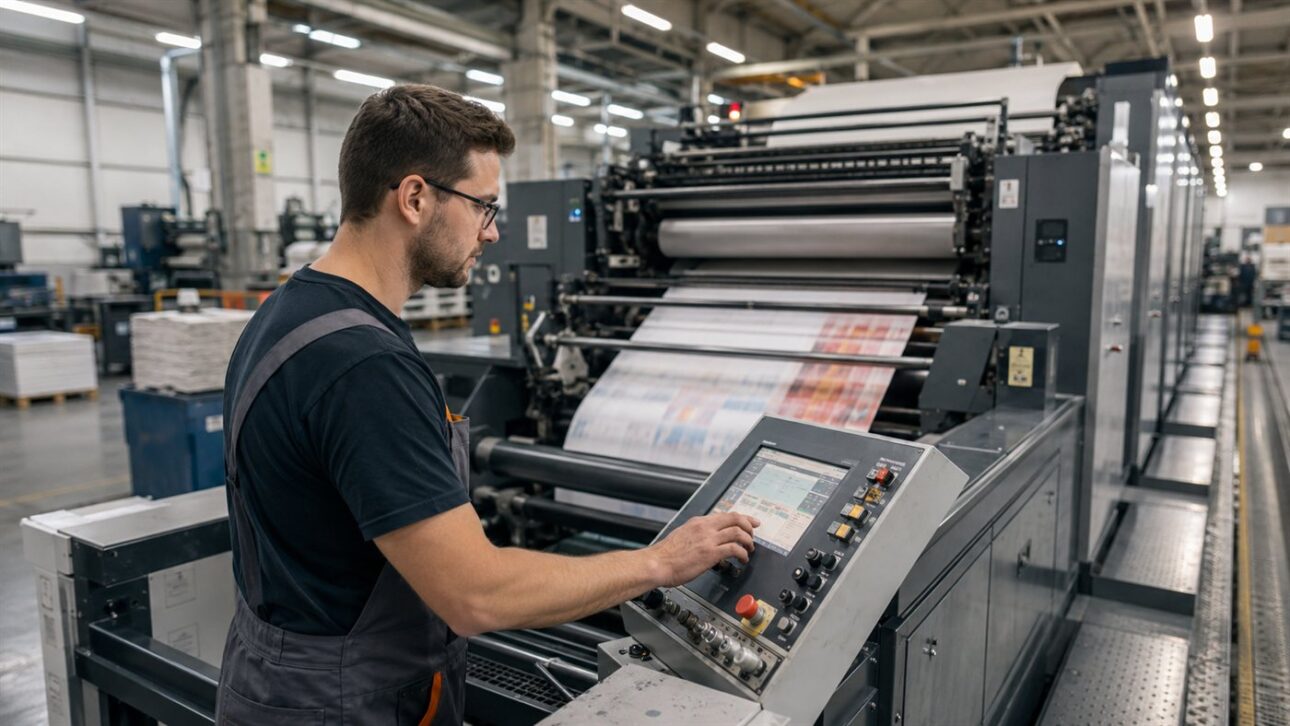
The size of the operation is impressive. The company’s main factory is located in Wiesloch, in southern Germany, and is considered by many to be the largest printing machine factory in the world, with thousands of employees dedicated to assembling gigantic and complex equipment. It was inaugurated in 1957 and remains the company’s largest production hub.
Each press is practically a custom engineering project, with tons of steel, precision electronics, and software. Assembling machines of this size requires an industrial structure that few countries and companies can maintain, and it is this scale that protects the leader from competition. Producing the machines that print the world is, in itself, a heavy and sophisticated industry.
From 1850 to the present day
The company’s history is long. According to Heidelberg, it all began on March 11, 1850, when Andreas Hamm and three partners founded a bell foundry and machine factory in Frankenthal. Since then, the company has gone through the industrial revolution, two world wars, and the digital age without losing its leadership in its niche.
This longevity has given the brand a solid reputation among printers worldwide. Buying a press from this manufacturer has become synonymous with reliability and quality in graphic arts, a seal that is inherited from generation to generation of printers. Tradition, in this case, is also a powerful commercial argument that sustains dominance.
The packaging you hold went through it
The most common use in everyday life might be packaging. Medicine boxes, food, cosmetics, and electronics packaging, as well as labels and leaflets, come out in large quantities from offset presses. It’s a market that only grows because almost every product sold needs printed packaging.
This ensures the company a constant demand even with the decline of paper newspapers and magazines. As long as there is a product to sell, there will be packaging to print, and much of this printing goes through the leader’s machines. The graphic industry has reinvented itself by migrating from editorial print to packaging print, and the manufacturer has followed this shift.
Why physical printing still moves billions
In an increasingly digital world, it may seem that printing is becoming extinct, but that’s not quite the case. Screen advertising has grown, yes, but packaging, labels, tags, and physical materials remain indispensable, and they move a billion-dollar market that remains strong.
The company also invests in digital printing and automation to keep up with changes, but the heart of the business remains in physical presses. Printed paper is not dead, it just changed its role, moving from newspapers to supermarket shelves.
Next time you hold a well-printed package, it’s worth remembering that it probably originated from a German machine. Did you imagine that almost all printing in the world depends on the same source?