






 Portuguese
  Spanish


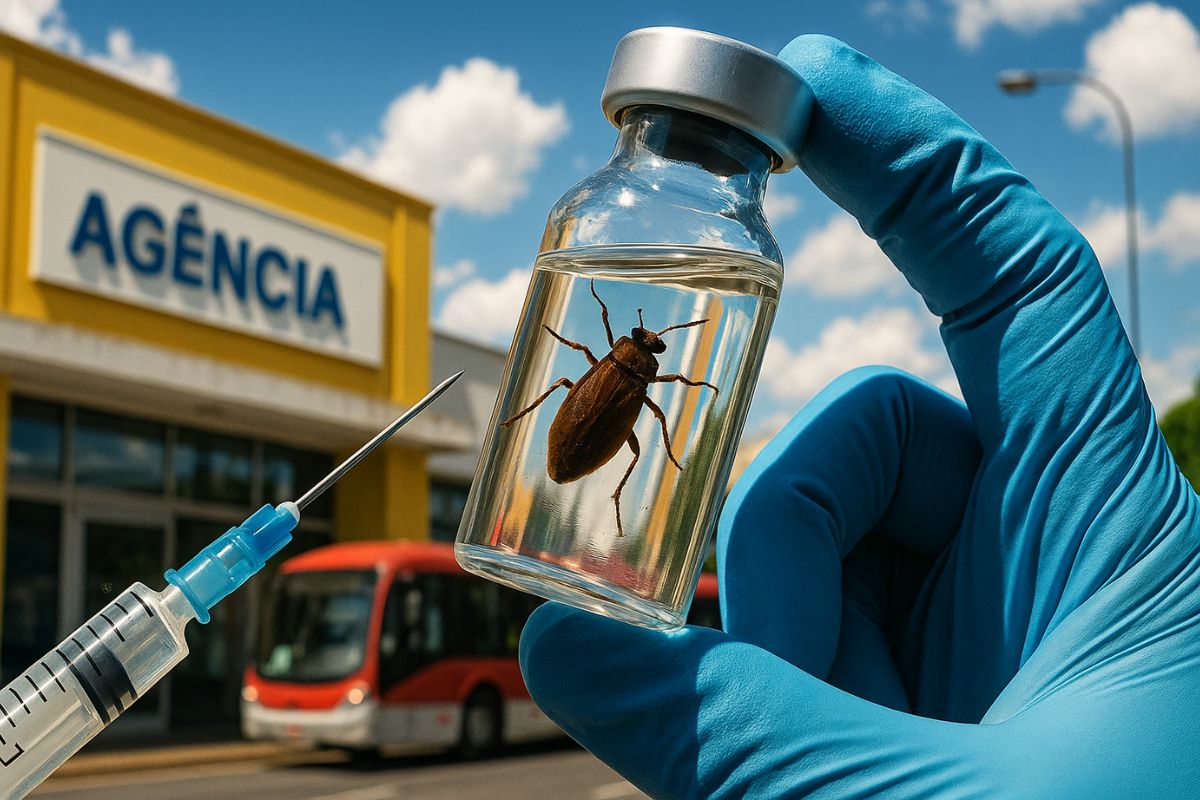


National Health Surveillance Agency Temporarily Suspends Two Medications, Including an Antibiotic and an Anesthetic, After Report of Contamination and Color Change in Batches Manufactured in Brazil
The ANVISA determined the preventive ban of two medications produced in the country after identifying possible quality failures in specific batches. One of the cases involves the finding of an insect inside a vial of anesthetic, which led to the immediate suspension of the distribution and use of the product.
The measure, published in the Official Gazette of the Union, affects the antibiotic Vancotrate 500 mg, from União Química, and lidocaine hydrochloride 20 mg/mL, from Hipofarma. According to ANVISA, the ban is temporary and precautionary, adopted to protect the population until laboratory analyses on the affected batches are completed.
Banned Batches and Risks Assessed by ANVISA
The most serious case involves the anesthetic lidocaine hydrochloride, used in hospital and dental procedures, in which an insect was found inside a sealed vial.
-
Domestic Workers in Switzerland Earn Around $220 per Day, Compared to $24-$60 in Brazil

-
As Engineering Jobs Decline in Brazil, Professionals Eye the U.S. with 186,500 Annual Openings and Salaries Up to $170,000

-
Brazilian Innovator Develops Concrete Blocks from Recycled Plastic, Eliminating Mortar and Reducing Construction Costs
-
World’s Most Powerful MRI Machine in France, Weighing 132 Tons and Generating 11.7 Tesla Magnetic Field, Offers Unprecedented Clarity of the Human Brain



The affected batch is valid until January 2027, and all of its commercialization and use have been immediately suspended.
In the case of the antibiotic Vancotrate 500 mg, the ban applies to a batch with validity until April 2027, which showed color change after dilution, a behavior different from that specified in the medication’s package insert.
Physical alterations are indicative of possible instability or contamination, which led the agency to determine the preventive blocking of the product throughout the national territory.
Reactions from Manufacturers and Ongoing Investigations
União Química, manufacturer of Vancotrate, reported that it is investigating the causes of the color change and that it fully complies with all ANVISA determinations.
The company emphasized that the problem was identified in only one batch and that other units remain under analysis to ensure safety and stability.
Meanwhile, Hipofarma, responsible for the anesthetic, stated that it found no signs of contamination in its internal processes and reported that the very client who made the complaint later retracted.
Nonetheless, ANVISA maintained the ban as a precaution, following the sanitary safety protocol until the conclusion of official analyses.
Safety Procedures and Guidance for Healthcare Professionals
During the ban period, the medications cannot be used, sold, or distributed.
ANVISA advises that healthcare professionals immediately suspend the use of the products and report any suspicion of adverse events to the National Health Surveillance System.
The ban does not imply definitive withdrawal, but serves to prevent potentially contaminated medications from reaching patients before the completion of quality control tests.
The preventive decision is one of the most stringent sanitary protection tools used by the agency to avoid risks to public health.
Preventive Measures and Impact on the Pharmaceutical Market
Cases of preventive bans on medications reinforce the importance of traceability mechanisms, quality control, and quick response from regulatory agencies.
Situations like this often lead to immediate adjustments in the production chain and revision of safety protocols in the involved pharmaceutical industries.
In addition to consumer protection, these actions serve as a warning to manufacturers, distributors, and healthcare professionals about the need to verify the physical integrity of medications before use.
The occurrence of foreign bodies or visual alterations, even if isolated, should be reported to the authorities for formal investigation.


