






 Portuguese
  Spanish


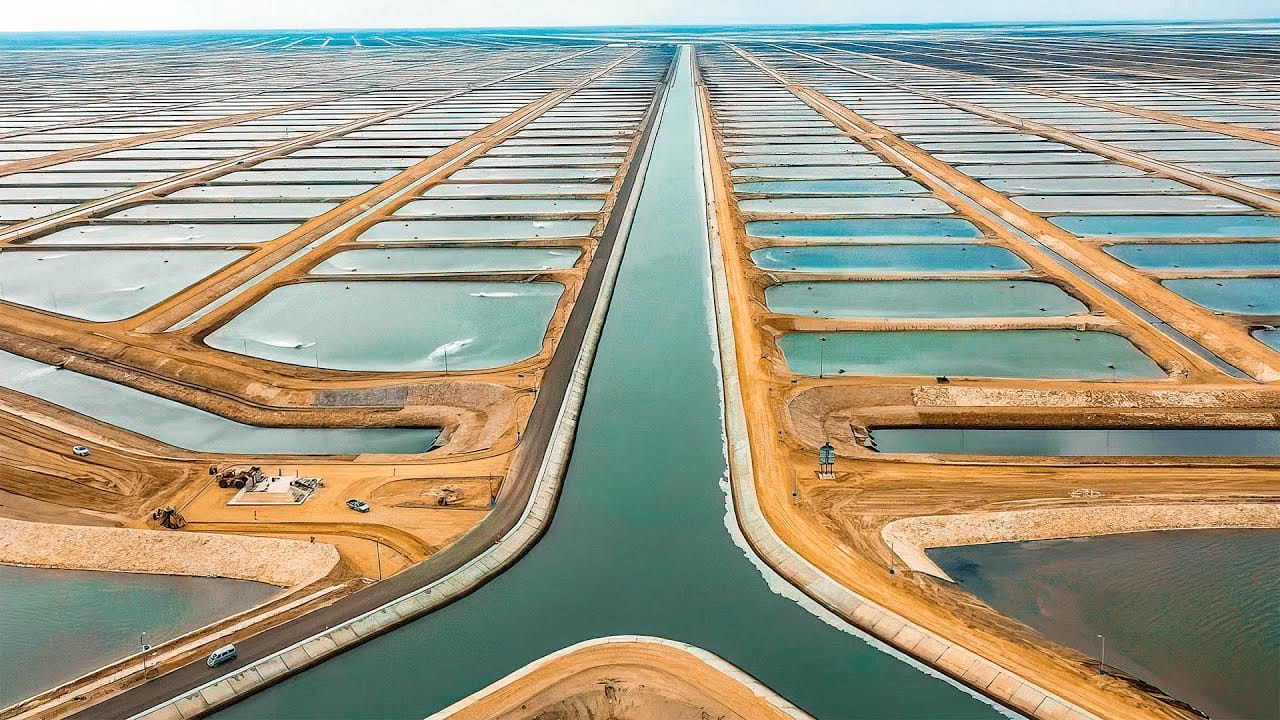


China Continues To Impress With Its Ambitious Projects, Now Developing An Artificial River That Could Become The Most Expensive Work In The World.
Most Expensive Construction In History? The ambitious water diversion project in China, which stands out as the most expensive construction in the world, aims to mitigate water scarcity in the arid and industrialized northern region of the country. This monumental initiative seeks to redirect about 44.8 billion cubic meters of drinking water annually to the densely populated northern areas, significantly fostering the socioeconomic development of this region. Undoubtedly, one of the most ambitious projects in the construction industry of this decade – the largest artificial river in the world!
New Most Expensive Artificial River Will Be Ready By 2050
The great undertaking of the artificial river involves connecting the main rivers of China along the Central East and West routes, challenging engineering limits and facing environmental and logistical concerns.
The East route starts at the Yangtze River through the Kedia passage reaching the city of Tianjin in the north via waterways and pipelines. The Central route departs from the Danube River, flowing through rivers and waterways toward Beijing in the north, passing through several provinces including Enan and Hubei. The West route connects the Yangtze River to the northwest region of China, passing through areas such as Qinghai and Xinjiang, bringing water to drought-prone regions.
-
China Develops Custom 140-Ton Electric Mining Truck with 770 kWh Swappable Battery, Deploys 290 Units in Xinjiang’s Largest Zinc Mine

-
Meta to Launch Arena, a New Prediction App Targeting 3.56 Billion Users, Competing with Polymarket and Kalshi

-
Scientist Challenges Famous Human Evolution Theory, Argues Homo Sapiens Evolved Gradually Over Thousands of Years
-
15-Year-Old American Builds Ocean Generator with PVC Pipe and 3D-Printed Propeller for $12, Wins National Prize, Presents at White House, and Makes Forbes 30 Under 30 List




The expectation is that the most expensive construction in the world will be completed by 2050, providing peace of mind for millions of people and transforming the landscape of China. The story of the artificial river project dates back to the bold response from the Chinese government to the growing water scarcity in the north of the country with rapid industrialization, population growth, and agricultural demands.
The region faced a severe water crisis threatening the supply of drinking water and socioeconomic development. The most expensive construction in the world, which began nearly 50 years ago, involved extensive planning, research, and construction.
Construction of The Artificial River Required 70 Thousand Workers
The construction of the South-to-North water transfer project in China was largely funded by the Chinese government. This is a major infrastructure project included in the national development plan, thus funding comes primarily from the Central government’s budget.
The most expensive construction in the world involved over 70,000 Chinese workers using more than 200,000 tons of concrete and steel. Facing geographic challenges, such as crossing the Yellow and Yangtze Rivers, underground tunnels were built to overcome natural barriers.


The project follows a complex timeline encompassing phases such as feasibility, planning, environmental licensing, land acquisition, excavation, infrastructure construction, and route completion. Comparing the Chinese artificial river project with the São Francisco River transposition project in Brazil, both aim to solve problems related to water availability in their specific regions. However, there are significant differences in scale, timeline, spending, and adopted strategies.
Most Expensive Construction In The World Has Already Spent 79 Billion Dollars
The Chinese project is the most expensive construction in the world with an estimated budget of 62 billion dollars, more than double the cost of the Three Gorges Dam, while the Brazilian project has an initial budget of about 10 billion reais. By 2014, more than 79 billion dollars had been spent, making it one of the most ambitious and expensive engineering projects in human history.
The impacts of the Chinese project encompass both positive and negative aspects, as the water diversion benefits areas in the north, alleviating water scarcity and boosting economic development, but there are environmental consequences such as habitat loss and the forced resettlement of local communities.
The future of the artificial river project will face transformations and challenges with a planned expansion to meet the growing water demands in northern China. In conclusion, the main benefit of this project is to address the water needs in the northern region, which tends to suffer from water scarcity, especially in large cities like Beijing and Tianjin, supporting economic growth and community well-being.






