Portuguese
  Spanish


Unexpected Treasure: Divers Exploring the Wreckage of the Titanic Find an Impressive Lost Statue, Shedding Light on More Mysteries of the Historic Shipwreck
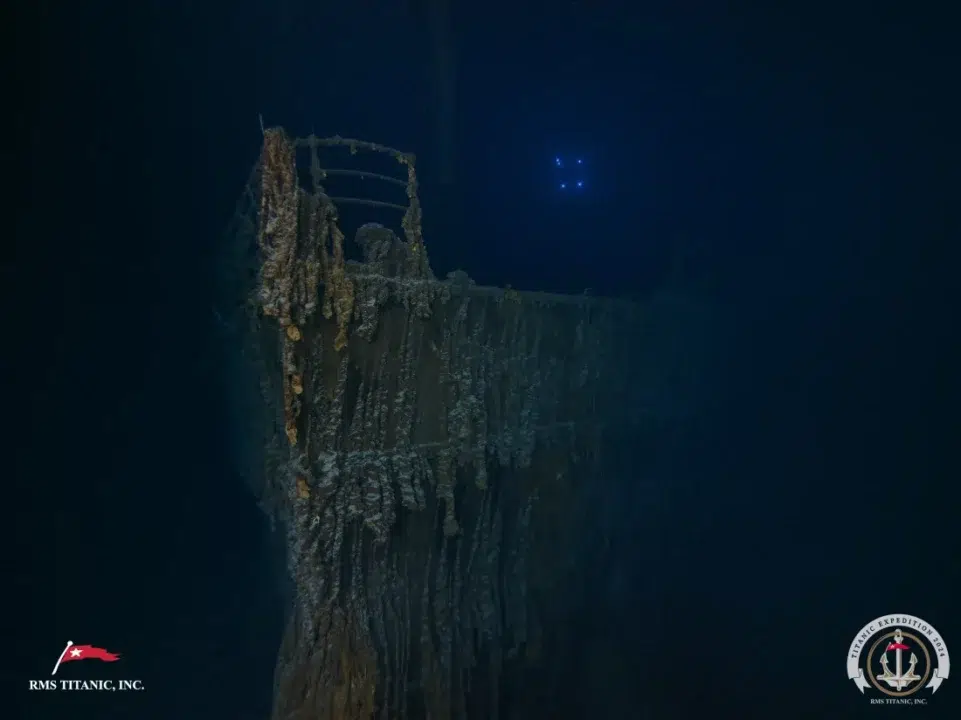
In a recent expedition to the wreckage of the Titanic, divers made an impressive discovery: the bronze figurine “Diana of Versailles.”
This piece, which was once a symbol of luxury in the first class of the Titanic, had been missing since 1986 and was finally located on the floor of the ocean. The discovery marks an important point in the history of the shipwreck, as the remains of the Titanic continue to provide new insights into the tragedy of 1912.
The search for the statue is part of an ongoing effort to document the state of the wreckage of the Titanic. The most recent expedition was organized by RMS Titanic, Inc., the only company legally authorized to salvage the Titanic. This mission, conducted in 2024, was the first since 2010 and involved capturing over two million images to fully map the wreckage.
-
The U.S. Navy Conducts Submarine Tests in Idaho Lake to Detect Underwater Noises Hidden by the Ocean

-
Nuclear Submarine USS Alexandria Retired After 35 Years, Having Completed Over 1 Million Miles in Missions

-
MODEC Introduces New Hull Design for FPSO Gato do Mato to Produce Up to 120,000 Barrels of Oil Per Day in Brazil’s Pre-Salt Region
-
This Massive 12-Meter, 21-Ton Underwater Drone Can Operate Autonomously for Up to Five Days


Discovery of Diana
The divers spent days searching for the statue, which once served as the centerpiece of the first-class lounge of the ocean liner. After 112 years on the ocean floor, the Titanic is in an advanced state of decay, and many parts of the ship have been destroyed over time. However, the statue of Diana, which symbolized the luxury of first class, was rediscovered in the final hours of the expedition, just moments before the search ended.
The statue, about two meters tall, was photographed, providing a rare glimpse into how the wreckage of the Titanic is preserved in the depths of the ocean. The research team was especially eager to locate this artifact, which had last been seen in 1986, shortly after the initial discovery of the wreck. The finding underscores the importance of continuing to explore the wreckage of the Titanic before deterioration completes the destruction of what remains.
The Impact of Time on the Wreckage of the Titanic
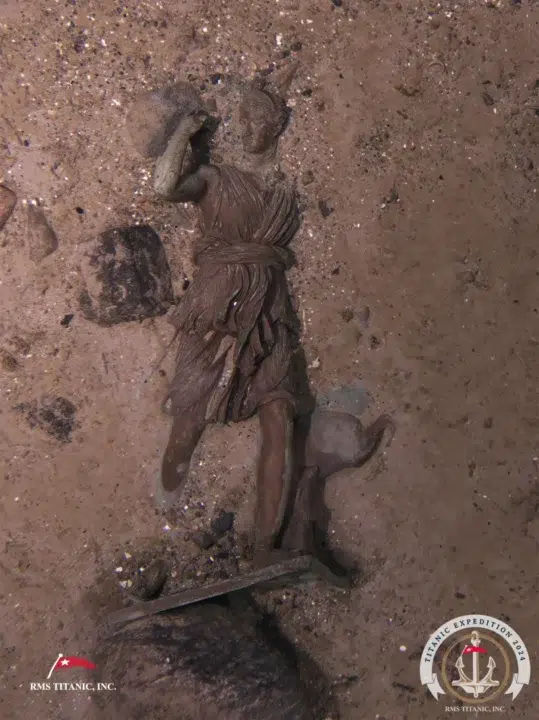
In addition to the rediscovery of Diana, the 2024 expedition revealed the growing impact of time and oceanic conditions on the wreckage of the Titanic. The iconic bow of the ship, one of the most recognized symbols of the shipwreck, has suffered significant damage. The railing that once surrounded the bow deck, which had been miraculously preserved, has collapsed and now lies on the ocean floor.
This collapse is just another example of the ongoing deterioration of the wreckage of the Titanic. The conditions on the floor of the North Atlantic, including cold currents and intense pressure, have accelerated the decomposition of the ship. For the research team, the mission to preserve and document the wreckage before it completely disappears is more urgent than ever.
The Shipwreck of the Titanic
The tragedy of the Titanic began long before the collision with the iceberg. On the morning of the fateful day, April 14, 1912, the crew received warnings from other ships about the presence of ice in the Titanic’s path. Captain Edward Smith received this information, but no immediate action was taken. As the ice warnings continued to come in, the concerns were ignored.
Around 11:40 PM that night, an iceberg was spotted dead ahead of the Titanic. Despite efforts to steer away, it was already too late. The impact opened several holes in the hull of the ship, allowing water to rush in. The first distress call was made shortly after midnight, but due to a lack of lifeboats, many passengers could not escape. About 20 minutes after 2 AM on April 15, the Titanic sank into the depths of the ocean.
The 2024 expedition not only mapped the wreckage of the Titanic, but also identified artifacts that could be recovered in future missions. While time is eroding what remains of the ship, each new discovery reinforces the importance of continuing to explore this submerged time capsule. The figurine of Diana is just one of many treasures that may still be hidden in the wreckage of the Titanic.
As the years go by, the conditions on the ocean floor will continue to deteriorate the Titanic. However, researchers remain committed to preserving as much of the history and memories of this iconic ship as possible.