Portuguese
  Spanish


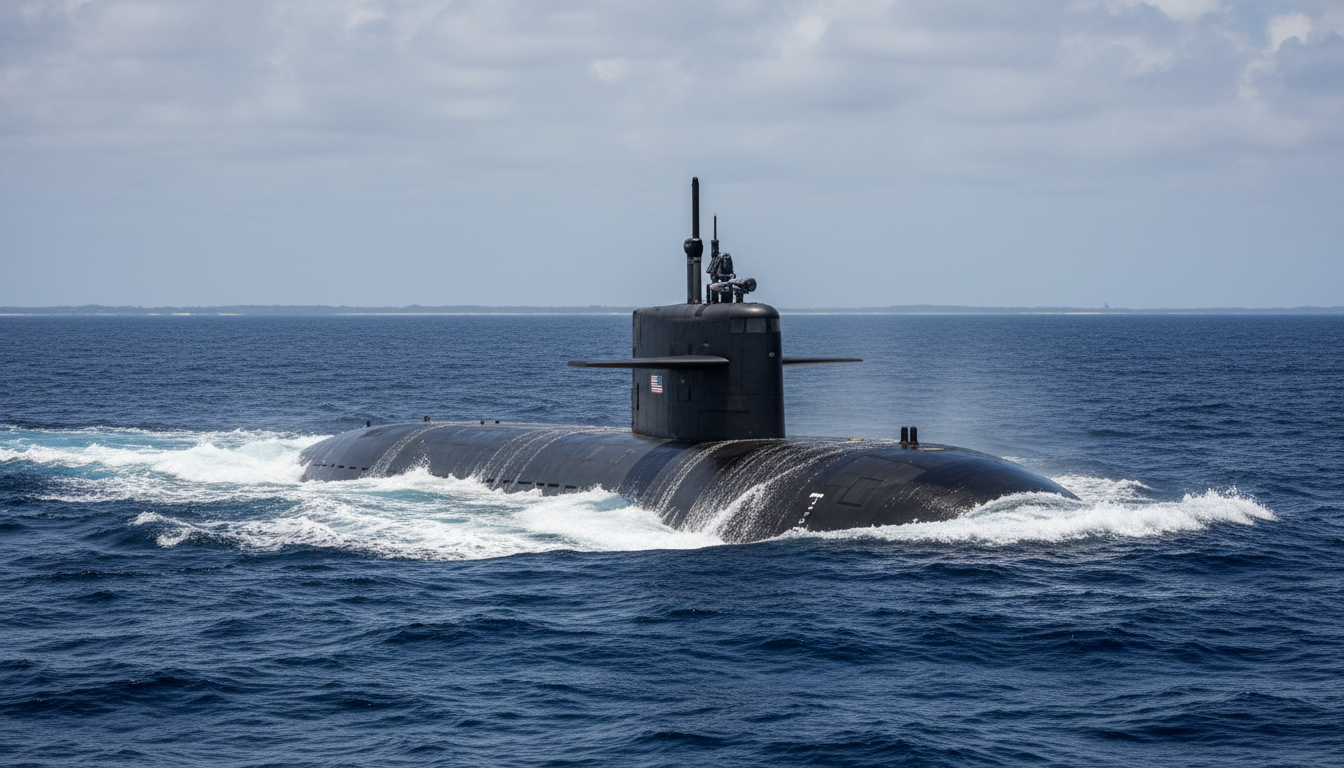

An American submarine fired a single torpedo at an Iranian frigate in the Indian Ocean and sank it — it’s the first time the United States has done this since World War II
On March 4, 2026, a United States Navy nuclear attack submarine sank the Iranian frigate IRIS Dena with a single Mark 48 torpedo in international waters of the Indian Ocean, off the coast of Sri Lanka.
According to confirmation from the Pentagon, it was the first American torpedo attack to sink an enemy ship since 1945 — the end of World War II.
Secretary of Defense Pete Hegseth and Chairman of the Joint Chiefs of Staff, General Dan Caine, confirmed the attack in a press conference. A single Mk-48 torpedo was fired and had “immediate effect”, sending the frigate to the bottom of the sea.
-
U.S. Military Intervention Risk in Brazil Raises Alarm, Highlights National Sovereignty Amid Tensions Over Washington’s Terrorist Designation of PCC and Comando Vermelho

-
Brazilian Air Force’s Sole KC-30 Aircraft Completes Strategic Mission to Spain for 105mm Anti-Tank Ammunition for Leopard 1A5 Tanks

-
Brazilian Air Force Seeks to Acquire More Gripen Fighter Jets
-
U.S. Air Force Launches Air-to-Air Missile Project with Range of Up to 1,850 km for Indo-Pacific Operations



The Sri Lanka Navy reported that it rescued 32 survivors and recovered 87 bodies from the crew of the sunken frigate.
The IRIS Dena: one of Iran’s newest warships
The IRIS Dena was a Moudge-class frigate — one of the most modern in the Iranian Navy. The ship was equipped with radar, missile systems, and ocean patrol capability.
When it was hit, the frigate was transiting through the Indian Ocean in international waters, hundreds of kilometers off the Iranian coast.
CNN described the attack as a “silent kill” — the American submarine was submerged, invisible, and fired without the frigate knowing of its presence.
The Moudge class represented the pride of the Iranian naval industry. Built domestically, the frigate demonstrated Iran’s capability to design and manufacture warships without external assistance.
Now it lies at the bottom of the Indian Ocean.

81 years without sinking a ship with a torpedo — until now
The last time an American submarine sank an enemy ship with a torpedo was in 1945, in the final months of World War II in the Pacific.
Since then, nuclear submarines have become the most powerful and quietest weapons in the American arsenal. But they never needed to use their torpedoes against surface ships in real combat.
The doctrine changed. Submarines began launching Tomahawk missiles against land targets, collecting intelligence, and patrolling strategic routes. The torpedo — the submarine’s original weapon — remained a theoretical capability.
On March 4, 2026, theory became reality.
General Caine succinctly described the engagement: “A single Mk-48 torpedo sank the ship”. No missiles, no warnings, no second chance.
The Mark 48: the oceans’ most lethal torpedo
The Mk-48 ADCAP (Advanced Capability) **torpedo** is the primary submarine weapon of the U.S. Navy. Each unit weighs over 1,600 kilograms and carries a 295 kg explosive warhead.
The torpedo is self-propelled and guided by active and passive sonar. It can pursue targets over 50 kilometers away, adjusting course in real-time to intercept evasive maneuvers.
Traveling at over 100 km/h underwater, the Mk-48 is too fast for any surface ship to escape.
The cost of each torpedo is estimated at US$ 4.2 million. The IRIS Dena frigate was worth tens of times more. For the Pentagon, the cost-benefit is devastating.

The attack was part of Operation Epic Fury
The torpedo against the IRIS Dena was fired on the same day an Israeli F-35 shot down an Iranian Yak-130 fighter jet over Tehran. Both events are part of “Operation Epic Fury”.
The joint US-Israel operation involved air, naval, and cyber attacks against Iranian military targets — missile bases, nuclear facilities, and defense infrastructure.
The sinking of the IRIS Dena demonstrated that the United States can project naval power in any ocean on the planet, silently, without warning.
For Iran, losing a modern frigate without even detecting the submarine is a strategic humiliation that goes beyond material loss.
87 dead and 32 rescued: the human cost
The Sri Lanka Navy, the neutral nation closest to the attack site, sent rescue vessels the following morning.
32 living crew members were rescued and 87 bodies recovered. The total number of crew members on the frigate was not officially disclosed by Iran.
Iran condemned the attack as “aggression in international waters”. The United States classified it as a defensive action within the scope of Operation Epic Fury, claiming that the IRIS Dena posed a threat to American forces in the region.

What the March torpedo changes in global naval warfare
The sinking of the IRIS Dena puts the submarine back at the center of global naval strategy.
China has the second largest submarine fleet on the planet. Russia operates nuclear submarines in all oceans. India and Brazil are developing their own nuclear programs.
But none of these navies have used a torpedo against an enemy warship in decades. The United States just did.
The message is direct: American submarines can be anywhere, at any time, without being detected. And when they fire, a single torpedo resolves it.
For naval strategists from Beijing to Moscow, from New Delhi to Brasília, March 4, 2026, will be studied for decades. The question that remains: if the U.S. sank an Iranian frigate without anyone seeing the submarine, what would prevent the same scenario in the Taiwan Strait or the South China Sea?