Portuguese
  Spanish


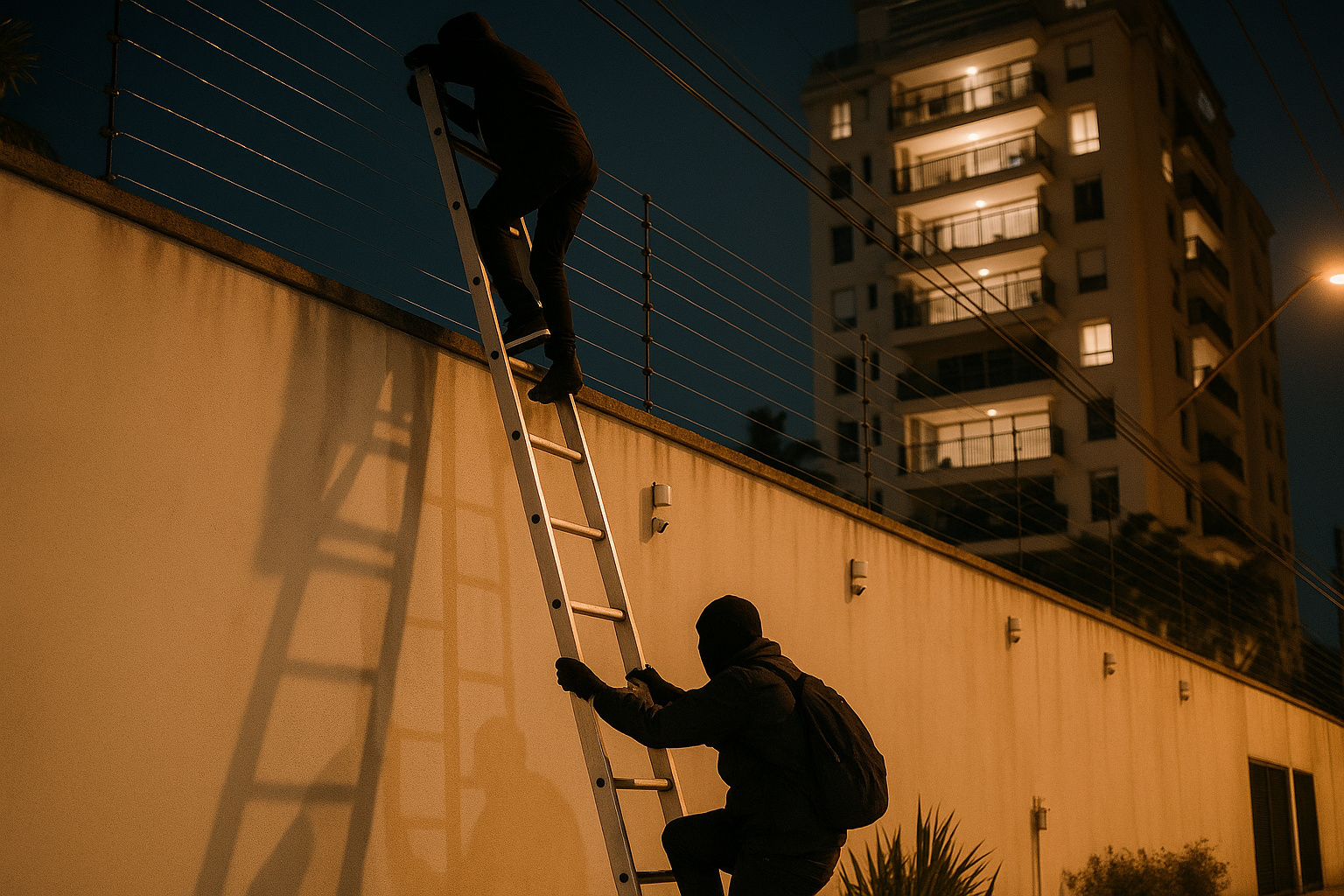

Recent Case in a High-End Gated Community Exposed How High Walls, Electric Fences, and Infrared Sensors Are Not Enough to Prevent Planned Break-ins and How New Strategies Can Reduce Risks
Do you believe that the high wall of your house or condominium is enough to keep criminals away? Security experts say that, although it represents a physical obstacle, this barrier is not capable of preventing well-planned invasions. The recent case of a high-end condominium in São Paulo is an emblematic example of how the sense of security can be misleading.
According to security expert Jorge Lordelo, from the channel “Don’t Get Robbed”, the incident drew attention due to the boldness of the intruders and the way they overcame all the security systems. The condominium in question had six-meter-high walls, fences with electric wires, infrared sensors, and camera monitoring. Even so, the criminals managed to breach this entire structure without triggering the alarms.
Break-in at Luxury Building Exposes Failures in Passive Security
The incident occurred in the early hours. According to reports from residents and images obtained from the condominium’s cameras, the suspects arrived in a pickup truck, parked near the location, and used a construction extension ladder capable of reaching over six meters in height.
-
UN Warns of AI’s Environmental Impact and Calls for Greater Corporate Transparency

-
Former Atacadão Employee Turns Online Cake-Baking Lessons into a Confectionery Brand with Factory, Store, Delivery, and Nearly $400,000 in Revenue
-
Brazilian Startup Sells Nearly 9 Million Surprise Bags of Near-Expiry Food, Prevents Thousands of Tons of Waste, Aiming for $42 Million Revenue by 2026
-
How to Prevent Brown Recluse Spider Bites: Common Hiding Spots and Free Tips to Reduce Risks





One of the intruders, described as thin and agile, climbed the structure with ease, jumping over the monitored fence and reaching a side slab of the building. From there, he gained access to the internal areas of the condominium and managed to break into two apartments that were vacant at the time.
“Our building has a very high wall; we invested a lot in security, but they knew exactly where and how to act,” reported one of the residents, according to Lordelo. The information was shared on the channel “Don’t Get Robbed”, in a video about vulnerabilities in residential security systems.
The criminals used a screwdriver to force open doors and stole high-value belongings. After committing the crime, they escaped the same way: climbed back down the ladder and left the location without anyone from the condominium noticing, since the action took place in the early hours while everyone was asleep.


Height Is Not Synonymous With Protection: Understand the Most Common Mistake
According to Jorge Lordelo, the case demonstrates that the height of the wall, alone, does not guarantee real protection. “Even a six-meter wall cannot prevent a break-in when there is planning and the right tools,” the expert states.
The technical explanation is simple: experienced criminals know the blind spots of the alarm systems and study the routine of the residents. Furthermore, equipment such as articulating or telescoping ladders — sold in hardware stores — allow reaching heights over seven meters with ease.
For Lordelo, the idea that “height provides protection” must be abandoned. Security should be seen as an integrated system that combines physical barriers, smart sensors, active surveillance, and preventive planning.
Double Protection: The Strategy Recommended by Security Experts
According to Jorge Lordelo, the best way to prevent climbing break-ins is to adopt what he calls double perimeter protection. The system consists of installing two layers of physical and electronic barriers over the wall, with a 45-degree angle facing outward.
This design prevents the criminal from resting ladders or climbing instruments, as the inclination creates an unstable area and triggers the alarm if the intruder attempts to make contact. The upper part can include electrified fences, alarm mesh screens, or vibration sensors, all interconnected to the central monitoring system.
“When the fence is installed at 45 degrees, the criminal cannot touch the ladder without triggering the system. It’s a simple barrier, but extremely effective,” the expert explains. Additionally, it is recommended to duplicate the structure, applying the same concept on both sides of the wall, which makes breaching practically impossible even with appropriate equipment.
Active Security and Resident Awareness
Another crucial point is the preventive behavior of the residents. It is of little use to invest in modern systems if the community does not adopt basic security practices, such as checking gate closures, not allowing strangers to enter, and maintaining vigilance during less busy hours.
Technology alone does not replace the human factor. Therefore, building managers and administrators should also invest in training for the front desk staff, response procedures for alarms, and emergency protocols. “The security of a condominium is a shared responsibility. Everyone needs to be alert,” emphasizes Lordelo.
According to the expert, the incident involving the six-meter wall serves as a warning to rethink passive security strategies, often based solely on height and aesthetics, without considering practical vulnerabilities.
Height Helps, But Strategy Protects
The case that occurred in São Paulo illustrates that security is not just a matter of height, but strategy. Integrated systems, constant monitoring, and resident awareness are key factors in preventing break-ins.
The information was shared by Jorge Lordelo on his channel “Don’t Get Robbed”, dedicated to educating about public safety and urban crime prevention. The expert emphasizes that although high walls hinder access, only a set of complementary measures can guarantee effective protection.
For those living in condominiums or isolated houses, the message is clear: the best defense is knowledge combined with prevention.
What about you? Do you believe that high walls really guarantee security or just create a false sense of protection? Share your opinion in the comments and let us know if you have witnessed or heard of similar cases in your area.