






 Portuguese
  Spanish


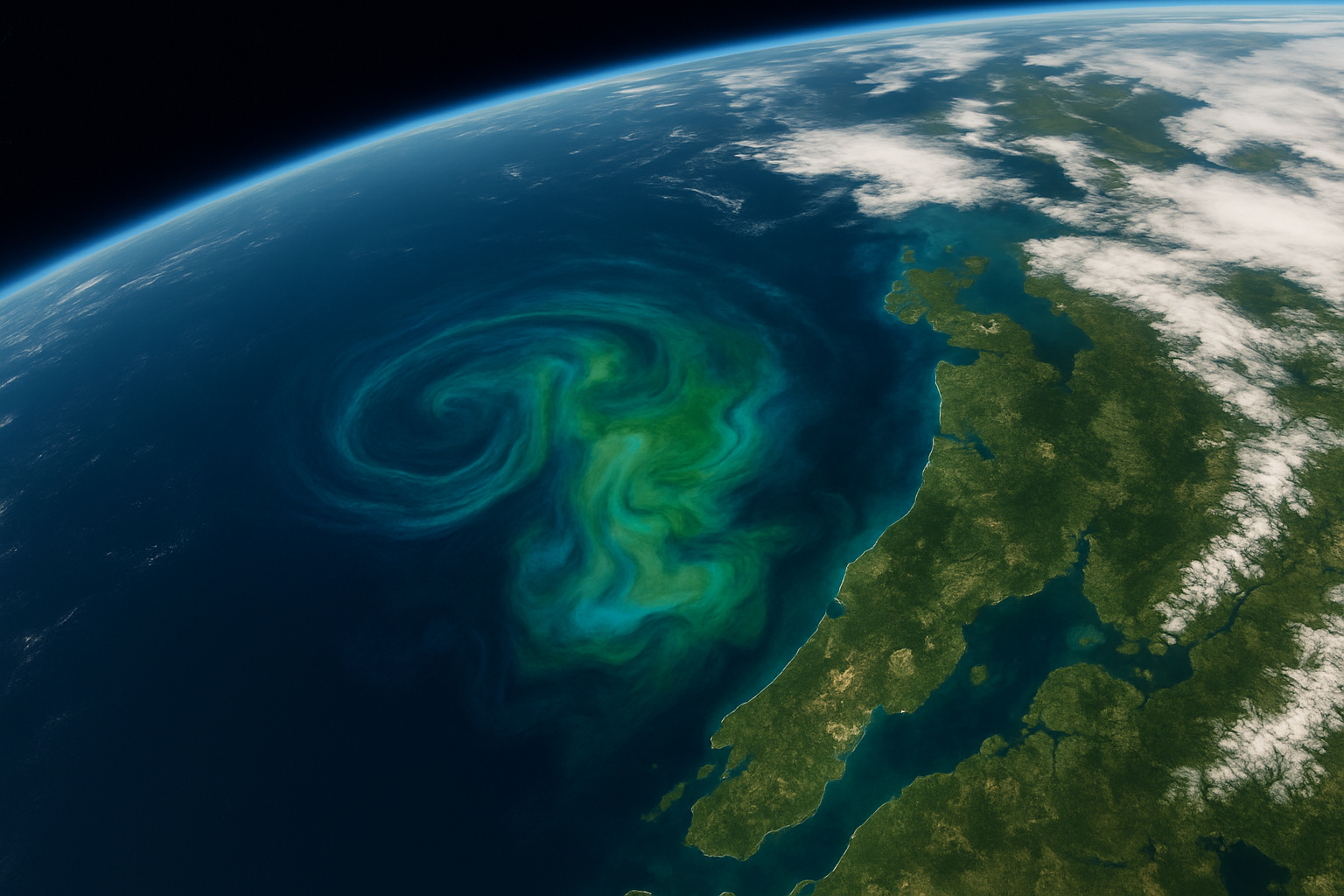

An International Study Published in Science Advances Reveals That Phytoplankton, Responsible for About 50% of the Planet’s Oxygen, Is Decreasing 1.78% Per Year in Coastal Waters — A Sign That Global Warming May Be Suffocating the Base of Marine Life
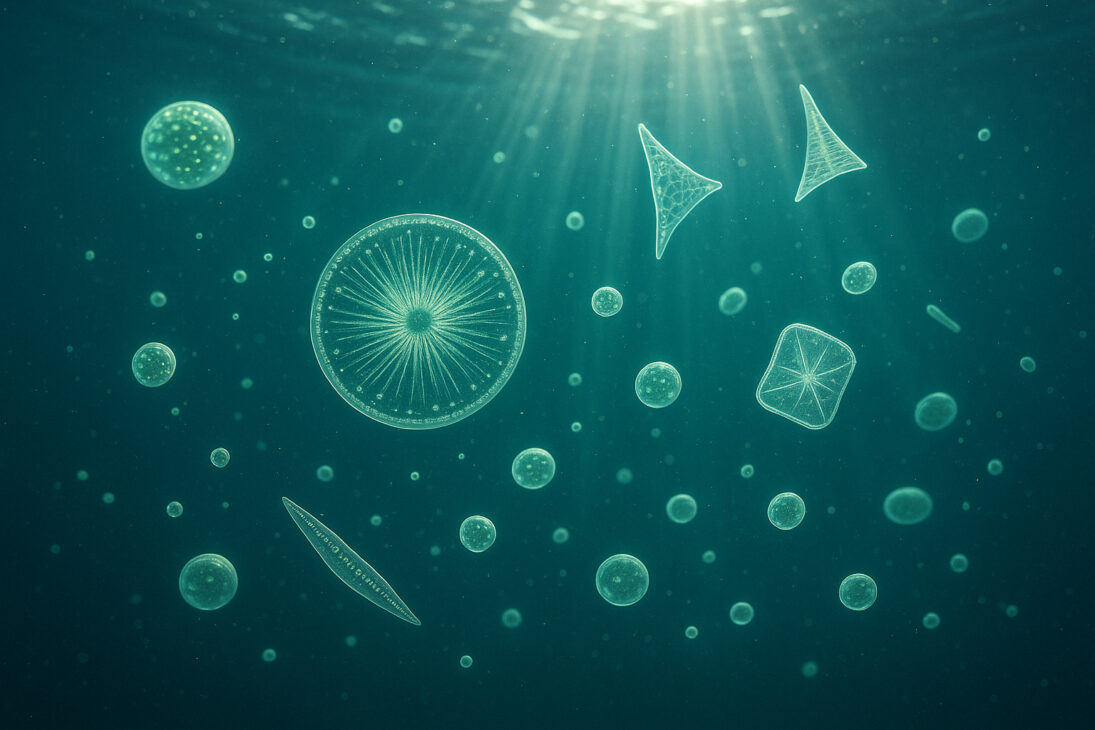
A new study published in the journal Science Advances has raised a global alarm: the phytoplankton population — microorganisms responsible for producing half of Earth’s oxygen — may be in continuous decline. These microscopic beings, which float freely in the oceans, are the foundation of the marine food chain and critical for the planet’s climate stability.
According to researchers from Tsinghua University (China), Bangor University (UK), and the University of Pennsylvania (USA), analyses of satellite images and data collected by floating buoys between 2001 and 2023 indicate that the concentration of chlorophyll A, the pigment responsible for photosynthesis, has decreased by about 1.78% per year in coastal waters. This trend suggests a concerning reduction in phytoplankton abundance — a phenomenon with potential impacts on the entire oceanic ecosystem and human respiration itself.
The scientists used deep learning algorithms to correct errors and fill gaps in regions with cloud cover, enhancing the accuracy of the survey. Nevertheless, the scientific community remains divided regarding the interpretation of the results.
-
Pennsylvania Mine Creates Ice in Summer Heat and Melts in Winter, Turning a Mountain Crevice into a Reverse Natural Refrigerator

-
China Accelerates Global Expansion of Robotics: From Smart Vacuums to Industrial and Humanoid Machines, Millions Exported to Over 150 Markets
-
Polar Air Mass to Hit Brazil: Temperatures to Plummet in Nine States, Near Freezing in the South with Frost Risk Until Monday
-
Chinese “dark factories” produce electric cars 24/7 with minimal human intervention, as Zeekr assembles 800 units daily, raising concerns in Brazil.





Global Warming and Nutrient Scarcity
According to the researchers, global warming is the main factor behind the phenomenon. This occurs because the increase in ocean temperatures intensifies water stratification — separating the warm surface layers from the cold deep layers. Under normal conditions, the vertical movement of water — known as upwelling or nutrient upwelling — brings nutrients from the depths to the surface, sustaining the microscopic life that performs photosynthesis.
However, with rising temperatures, this exchange becomes more difficult. The surface waters become warmer and less dense, preventing mixing with the nutrient-rich cold layers. The result is a severe nutritional scarcity, which directly compromises phytoplankton development and, consequently, affects the entire marine food chain, from zooplankton to large predators.
This information was released by Galileu, based on the original article from Science Advances, and reinforces the warning that climate change is altering vital processes for maintaining life on the planet.
The Role of Phytoplankton in Oxygen Production
The oceans cover 71% of the Earth’s surface and are responsible for about half of the atmospheric oxygen production. Phytoplankton, through photosynthesis, converts CO₂ into oxygen, functioning as the planet’s “invisible lungs.” Furthermore, it feeds on zooplankton, which serves as food for small fish and, subsequently, larger predators — sustaining the base of marine life.
Professor Frederico Brandini from the Oceanographic Institute of USP emphasizes that phytoplankton alone performs the role of an entire forest on land. “In the marine environment, a single cell does everything an entire tree does,” he explains. “These microalgae form a three-dimensional planetary lawn that, 3.5 billion years ago, began to release free oxygen into the Earth’s atmosphere.”
According to the study, 40% of the analyzed coastal regions showed a decline in phytoplankton, while only 12.5% showed an increase — concentrated primarily in the northern Brazilian coast, where pollution and human activity may be enriching the water with nutrients. This pronounced difference demonstrates that the effects of global warming are not uniform and depend on the local characteristics of each ecosystem.
What the New Study Ignores — and the Critiques from the Scientific Community
Despite the relevance of the results, experts warn that the reduction of chlorophyll A may not actually reflect a proportional decrease in phytoplankton biomass. Professor Frederico Brandini from USP argues that chlorophyll is merely an abundance indicator, but does not equate to the total mass of carbon — which is the most important parameter for measuring the real volume of living organisms.
“There is a carbon-chlorophyll ratio that varies from 20 to 200,” Brandini explains. “One milligram of chlorophyll can represent between 20 and 200 milligrams of carbon. And it’s the carbon that really matters. The decrease of 1.78% may seem large, but in practice it translates to 0.00035 milligrams of chlorophyll per cubic meter in an ocean that covers 361 million km². It’s a minimal difference.”
Moreover, he highlights a frequently overlooked factor: the role of zooplankton. The rise in water temperatures elevates the metabolism of these organisms, which actively feed on phytoplankton. Thus, part of the observed decline in chlorophyll may be a consequence of natural herbivory rather than necessarily the collapse of oceanic photosynthesis.
Brandini emphasizes that if the decrease is related to zooplankton feeding, the carbon cycle remains intact — CO₂ continues to be absorbed, just transferred to another link in the chain. “In this case, there is no real loss for the climate, and there may even be growth in the fish population, which would benefit fishing,” he notes.
A Warning That Goes Beyond the Numbers
Despite the disagreements, the study reinforces a concerning trend: the ocean is changing rapidly. The stratification of the waters mentioned in the article has intensified over the past decades, creating a physical barrier that limits the recycling of essential nutrients. According to the text from Science Advances, this process “is likely weakening the vertical transport of nutrients, limiting phytoplankton growth in the upper ocean layer.”
These changes do not only affect microorganisms but the entire food web. Less phytoplankton means less food for zooplankton, which impacts fish, birds, and marine mammals. Consequently, fish productivity and the ecological balance of coastal zones may be compromised — something that has already been observed in parts of the Pacific and tropical Atlantic.
According to Brandini, however, the decline in phytoplankton biomass is not the most urgent environmental issue. He reminds us that marine pollution, heavy metal disposal, overfishing, and mangrove destruction represent more direct and immediate threats to human survival. “Before being affected by the decline in phytoplankton, humans will suffer from these factors,” warns the oceanographer.
Disagreements and the Role of Science in the Future of Oceans
The study in Science Advances is not the first to address the topic. Previous research, such as one published in Nature in 2023, indicated just the opposite: a possible increase in the phytoplankton population in some regions. This discrepancy, according to Michael Mann, director of the Penn Center for Science, Sustainability, and Media at the University of Pennsylvania and co-author of the new study, is due to methodology. He argues that previous works relied solely on satellite images, without considering direct data from ocean sensors.
“We are confident that our result is the most accurate,” Mann stated to the Inside Climate News website. “The increases in ocean stratification documented in recent decades already suggested that something was limiting marine photosynthesis. Our data merely confirm this trend.”
Even though the debate remains open, the consensus is that the ocean is undergoing profound transformation. Phytoplankton, invisible to the naked eye, is a biological thermometer of these changes. If it suffers, the entire planet feels it — from climate regulation to the respiration of every living being. Understanding and protecting this microscopic layer of life can be crucial for the future of Earth.






