Portuguese
  Spanish


Ultra-black paint for cars created by Nipsea Group absorbs 99.9% of light and makes the body lose shapes and visual depth.
Imagine looking at a car and not being able to clearly distinguish its curves, creases, or even the depth of the body. This is the proposal of an ultra-black paint for cars developed by Nipsea Group, a company from Singapore, capable of absorbing 99.9% of visible light.
The result creates such an intense effect that the car seems to lose its three-dimensional shape. From certain angles, the body stops resembling a metallic surface and starts to look like a kind of dark void in motion.
The technology combines carbon nanotubes with special pigments and is expected to initially appear in luxury models in China. However, before reaching common cars, it still needs to overcome challenges related to heat, nighttime safety, and production cost.
-
Ancient Maya City Discovered in Remote Mexican Area with 12-Meter Pyramid, Palaces, Canals, and 14 Preserved Monuments

-
Indigenous 8-Year-Old Girl Wins National Science Award for Solar-Powered Water Heater Invention Using Recycled Materials

-
14-Year-Old Girl Develops Solar-Powered Water Purification System for India, Eliminating Need for Electricity or Chemicals

-
Forgotten Canadian Machine Harnessed Waterfall Power to Supply Mines with Compressed Air for 70 Years Without Motors or Electricity



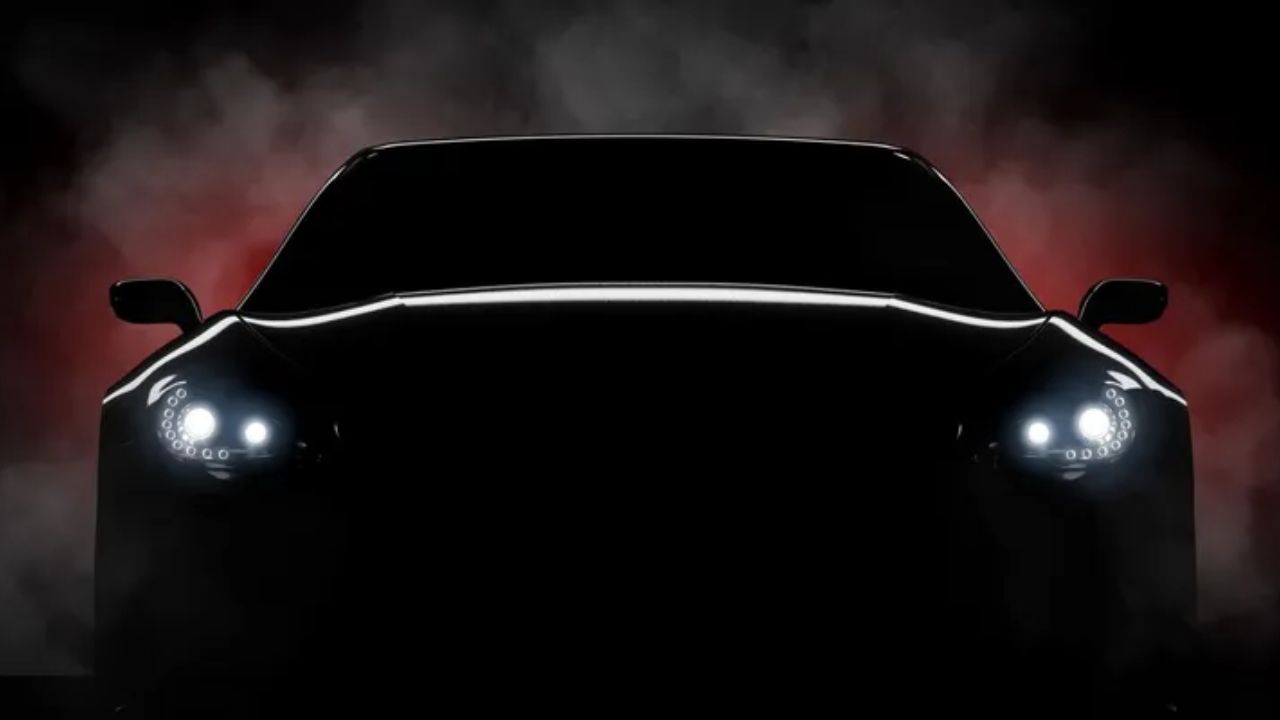
Car seems to lose curves and volume
The curiosity lies in the way our eyes perceive a vehicle. In conventional paint, light hits the body and part of it returns to the observer. These reflections help to show the design of the hood, the curvature of the fenders, and the creases of the doors.
With the ultra-black paint for cars, almost all light is absorbed. Without enough reflections, the details are hidden and the body appears flat.
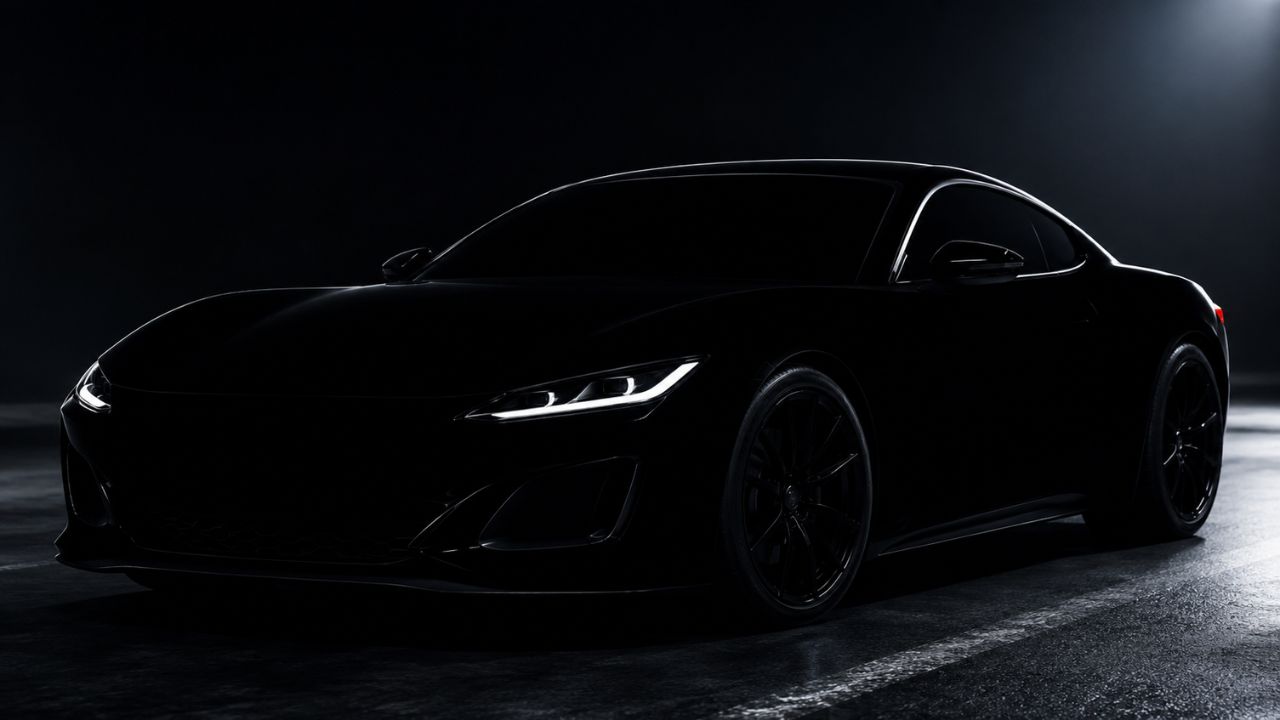
Even a car full of lines and cuts can seem like just a dark silhouette. This is where the comparison to a “black hole” on wheels comes from.
Technology uses carbon nanotubes
The effect is not achieved with just a conventional black pigment. Nipsea Group used carbon nanotubes combined with special pigments to increase light absorption.
The development was inspired by materials like Vantablack, known for creating extremely dark surfaces, but the technology was adapted for application in the automotive sector. This requires the coating to withstand common situations in car use, such as humidity and environmental exposure.
According to the team involved in the development, the material has already been tested in high humidity environments and showed stable performance.
Luxury models should receive the innovation first
The commercial debut of the ultra-black paint for cars is expected to occur in luxury vehicles sold in China. The choice makes sense due to the exclusive nature of the technology. The production still involves complex and expensive materials, which hinders its immediate use in high-volume automobiles.
In high-end models, the visual effect can serve as a differentiator as important as special wheels, interior finishes, or exclusive bodywork details. Instead of just changing the vehicle’s color, the paint alters the way the design itself is perceived.
Can the car become almost invisible at night?
This is precisely where one of the biggest doubts arises. If the paint absorbs almost all the light, a car with this finish can become very difficult to see in dark environments.
At night, the absence of reflections can hide part of the bodywork and impair the perception of other drivers, motorcyclists, and pedestrians.
This does not mean the car would disappear completely, as lights, windows, wheels, and other components would remain visible. Even so, the extreme effect would require additional safety solutions before broader application.
Extreme black can also increase heat
Another concern involves temperature. Dark surfaces absorb more light, and a paint capable of retaining 99.9% of it can promote the heating of the bodywork.
In practice, this can affect internal comfort, especially when the vehicle remains exposed for long periods.
Therefore, it is not enough to create the most intense black possible. The technology also needs to prevent the visual effect from turning the car’s interior into an excessively hot environment.
Mass production is still a challenge
Carbon nanotubes are essential for the outcome, but they also represent one of the main challenges of the project. Handling this material in large quantities requires sophisticated processes. This increases costs and complicates production on an industrial scale.
For this reason, it may still take time before the ultra-black paint for cars appears in popular models or large assembly lines. The initial arrival in the luxury segment serves as a way to test the technology on a smaller scale and with a greater margin to absorb the costs.
Researchers want to make the paint even darker
Even with 99.9% light absorption, the team led by Zhiwei Liu intends to advance. The researchers are studying ways to increase the proportion of carbon nanotubes in the formula, which could further reduce the amount of light reflected.
The change would make the visual effect even more radical, but it could also increase challenges related to heat, cost, and manufacturing. In other words, the race is not just to create a black color. The goal is to develop a surface that practically eliminates the perception of light.
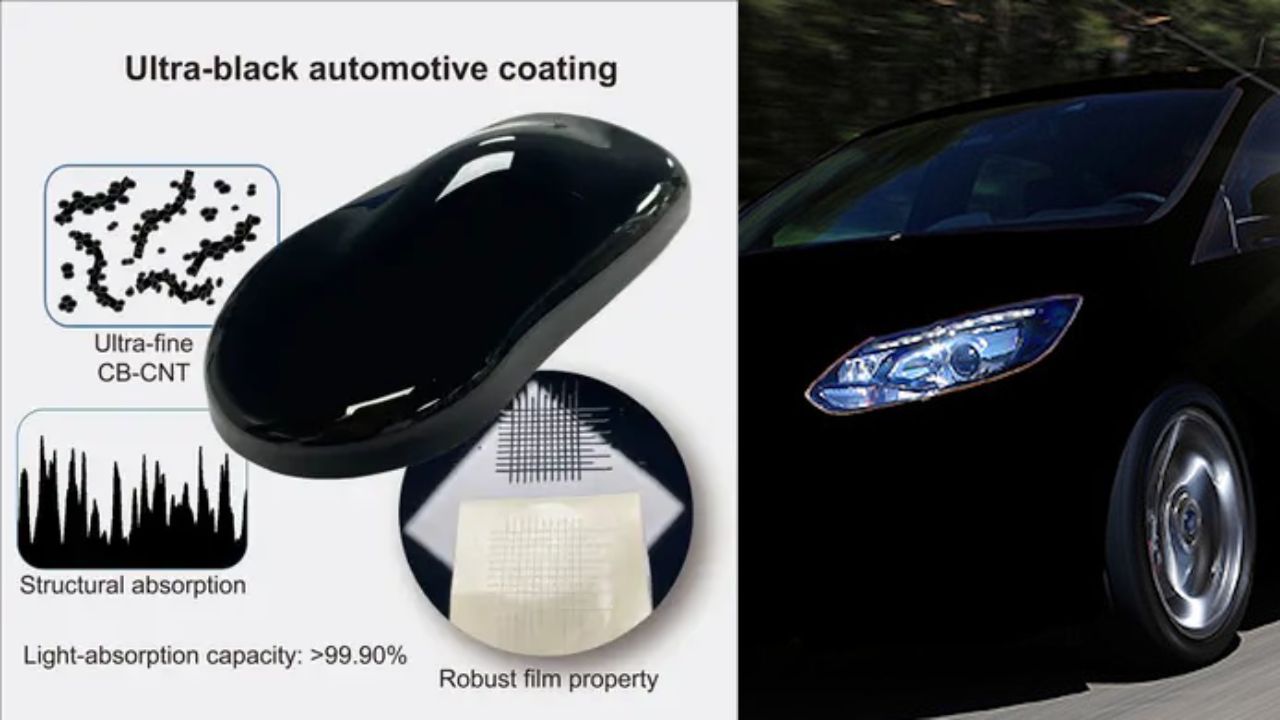
The ultra-black paint for cars transforms the paint into something beyond a color choice. The finish interferes with how the vehicle is perceived, hides body lines, and creates an appearance that seems straight out of a science fiction movie.
If the safety, temperature, and production issues are resolved, the feature could open a new front in automotive design. In this scenario, black would cease to be just a classic color and would function as a technology capable of making a car appear almost invisible.
With information from CanalTech