Portuguese
  Spanish


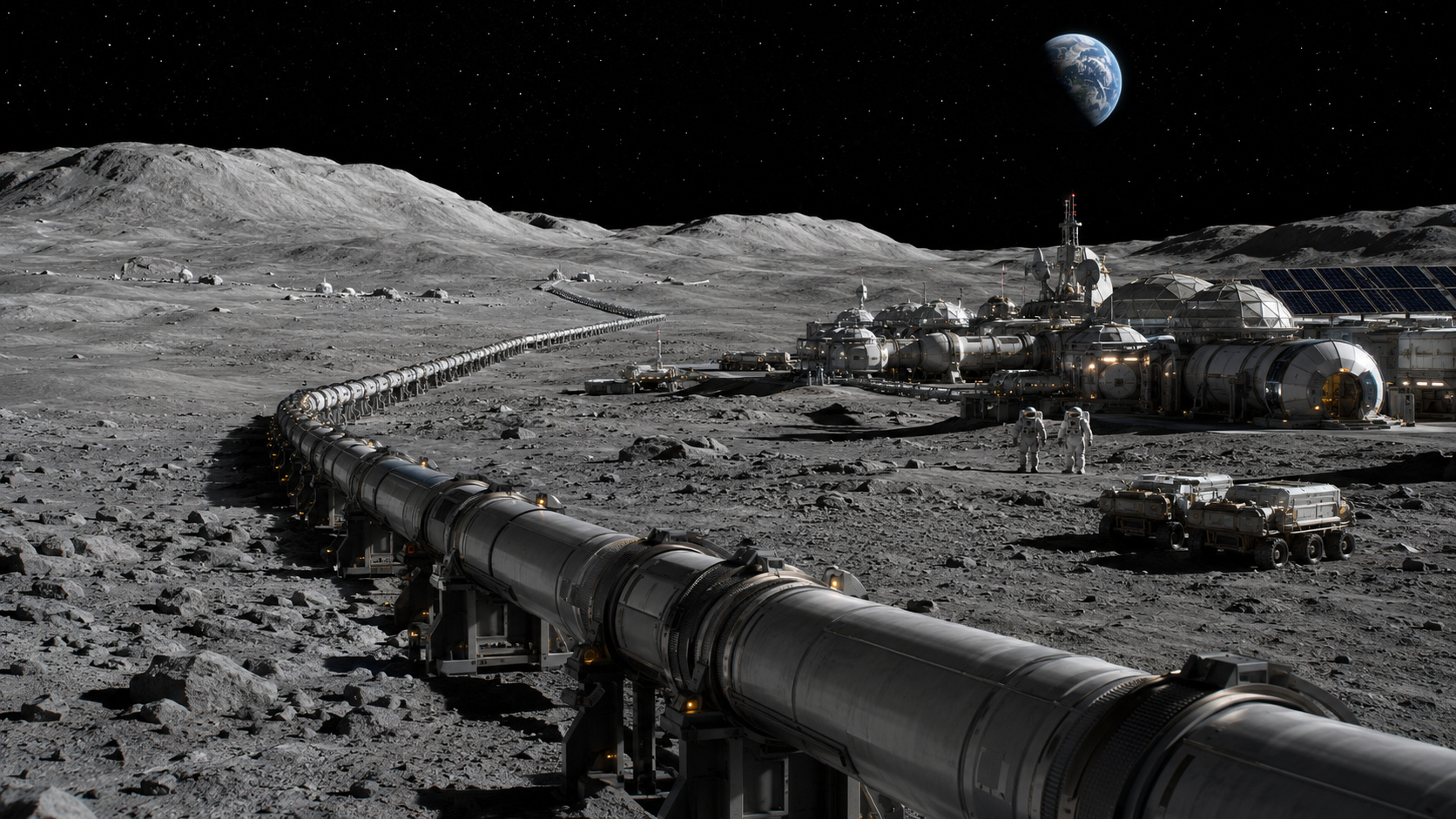

Study supported by NASA proposes a 5 km pipeline at the Moon’s South Pole to transport oxygen and reinforce future lunar bases of Artemis.
Building a lasting human presence on the Moon will require much more than rockets, habitable modules, and successful landings. Lunar infrastructure will also need to ensure a continuous supply of critical resources, and oxygen is at the center of this equation, both to sustain astronauts and to support broader operations on the surface. It is in this context that one of the most unusual proposals linked to recent lunar exploration has emerged.
Supported by the NASA Innovative Advanced Concepts program, the Lunar South Pole Oxygen Pipeline concept, or L-SPoP, proposes a pipeline of about 5 kilometers at the Moon’s South Pole to transport gaseous oxygen from a production area to a facility near a future lunar base.
5 km lunar pipeline aims to deliver oxygen to future Moon bases
Unlike a conventional pipeline on Earth, the L-SPoP is designed to operate in an atmosphere-less environment, under intense radiation, and with enormous logistical challenges.
-
U.S. Attempted to Tame Hurricanes with Silver Iodide and Aircraft for Nearly 20 Years

-
Teen Inventors Win $50,000 for Pen-Sized Device Using Ultrasound to Remove 94% of Microplastics from Water

-
Ultra-Black Car Paint Absorbs 99.9% of Light, Making Vehicles Look Like “Black Holes” on Wheels

-
Ancient Maya City Discovered in Remote Mexican Area with 12-Meter Pyramid, Palaces, Canals, and 14 Preserved Monuments



The proposal submitted to NASA describes a system to transport gaseous oxygen from a production source, such as a molten regolith electrolysis extraction facility, to a storage and liquefaction plant near a lunar base.
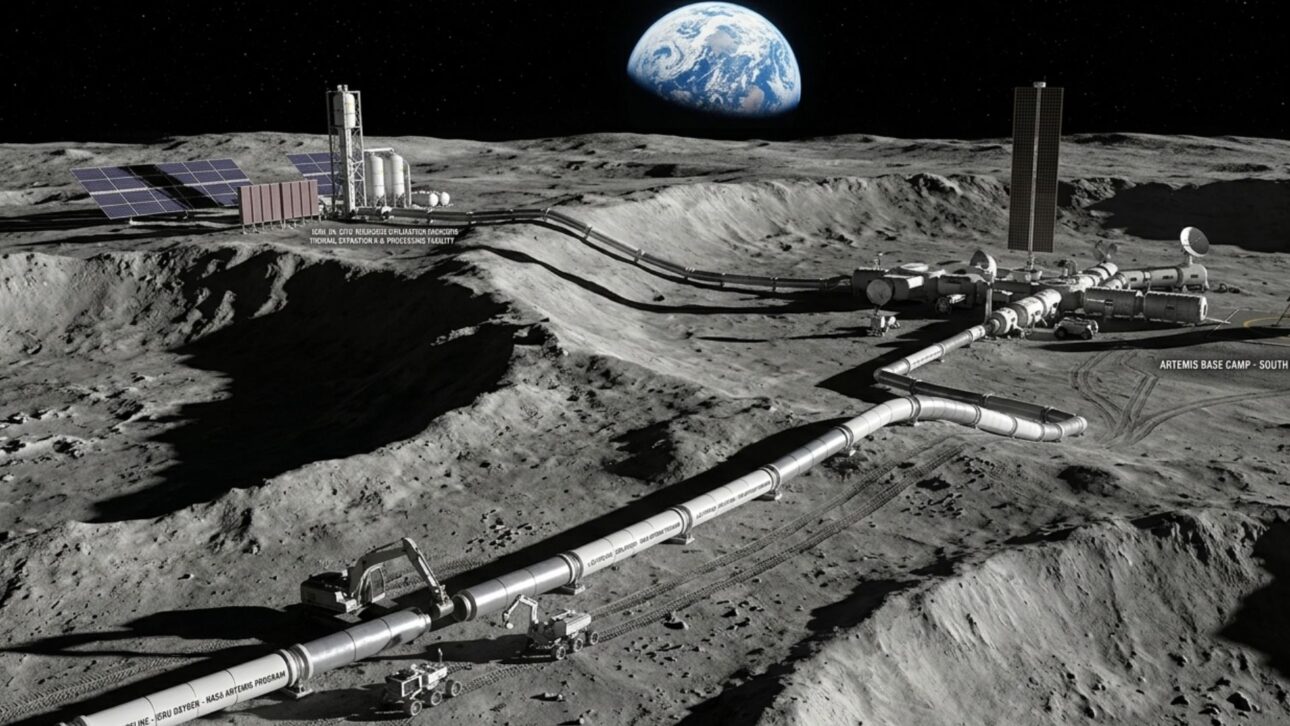
This point is central because the project’s own page states that current efforts to obtain in situ oxygen foresee bottling the resource in compressed tanks or storing it in dewars, which would require transport by vehicles on the surface.
According to the NASA study text, moving this oxygen in rovers can be more energy-intensive than the extraction itself and tends to become one of the heaviest costs of the operation.
In other words, the logic of the pipeline is to cut a critical step in lunar logistics. Instead of repeatedly relying on convoys carrying oxygen between distant facilities, the proposal attempts to transform the supply of the resource into a continuous flow of infrastructure.
The Moon’s South Pole concentrates ice, permanent shadow, and Artemis interest
The chosen location is not random. NASA states that the lunar South Pole offers exceptional opportunities for long-term science and exploration, but it also features rugged terrain, extreme temperatures, and permanently shadowed craters that will require new technologies to enable a functional base.
These dark craters are especially important because NASA confirms that the Moon has water in the form of ice in permanently shadowed regions.
The agency also reports that analyses have revealed multiple sites with confirmed water ice in these areas, which reinforces the strategic value of the South Pole for human missions and the utilization of local resources.


This importance also appears in lunar exploration planning. NASA states that the target sites of Artemis III are near the South Pole and that the region contains ancient rocks, minerals, and trapped water ice, materials that can serve as resources for human explorers and, at the same time, enhance the scientific value of the mission.
Lunar oxygen can supply habitats, rovers, and even launches
The study supported by NASA makes it clear that oxygen would not only have a respiratory function. In the project text, the team states that the resource would be used in human habitats, rovers, and other life support systems, as well as potentially acting as an oxidizer for launch vehicles departing from the Moon.
It’s not just about keeping astronauts alive inside pressurized modules, but about creating a supply chain that can also support mobility operations, storage, and future refueling activities on the lunar surface.
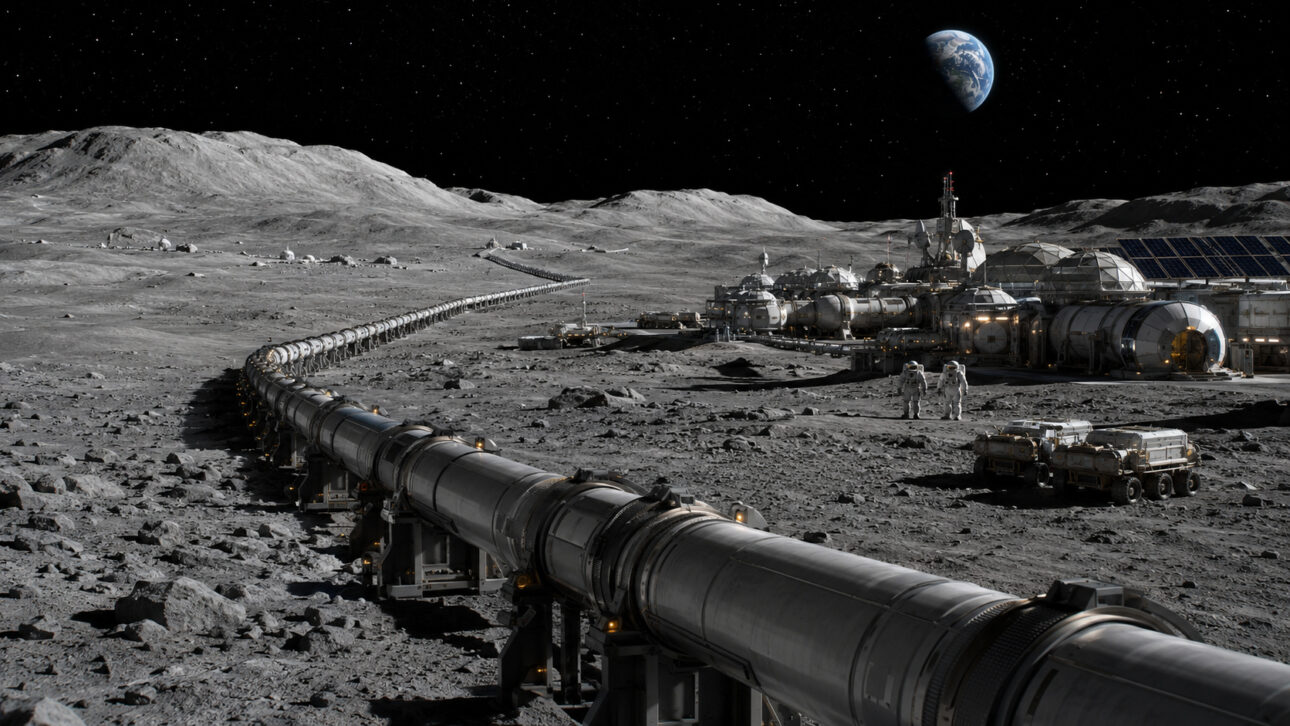
Therefore, the proposal fits into the broader vision of infrastructure outside Earth. NASA itself states that a permanent or sustained human presence will depend on the use of in situ resources to reduce cost and risk of lunar operations, and the L-SPoP appears precisely as an attempt to solve one of the most practical bottlenecks of this equation.
Lunar pipeline would have robotic assembly and use of metals extracted on the Moon itself
Another point that draws attention is how the pipeline would be constructed. The study foresees segments manufactured with materials obtained in the lunar environment itself, highlighting metals derived from regolith, reducing the amount of components that would need to come from Earth.
The proposal mentions a modular structure, with parts produced in situ and connected to cover the distance of 5 kilometers.
The team also states that the duct was designed to be robotically constructed, repaired by robots, operate with low energy consumption, and survive the lunar environment for more than 10 years, with high operational reliability.

This shows that the project is not limited to a generic idea of oxygen transportation. It already starts from quite concrete engineering requirements, related to durability, maintenance, local manufacturing, and heavy automation, all indispensable for any permanent structure beyond Earth.
NASA study is not yet an approved mission, but reveals what the engineering of a lunar base will be like
It is important to separate concept from execution. The L-SPoP was selected in 2023 for a Phase I feasibility study of NIAC, which means that the proposal received support for initial technical evaluation, and not approval for immediate construction on the Moon.

Even so, the project carries weight because it reveals how lunar exploration is scaling up. Instead of thinking only about isolated landings and short missions, NASA is already discussing fixed infrastructure, use of local resources, automated systems, and support networks capable of sustaining a human presence at the South Pole of the Moon.
If this idea evolves in the coming phases, the small 5-kilometer pipeline could become a historic milestone.
Not for its size, but for representing one of the first steps towards continuous industrial infrastructure outside Earth, connecting production, storage, and human life on another celestial body.