






 Portuguese
  Spanish


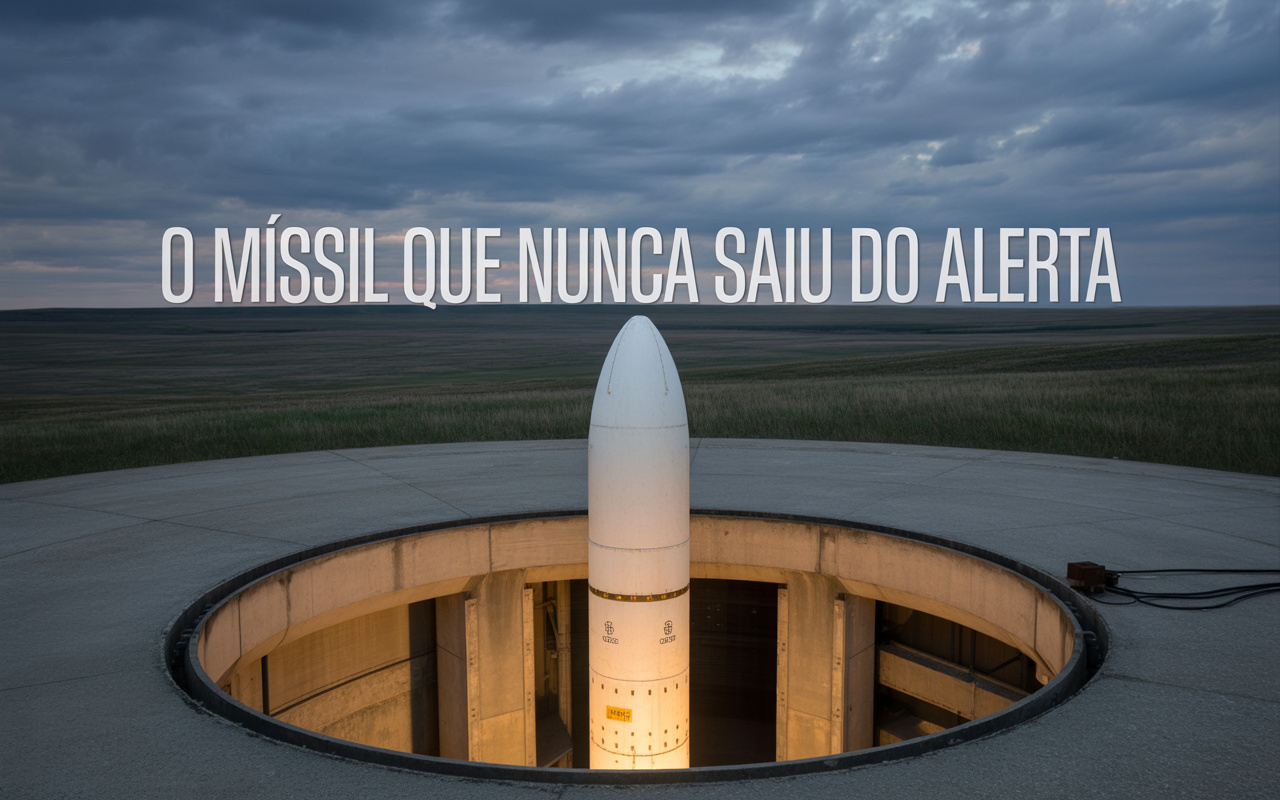


With Intercontinental Range of 9,650 km, Mach 23, and 36 T, the Minuteman III Maintains 400 Missiles in Silos Since 1970 and Still Defines U.S. Nuclear Deterrence.
Under seemingly ordinary fields of the American Midwest, a network of silos holds one of the most decisive weapons in modern history. The LGM-30G Minuteman III is an intercontinental ballistic missile designed to remain invisible, protected, and ready. With a range of over 9,650 kilometers, it can cross continents in minutes, reaching speeds close to 24,000 km/h (Mach 23) immediately after engine shutdown. It is this combination of range, speed, and permanent readiness that makes the Minuteman III a pillar of strategic deterrence to this day.
Numbers That Explain The Fear
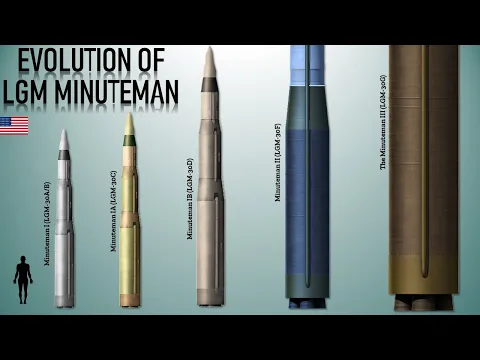
The psychological impact of the Minuteman III begins with the data. The missile weighs about 36 tons, measures over 18 meters in length, and uses three stages of solid propulsion, ensuring extreme reliability and immediate response. Unlike liquid-fueled missiles, it does not need to be fueled before launch. The order arrives, the systems are checked in seconds, and the vector leaves the silo almost instantaneously. In military terms, this dramatically reduces the enemy’s reaction window.

Why 400 Missiles Still Matter
Even after more than five decades since its introduction into service, 400 units remain active in reinforced silos. This number is not random. It has been calibrated through international treaties to maintain strategic credibility without escalating arsenals.
-
New Brazilian Frigate Equipped with Advanced Missiles and Radars to Safeguard Strategic Maritime Areas

-
New Brazilian Frigate Equipped with Advanced Missiles and Radars to Protect Strategic Maritime Areas, Including the Blue Amazon and Pre-Salt Reserves
-
China Unveils Laser Weapon Capable of Instantly Neutralizing Military Drones, Marking a Significant Advancement in Air Defense Technology
-
U.S. Navy’s Ticonderoga-class Cruiser Becomes a 9,800-Ton Missile Fortress with Advanced Aegis System Capable of Tracking Hundreds of Targets



Each silo requires infrastructure, teams, electrical redundancies, and secure communications. The result is an expensive system to maintain but considered essential to ensure that any attack against the United States faces a devastating and inevitable response.
The Role of the Minuteman III in the Nuclear Triad
The American doctrine rests on three pillars: strategic bombers, submarine-launched missiles, and land-based ICBMs. The Minuteman III represents the most stable and predictable component of this triad. Bombers can be seen and withdrawn; submarines operate silently in the oceans; the silos, on the other hand, are known and fixed. Paradoxically, it is precisely this predictability that strengthens deterrence, as it eliminates ambiguities and reduces the risk of miscalculation in crises.
After launch, the Minuteman III ascends rapidly, surpasses the atmosphere, and enters a ballistic trajectory. In the exo-atmospheric phase, the warhead follows a precisely calculated arc through inertial systems. The hypersonic speed is not a technical detail: it limits any interception attempts and makes missile defense a permanent, costly, and incomplete challenge. Even modern systems cannot guarantee total blockage against a large-scale attack.
Modernizations for a 21st Century Missile
Although the basic design is from the 1960s, the Minuteman III has undergone continuous life extension programs. Guidance, electronics, command systems, and materials have been updated to maintain reliability and safety.
The missile that remains on alert today is not the same as it was in 1970 from the inside. It is, in practice, an old platform with a modern brain, maintained until its replacement is ready.
Treaties, Limits, and International Politics
The Minuteman III is also a product of nuclear diplomacy. The number of missiles and warheads has been shaped by agreements like START and New START. Each cut required verifiable dismantlements, international inspections, and technical adjustments.

Even so, the system has remained active because, for Washington, it continues to be the fastest way to ensure retaliation in any extreme scenario.
Why It Still “Haunts” Geopolitics
In a world discussing hypersonic weapons, drones, and cyber warfare, the Minuteman III serves as a reminder that global balance still rests on technologies created at the height of the Cold War. Its mere existence influences negotiations, strategies, and alliances. As long as it is in service, it symbolizes the logic of deterrence: it is not made to be used, but to ensure that no one dares to use it against those who possess it.
The United States is already working on a successor to the Minuteman III, but the transition will be long and complex. Until then, the silos remain active, monitored 24 hours a day. The missile that crosses continents continues to fulfill its silent mission, proving that, even after more than half a century, range, speed, and readiness still define the heart of global strategic power.






Mísseis hiper sônicos ainda são de capacidade Russa e não americana.
E o mais temido no momento é o Satan II que transportadora 15 ogivas atômicas.