Portuguese
  Spanish


Unique Discovery Of Uranium At Great Depth In The Chinese Desert Reveals Technological Advancements, Expands Strategic Reserves And Promises To Change The Global Nuclear Energy Scenario.
The China announced a discovery that surprised the international scientific community: a uranium deposit located 1,820 meters deep in the heart of the Xinjiang desert, within the Tarim Basin, in the northwest of the country.
The information was confirmed through an official statement from the China National Nuclear Corporation (CNNC), the state-owned company responsible for the operation, which classified the achievement as the “deepest discovery of industrial-grade sandstone-type uranium ever recorded in the world”.
The location of this mineral deposit, in a remote and uninhabited area, represents a milestone for global uranium exploration, a key resource for nuclear energy generation.
-
AI Security System in Brazil Aims to Cut False Alarms by Differentiating Pets from Intruders, Enhancing 24/7 Monitoring for Homes and Businesses

-
Archaeologists Discover 1,500-Year-Old Byzantine Mosaic with Greek Biblical Inscription in Israel, Uncover Ruins of 10 Buildings Near Kiryat Gat
-
Ohio Carpenter Finds 308-Gram Meteorite the Size of a Baseball After Dreaming of Its Location

-
Chinese Student Builds Humanoid Robot for $2,100 at Age 20, Now Leads Robotics Startup in China



According to CNNC, exploration in such deep geological layers and in an inhospitable desert environment fills a historical gap in the sector, as the world’s main deposits of this element are usually found at significantly shallower depths and in more accessible areas.
The confirmation of uranium at this depth was made possible thanks to the use of advanced geological mapping technologies.
High-resolution satellite images, detailed aerial surveys, and precision drilling allowed for the mapping of the underground layers of the desert, facilitating the identification of the exact location for operations.
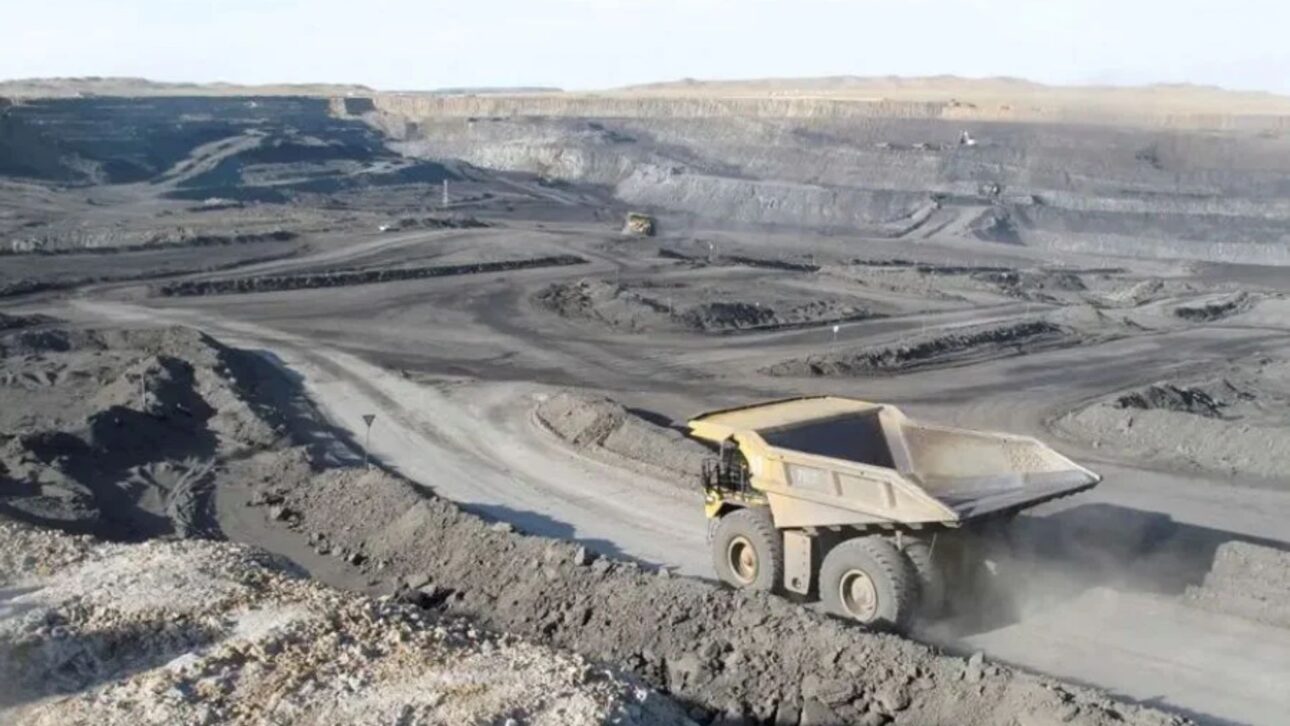
The use of these digital tools was highlighted by CNNC itself, which stated that it has created an “integrated, ecological, and efficient” system for uranium prospecting in desert regions — a model that could transform traditional methods used in other parts of the world.
According to the Beijing Uranium Geology Research Institute, which directly participated in the analyses and operations, the team involved developed a new predictive model to detect uranium in previously unexplored areas.
The process involved an unprecedented combination of techniques, both in the field of prospecting and in drilling through complex geological formations.
The Chinese state-owned company considers the discovery to be “pioneering” not only due to the uniqueness of the location and depth but also because of the scientific approach used.
Uranium In The Chinese Desert: Energy Demand And Self-Sufficiency
The search for uranium at increasingly greater depths meets the growing demand of the Asian country for safe and abundant sources of nuclear fuel.
Nuclear energy is a key element in China’s national plan for diversifying the energy matrix and reducing dependence on fossil fuels.
Official data shows that China, currently the third-largest producer of nuclear energy in the world, has accelerated projects to build new plants and invested heavily in research to ensure self-sufficiency in providing strategic raw materials.
The discovery of uranium in Xinjiang represents a fundamental step in this context as it expands the national reserves of the mineral and reduces the need for imports.
The Chinese government has already declared its intention to double its installed nuclear energy capacity by 2030, and the new uranium deposit arises as a central element of this strategy.
In addition to the energy benefit, China’s technological advancement in mineral exploration places the country at the forefront of the sector, generating expectations in international markets regarding potential partnerships and technology transfers.

Advanced Technologies And Innovation In Prospecting
The project in the Xinjiang desert was only made possible thanks to the integrated use of remote sensing technologies, artificial intelligence applied to geological analysis, and drilling equipment capable of operating under extreme temperature and pressure conditions.
The development of these solutions was led by multidisciplinary teams from the Beijing Uranium Geology Research Institute and CNNC, which also drafted environmental protocols to minimize impacts in the region.
Experts highlight that uranium prospecting in desert areas represents a particular challenge.
Deep sandstone layers, generally poor in minerals, make detection and extraction complex and costly.
The Chinese approach, which combined predictive data analysis and high-precision mechanized operations, could serve as a reference for other countries with difficult-to-access areas and a growing demand for clean energy.