





 Portuguese
  English
  Spanish
  4 min of reading
  0 comments


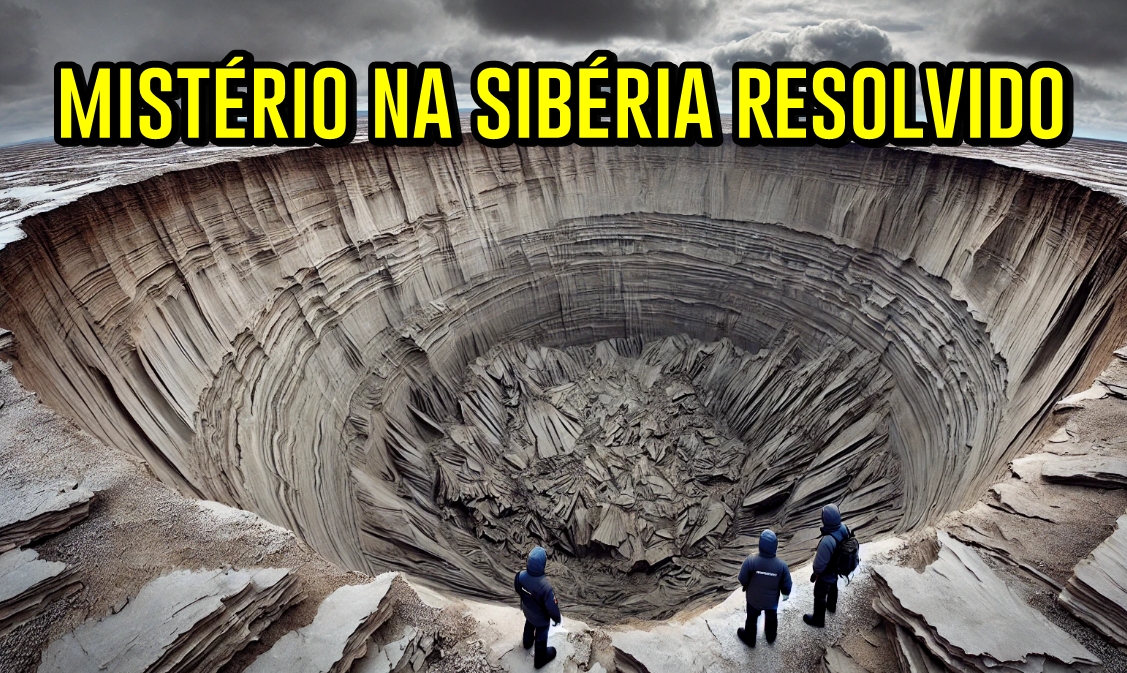
Large Methane Craters Are Exploding and Destroying Siberia; Scientists Finally Understand the Cause
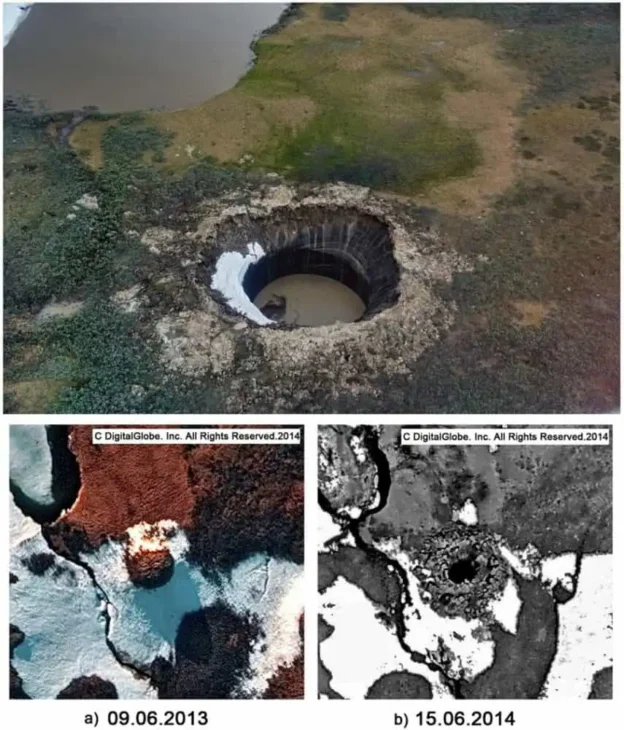
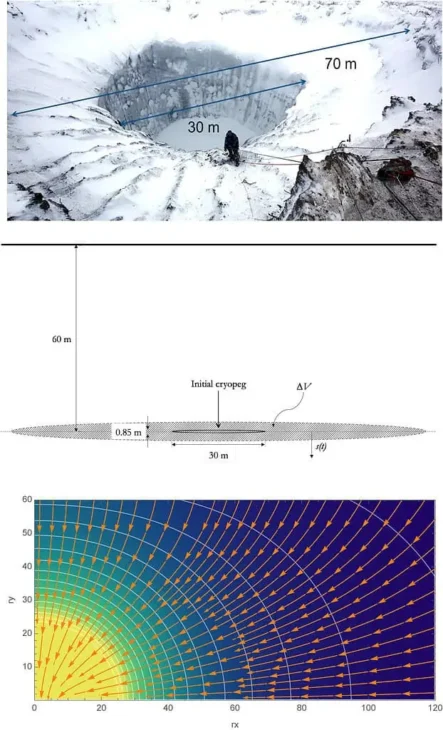
In the icy expanse of Siberian tundra, a terrifying mystery has begun to emerge: giant craters exploding from the very ground. Since 2014, more than twenty of these formations have been discovered, each several hundred meters wide, creating dark and deep abysses in the Russian Arctic permafrost.
For many, the craters are works of science fiction or perhaps even the result of extraterrestrial forces. But now, scientists are beginning to understand the real reasons behind these explosions — and the answer may lie in global warming.
The first crater was discovered on the Yamal Peninsula in 2014, generating curiosity and many theories. From meteors to pertinent, all possibilities were considered. However, a plausible answer seems to lie in the very ground itself: climate changes interacting with unique Siberian geology.
-
Fossils hidden in a cave in New Zealand have revealed an ancestor of the kākāpō parrot that, unlike the current bird, might still have known how to fly.

-
Antarctica once had a tropical forest near the South Pole: fossilized roots, pollen, and spores extracted from the seabed reveal an ice-free continent 90 million years ago, with CO2 levels so high that they kept trees alive even after months without Sun.

-
The space minibus that lands like a plane: Dream Chaser carries more than 7,800 pounds of cargo to orbit, can stay docked to the ISS for up to 75 days, returns with over 3,500 pounds of experiments, and promises to make the Kennedy Space Center receive the first orbital runway landing since the end of NASA’s space shuttles.

-
South Korea begins construction of a 10.9 km hydrogen-powered tram line, without overhead wires and with 15 stops, invests 381 billion won, orders nine trains, and prepares Ulsan for a new era of clean urban transport starting in 2029.


A recent study published in Geophysical Research Letters suggests that rising temperatures are causing the explosive release of methane from the depths of the frozen ground. This aspect is not only a geological investigation but an alarming example of the consequences of climate change in remote and frozen areas of the planet.
Methane Hydrates and the Explosion of Siberia’s Subsurface
To understand what is happening, we need to understand methane hydrates. Imagine solidified methane, trapped in ice. These formations result from high pressure and low-temperature conditions, just like the Siberian permafrost. However, warming soils, even if subtly, are destabilizing these hydrates.
Ana Morgado, a chemical engineer at the University of Cambridge, describes the situation as a “perfect storm” of factors, where permafrost, methane hydrates, and a unique layer of salty liquid water, known as “cryopeg,” form a recipe for an explosive situation.
With warming, the upper layers of permafrost melt and the fluid water reaches the cryopeg — a layer of saline liquid water that lies beneath the frozen ground. This infiltration generates increasing pressure underground, sufficient to crack the upper layers of the earth.
When these cracks reach the surface, the pressure significantly drops, destabilizing the methane. And it is at this moment that the explosion occurs, violently releasing the gas and creating the craters that today intrigue scientists.
The Global Impact of Small Local Explosions
These explosions affect not only the landscape and the safety of local inhabitants but have a global impact. Methane is one of the most potent greenhouse gases, able to trap heat up to 80 times more than carbon dioxide over short periods.
Although the craters may seem insignificant compared to the global scale, they serve as reminders of how quickly the Arctic is changing. Lauren Schurmeier, a geophysicist at the University of Hawaii, observes that these craters appear shortly after particularly hot summers. “They are a frightening sign that the Arctic is changing,” she said.
While most scientists agree on the role of climate change, some voices raise doubts. Evgeny Chuvilin, a scientist at the Skolkovo Institute of Science and Technology in Moscow, questions whether the process is so straightforward.
For him, methane could accumulate in cavities closer to the surface before dropping, rather than being the result of deep interactions with the cryopeg. Still, most researchers emphasize that climate change weakens permafrost, making it more vulnerable to gas releases.
The Future of the Arctic and Climate Science
The appearance of the craters is concerning for various reasons. First, these explosions are dangerous for people and infrastructure in the affected areas. Institutions such as the Oil and Gas Research Institute of the Russian Academy of Sciences are already monitoring mounds near villages, anticipating that new explosions may occur.
The second point is that they serve as a warning about the impact of human activity on the planet. As Morgado stated, the speed at which these changes occur is astounding. We are not talking about millennia, but decades.
For researchers, predicting future explosions is a challenge, but also a necessity. Understanding exactly how and where these craters form can help save lives and protect critical Arctic infrastructure. Moreover, it is an opportunity to raise global awareness of the importance of acting against climate change.
Reflection and Conclusion
Thinking of the Siberian craters as a consequence of climate change helps us see the global impact of our local actions. Often, we associate global warming with phenomena like hurricanes, droughts, and rising sea levels, but the melting of permafrost and the release of methane show us that it also takes forms we do not see — until a chasm opens in the tundra.
The craters are a grim reminder of how interconnected the planet is. What happens in a remote corner of Siberia can eventually affect the global climate and, with it, the lives of all of us. The melting of the Arctic is more than an isolated issue.
It is a warning that time is running out and that if we want to protect our future, we need to understand and act on these signs before even more drastic manifestations appear.






Be the first to react!