






 Portuguese
  Spanish
  4 min of reading
  0 comments


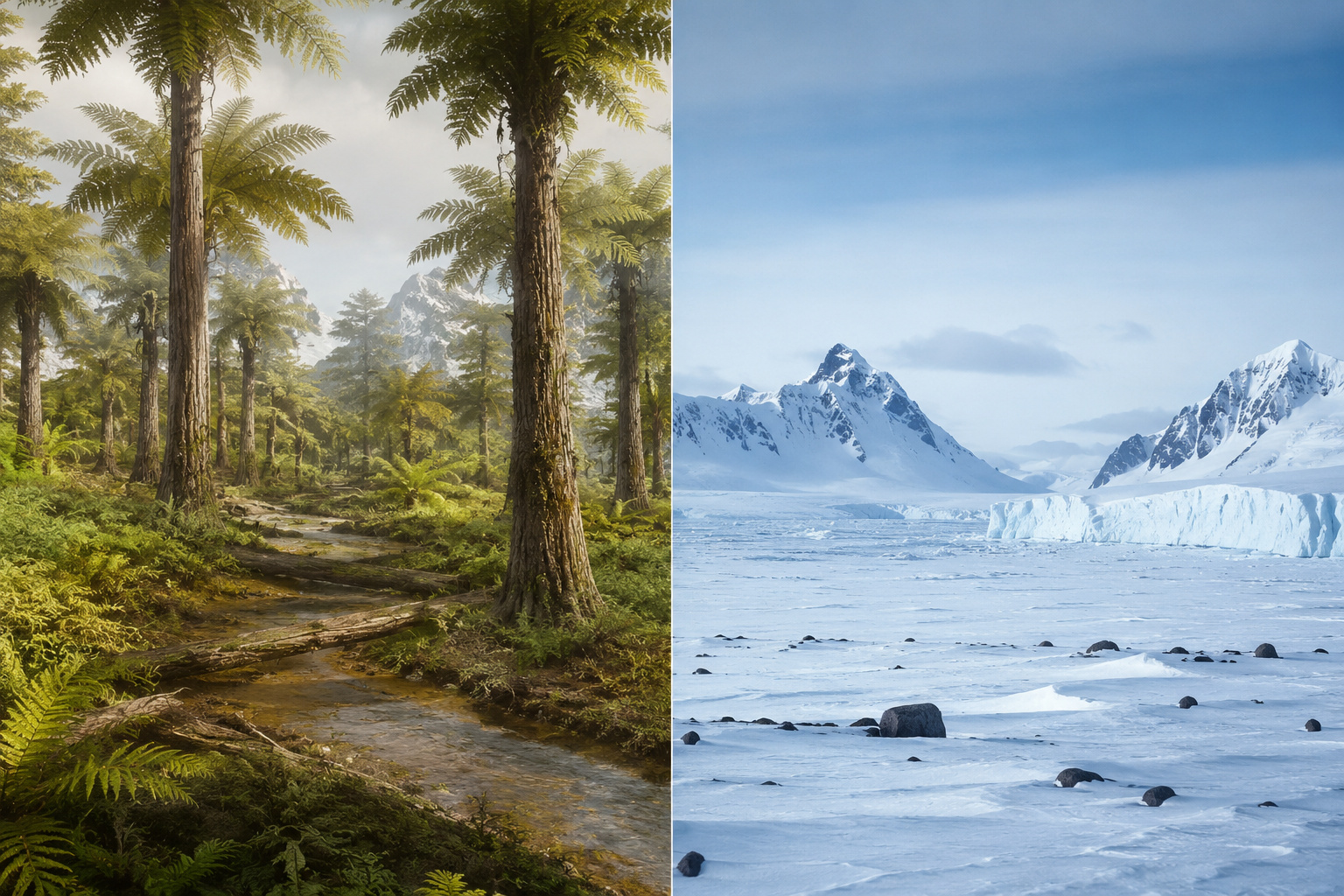
Sediments extracted from Antarctica revealed a 90-million-year-old forest near the South Pole, in a world without ice and with extreme CO2.
Today covered by an ice layer that in some places exceeds 4 kilometers in thickness, Antarctica is the coldest, driest, and most inhospitable continent on Earth. But a sediment core extracted from the seabed revealed that this landscape was once completely different. About 90 million years ago, during the Cretaceous period, a swampy forest thrived near the South Pole.
The discovery was made by an international team led by the Alfred Wegener Institute, from Germany, after analyzing sediments collected in the Amundsen Sea, in West Antarctica. The material contained fossilized roots, pollen, spores, and soil remains preserved so exceptionally that researchers were able to reconstruct an environment similar to a humid temperate forest in a region that currently remains frozen all year round.
Fossilized roots found beneath the seabed revealed a preserved forest near the South Pole during the Cretaceous
The discovery occurred during an expedition of the research vessel Polarstern, which drilled sediments near the Pine Island glacier, one of the most vulnerable areas of present-day Antarctica. The researchers recovered a core approximately 30 meters long.
-
Brazilian student creates a cheap formula that makes plants grow up to 90% faster and wins an award in a global scientific competition.

-
Europe unveils armored tank with remote turret, 1,500 horsepower, and 120-millimeter cannon

-
Old hard drives may hide neodymium, dysprosium, praseodymium, and terbium, and a United States company is expanding its network with a new 93,000-square-foot facility to recover rare earths used in electric cars, artificial intelligence, defense, and renewable energy.

-
Giant crane lifts up to 3,000 tons, requires special logistics to reach the site, and can transform 18-hour operations into just 3 hours, speeding up the hoisting of oil platforms, refineries, and plants in giant industrial projects.




What immediately caught attention was the unusual coloration of a layer located at the bottom of the core. When the material underwent CT scans, scientists found an extremely dense network of fossilized roots spread throughout the sediment.
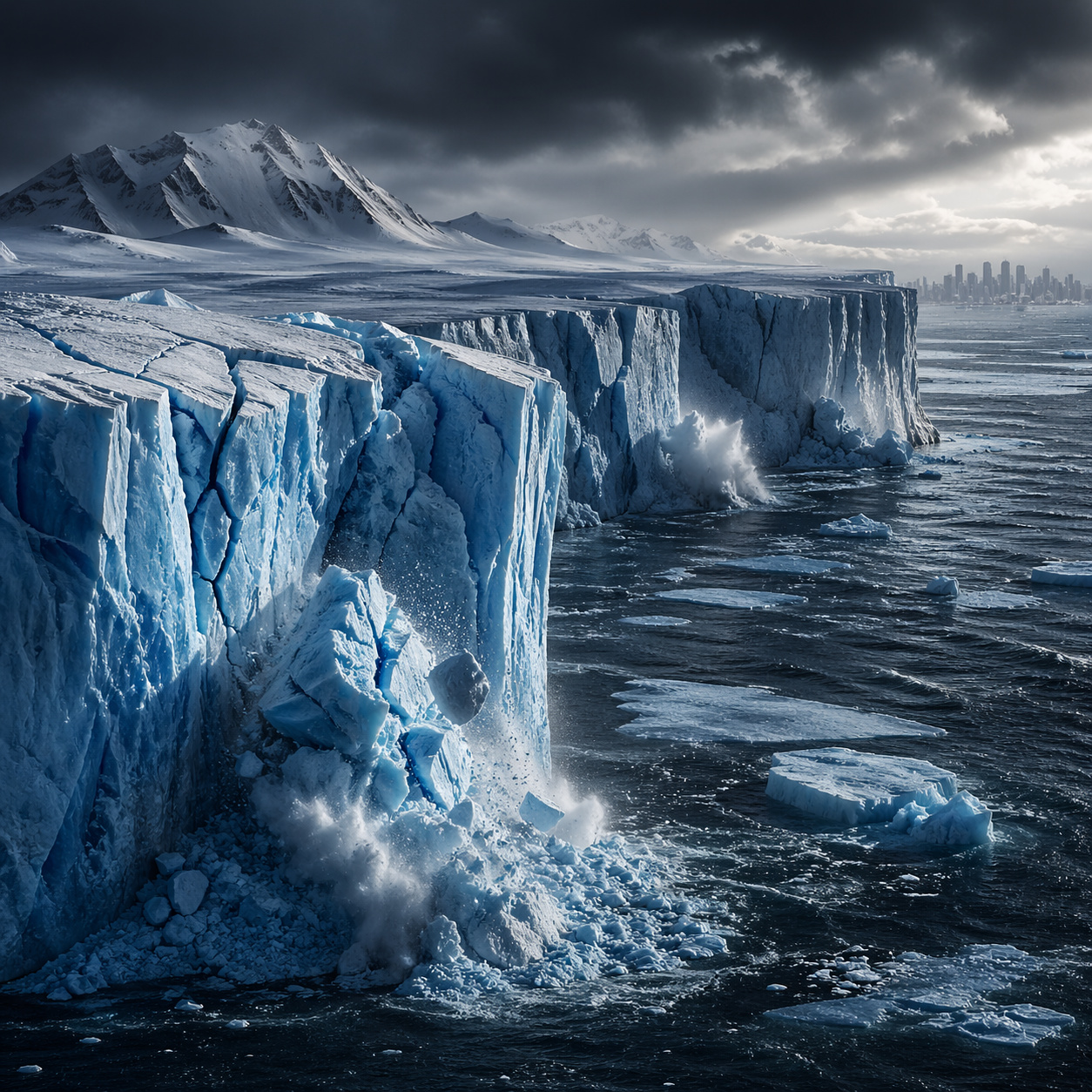
In addition to the roots, microscopic analyses revealed a large amount of pollen, spores, and plant biomarkers. The traces confirmed that this region housed a developed swampy forest, something considered practically impossible for the current conditions of Antarctica.
The forest grew about 900 kilometers from the South Pole and survived months of continuous darkness
During the mid-Cretaceous, Antarctica occupied a position similar to today, and the studied area was located approximately 900 kilometers from the South Pole. This means that the plants faced long periods without sunlight during the polar winter.
Even so, the data indicates that the region had an average annual temperature close to 12°C, a surprisingly high value for a polar area. According to the researchers, rivers, swamps, and dense vegetation dominated the landscape.

Scientists believe that the forest was mainly composed of conifers, ferns, and other plants adapted to extremely humid environments. The scenario probably resembled some modern swamp forests found in temperate regions.
Climate models showed that Antarctica needed a colossal greenhouse effect to sustain trees at that latitude
After identifying the plant remains, the team used climate models to understand how a forest could survive so close to the South Pole. The results showed that atmospheric concentrations of carbon dioxide needed to be much higher than previously used estimates for the period.
According to climate experiments, levels between approximately 1,120 and 1,680 parts per million (ppm) of CO2 would be necessary to reproduce the temperatures found by the researchers.
For comparison, the current concentration of carbon dioxide in the atmosphere exceeds 420 ppm. Although it is far below the estimated values for that period, it remains one of the highest recorded in recent human history.
At the time of the polar forest, Antarctica had no ice cap and the planet was radically different
The researchers concluded that the forest could only exist because Antarctica did not yet have a large permanent ice layer. The continent was part of a world known as “Greenhouse Earth,” when the global climate was much warmer than it is today.


During the Cretaceous, the oceans had significantly higher levels and vast continental areas were covered by shallow seas. Polar regions had much milder temperatures and there were no ice caps similar to those of today.
Geological records indicate that Antarctic glaciation only began tens of millions of years later, between approximately 60 and 45 million years ago, intensifying around 34 million years ago.
The lost forest of Antarctica has become one of the most impressive pieces of evidence of a planet capable of functioning in extreme climate states
For researchers, the core extracted from the Amundsen Sea represents one of the most important direct pieces of evidence ever found about the polar environments of the Cretaceous. Before this discovery, there were practically no reliable climate records from regions so close to the South Pole for this period.
The finding also showed that dense forests managed to survive in a location subjected to months of continuous darkness, something that challenges the modern perception of the ecological limits of plants.
Today, under kilometers of ice, Antarctica holds traces of a world that seems to belong to another planet: a landscape of trees, roots, swamps, and lush vegetation growing near the South Pole at a time when the white continent was still green.




Be the first to react!