






 Portuguese
  Spanish


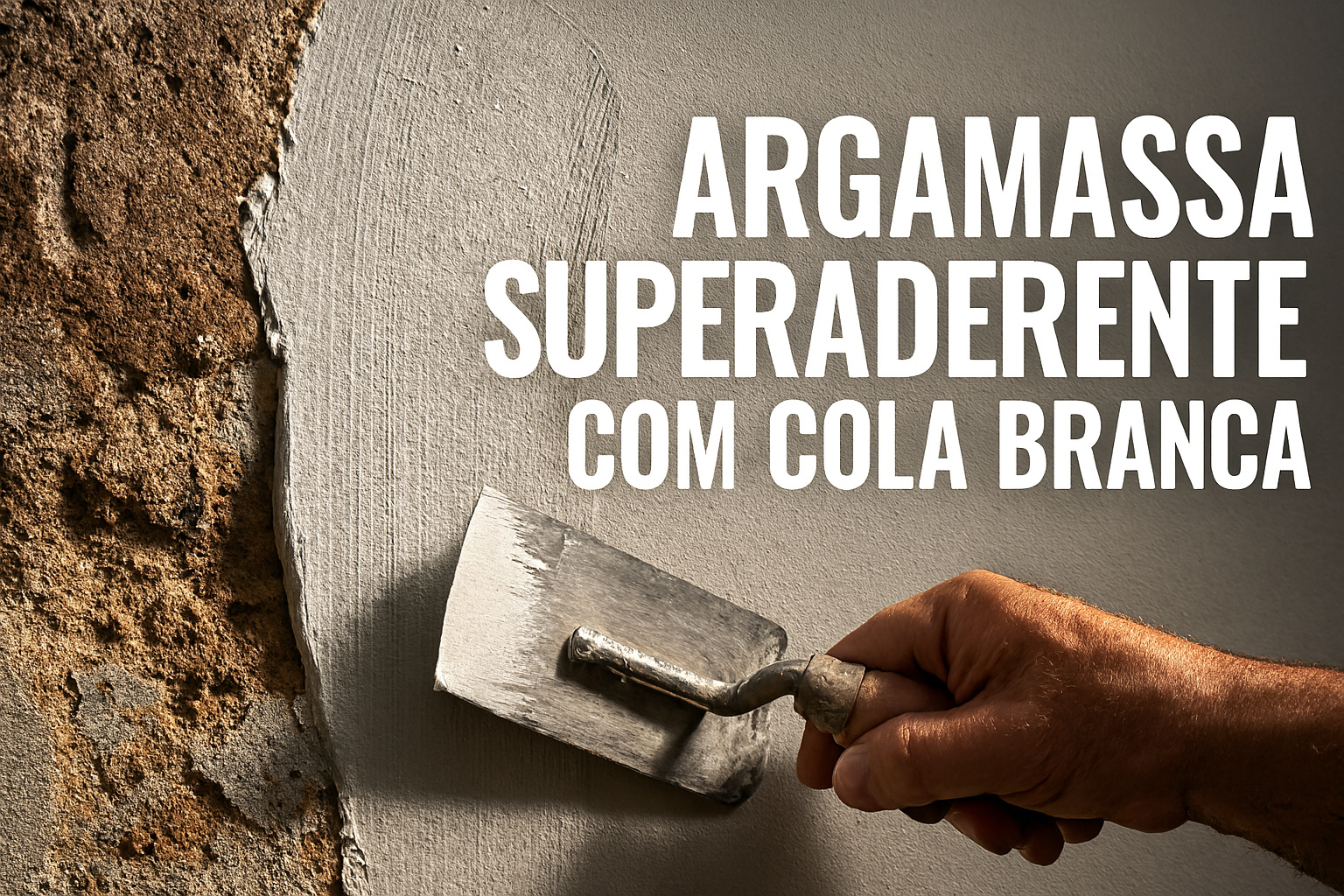


Cement Mixed With White Glue Creates Super-Adhesive Mortar That Recovers Old Walls, Corrects Weak Plaster, And Provides Durable Finish In 2025.
In residential work and small renovations, a simple and inexpensive mixture has regained prominence among masons, painters, and engineers: the combination of cement + PVA white glue to create a super-adhesive mortar capable of recovering old walls, correcting weak plaster, and increasing the durability of the final finish. Although it has been known for decades in the construction sector, the technique has resurfaced strongly in 2024 and 2025, boosted by the rising prices of paint, cement, and surface preparation products, as well as the popularization of technical videos and professional demonstrations that have shown, in practice, how the mixture improves cohesion and resistance of the plaster.
The scientific basis is clear: PVA glue acts as a binder, increasing adhesion between cement particles and the surface. Manufacturers of construction products, such as Quartzolit, Vedacit, and Suvinil, already include PVA as an additive in various lines; therefore, the technique has become common in low-cost works looking for the same effect with accessible materials.
How the Mixture Works Technically and Why It Recovers Old Walls
Cement is a material with high resistance power, but its adhesion capacity decreases when applied to very dry, powdery (dusting) or aged surfaces. PVA glue enters this process as a film-forming polymer, which:
-
U.S. City Builds Tiny Home Village on Water Company Land to House 136 Homeless People: Inside the Social Housing Units

-
Woman Turns Shipping Container into Home, Embraces Rural Life to Cut Monthly Expenses to Just Over $330
-
France Revamps 530 Social Housing Units with Large Balconies and Glass Facades Without Demolishing Existing Buildings

-
Facing high rent, couple transforms parents’ garage into a fully functional apartment, creating a complete home at a fraction of the market cost.




- improves adhesion immediately after application;
- reduces porosity;
- increases abrasion resistance;
- decreases the appearance of microcracks;
- increases surface impermeability;
- prolongs the life of the plaster.


The result is a fine, strong, easy-to-apply mortar capable of transforming walls that would be discarded or would require complete demolition.
This is why the mixture is widely used in:
- old plasters;
- peeling walls;
- areas with controlled humidity;
- porous surfaces;
- internally deteriorated walls;
- base preparation before painting.
Proportion Used By Professionals and Performance Observed On Site
Fieldwork and practical tests show that the proportion most commonly used by professionals is:
- 1 part of cement
- 2 to 3 parts of fine sand (when a thicker mortar is desired)
- PVA glue sufficient to replace 30% to 50% of the water
- remaining water until the desired consistency is reached
For internal surfaces requiring a thin correction layer, many applicators use the mixture without sand, creating a type of “polymeric cement paste.”
This version is:
- smoother;
- extremely adhesive;
- ideal for leveling small imperfections;
- resistant to chipping.
Drying occurs in approximately 8 hours, depending on ventilation and weather, allowing painting the very next day, one of the main reasons for the technique’s success in quick works.
Real Performance After Curing: Superior Durability
Once completely dry, the mortar with white glue shows:
- hard and firm surface;
- high mechanical resistance;
- lower tendency to cracking;
- excellent adhesion to old walls;
- good abrasion resistance;
- better finishing even before painting.
Professionals highlight that the mixture can replace two or three preparation steps, such as sealer, leveling compound, and thin plaster, resulting in significant cost savings in low-budget works.
When the Technique Works Best and When It Should Not Be Used
The mixture is extremely effective in:
- internal walls without structural infiltration;
- powdery surfaces;
- deteriorated internal walls;
- worn walls;
- areas with “weak,” crumbling plaster;
- surfaces that require quick recovery.
On the other hand, it should not be applied to:
- walls with active infiltration;
- external areas directly exposed to heavy rain;
- places where the internal temperature experiences large fluctuations;
- greasy surfaces or those with loose paint.
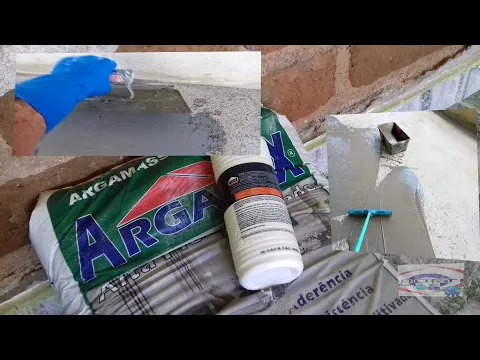
If there are structural issues such as infiltration, efflorescence, or “hollow” plaster — the problem should be fixed first.
Comparison With Commercial Products: Cost Advantage and Good Performance
Acrylic sealers and industrial leveling compounds show superior performance in laboratory tests, but the cement + PVA solution continues to be widely used because:
- it is inexpensive;
- it uses easily found materials;
- it dries quickly;
- it provides high durability;
- it corrects heavily compromised walls;
- it reduces construction phases;
- it offers effects similar to sealers on internal walls.
Painting professionals report that, after complete curing, the adhesion of paint on this base is superior to that of traditional plaster without additives.
Why the Technique Became a Trend in 2025
The increase in the use of the mixture occurs for three main reasons:
High Prices of Paint and Preparation Products
Accumulated inflation in construction materials has led many owners and professionals to seek reliable and inexpensive methods.
Popularization in Technical Videos
Demonstrations by engineers, foremen, and experienced masons have shown visible results after the first coat, reinforcing its effectiveness.
Quick Works and Need for Immediate Recovery
Small renovations require solutions that:
- dry quickly;
- cover flaws right on the first application;
- allow painting the next day.
This makes the mixture one of the most used solutions to give “a new life” to old walls.
How Much It Costs to Apply the Technique in 2025
The average costs reported in real works are:
- Cement: R$ 25 to R$ 40 per 25 kg bag
- PVA White Glue: R$ 12 to R$ 25 per liter
- Fine Sand (optional): R$ 6 to R$ 12 per bag
- Cost of the Mixture per m²: R$ 4 to R$ 7
In other words, it is one of the cheapest ways to recover badly damaged walls.
The application by a professional varies between R$ 15 and R$ 25 per m², depending on thickness and region.
Final Result: Recovered Wall With Resistant and Durable Finish
When correctly applied, the mixture delivers a finish that is:
- firm;
- uniform;
- resistant;
- without peeling;
- with superior adhesion;
- capable of prolonging the life of the paint.
The visual effect is similar to that of a professional polymer mortar, but at a drastically lower cost.
One of the Most Efficient Techniques for Renewing Old Walls
Mixing cement with white glue is not a homemade trick; it is a real construction technique, used for decades and validated by professionals.
In 2025, with the rising costs and the need for practical solutions, it became one of the most sought after alternatives to recover old walls, reinforce weak plasters, and provide a solid base for painting, without the need for expensive products.
For quick works, internal renovations, and material savings, the mortar with PVA remains one of the best cost-benefit solutions in the sector.








