Portuguese
  Spanish


Created at MIT, E-bricks Conduct Electricity, Store Heat of Up to 1,800 °C, and Promise to Replace Fossil Fuels, Revolutionizing Furnaces, Power Plants, and Heavy Industry.
The Massachusetts Institute of Technology (MIT) is once again at the center of a technological revolution that could transform entire industries. The startup Electrified Thermal Solutions, born within MIT, has developed refractory bricks that not only conduct electricity but also store heat at temperatures of up to 1,800 °C. Named E-bricks, these bricks are the foundation of a system called Joule Hive™ Thermal Battery (JHTB), a thermal battery capable of generating, storing, and releasing extreme heat, promising to change the way sectors like cement, steel, mining, and food operate.
This innovation goes beyond an academic advance: it is a concrete step toward decarbonizing heavy industry, responsible for more than 20% of global greenhouse gas emissions. With E-bricks, factories will be able to replace fossil fuels with renewable electricity, creating a realistic path to drastically reduce pollution in processes that have historically relied on coal, gas, and oil.
MIT Innovation Brick: How the Technology That Conducts Electricity and Stores Heat Works
The concept behind E-bricks is simple yet powerful. The bricks are made with special refractory materials, capable of withstanding extremely high temperatures. When connected to a renewable electricity source, they heat up quickly and store heat on a large scale. This heat can then be released on demand to power furnaces, plants, and industrial systems.
-
Affordable Housing Project in Brazil’s Mato Grosso Aims for 700 Deliveries and $34 Million in 2026, Outpacing Major Developers in High-Demand Areas

-
Brazil’s Largest Port to Accommodate Bigger Ships by October as Ibama Approves Non-Explosive Removal of Hidden Rocks and Sediments
-
Mexico Develops 3D-Printed Concrete from Corn Waste, Cutting Emissions by 70% and Reducing Construction Waste by 90%
-
Traditional Mortar to Decline by 2026: ACIII-E Solution for Large Porcelain Tiles Offers Better Adhesion and Reduces Risk of Loose Pieces in Floors and Facades


This model is revolutionary because it transforms the brick itself into a means of energy storage, something that can eliminate the need for burning fossil fuels in thermal processes. As a result, heavy industries will be able to maintain the same efficiency but with a significantly lower carbon footprint.
E-bricks and the Strategic Partnership with HWI for Large-Scale Production
To take the technology from the lab to the industry, Electrified Thermal Solutions has made an agreement with HarbisonWalker International (HWI), a company of the Calderys group and one of the largest suppliers of refractory materials in the U.S.
This partnership is crucial because it ensures the large-scale production of E-bricks using existing supply chains.
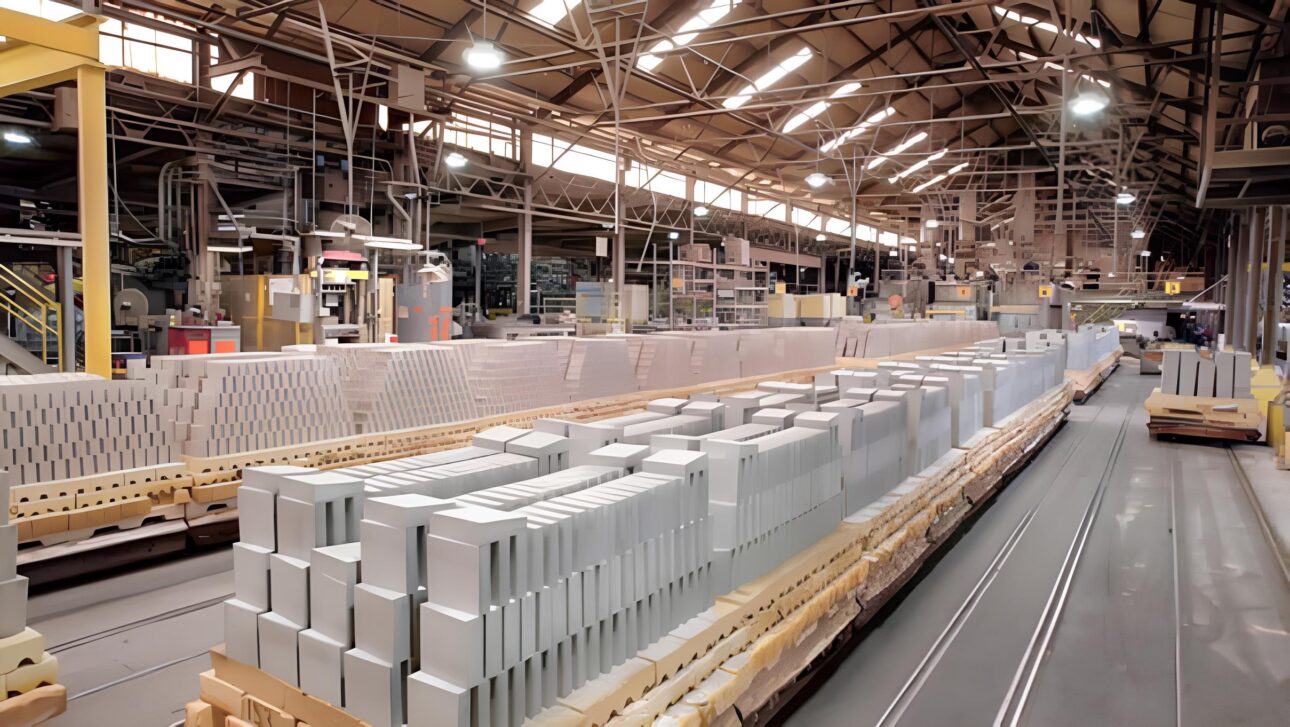
According to HWI, the electric bricks maintain the durability required by customers who work with extreme temperatures, while also providing the advantage of generating heat using renewable electricity.
Calderys, the parent company of HWI, is already planning to expand production globally, signaling that industrial demand for this type of solution is rapidly growing.
Electric Bricks: Benefits and Potential for Industrial Transformation
E-bricks offer a range of advantages that explain why they are attracting the attention of industrial giants:
- Withstand extreme temperatures of up to 1,800 °C, suitable for sectors like cement and steel.
- Replace fossil fuels, using renewable electric energy as a heat source.
- Reduce greenhouse gas emissions, helping companies meet sustainability goals.
- Can be produced on a large scale, leveraging existing manufacturing and supply chains.
According to Daniel Stack, CEO and co-founder of Electrified Thermal Solutions, the goal has always been to create a scalable product: “To make a significant impact on a global scale, we needed a solution that could be produced quickly. Our partnership with HWI transforms what could be a bottleneck into a powerful scale advantage.”
Conductive Bricks: What This Means for the Clean Industrial Revolution
The ability to store heat efficiently using electricity opens a range of opportunities for the so-called Green Industry 4.0.
Today, many sectors face challenges in eliminating fossil fuels because they require continuous and intense heat to operate. Steel, for example, requires extremely high temperatures for melting. Cement, another polluting sector, relies on kilns that operate 24 hours a day.
E-bricks can solve this impasse by allowing companies to use solar and wind energy — sources that vary throughout the day — to heat the bricks, which then release heat steadily. This creates a link between intermittent renewable energy and constant industrial processes, something that has always been a challenge for decarbonization.
Industries That Can Benefit from E-bricks
- Cement: responsible for about 7% of global CO₂ emissions, could use the bricks to eliminate coal usage.
- Steelmaking: replacing coke and natural gas with electric heat would reduce emissions without compromising production.
- Mining and metals: smelting and refining processes would become cleaner.
- Food and beverages: ovens and pasteurization systems could operate more sustainably.
A Step Toward a Future of Cleaner Furnaces and Power Plants
The potential impact of the technology is enormous. Instead of reinventing all infrastructure, E-bricks can be integrated into existing furnaces, power plants, and systems, accelerating adoption without requiring drastic changes to the global industrial landscape.
More than an MIT innovation, electric bricks represent a pragmatic concept: transforming simple components, like bricks, into key pieces for the global energy transition.
E-bricks demonstrate that not every technological revolution comes in the form of chips or artificial intelligence. Sometimes, what changes the world is a brick — as long as it stores heat, conducts electricity, and replaces fossil fuels on an industrial scale.
With the partnership between Electrified Thermal Solutions and HWI, this innovation is ready to leave MIT’s laboratories and heat furnaces around the world, ushering in a new era for the clean and sustainable heavy industry.