Portuguese
  Spanish


Japanese Maritime Giant Mitsui OSK Lines (MOL) Evaluates With Caution Chinese and South Korean Shipyards for Future LNG Carrier Orders, Considering the Global Political Scenario and US Policies.
Mitsui OSK Lines (MOL), one of the largest shipping companies in Japan, is adopting a careful evaluation stance. The company is analyzing the use of Chinese and South Korean shipyards that meet its criteria. This analysis takes into account changes in political trends in the United States and geopolitical risks. The goal is to meet the growing demand for liquefied natural gas (LNG) carriers.
Cautious Decision in Shipyard Selection
Recently, media speculation suggested that MOL might suspend new orders for LNG carriers from Chinese shipyards. In response, the Japanese company clarified its position. MOL stated that it will exercise “prudent judgment” in selecting shipyards for any new orders. This decision will take current geopolitical circumstances into account.
The Strategic Importance of LNG and the Role of MOL in Energy Transport
“LNG plays a significant role as an energy source,” emphasized MOL. It supports the global transition to a decarbonized society. MOL’s mission is to maintain a stable supply of energy in Japan and around the world. The company positions itself as a leading operator in LNG transportation. “Ensuring a stable LNG transport infrastructure is essential to meet this demand,” highlighted the company.
-
The FLIP: A 108-Meter Ocean Laboratory That Stood Vertically for 60 Years, Dismantled in 2023

-
North Korean Fiasco: Launch of the Largest Warship Ends in Sinking

-
While giant ships still burn heavy fuel and the maritime sector races against climate targets, Maersk and Vale are starting to bet on ethanol as a new route to reduce emissions at sea.

-
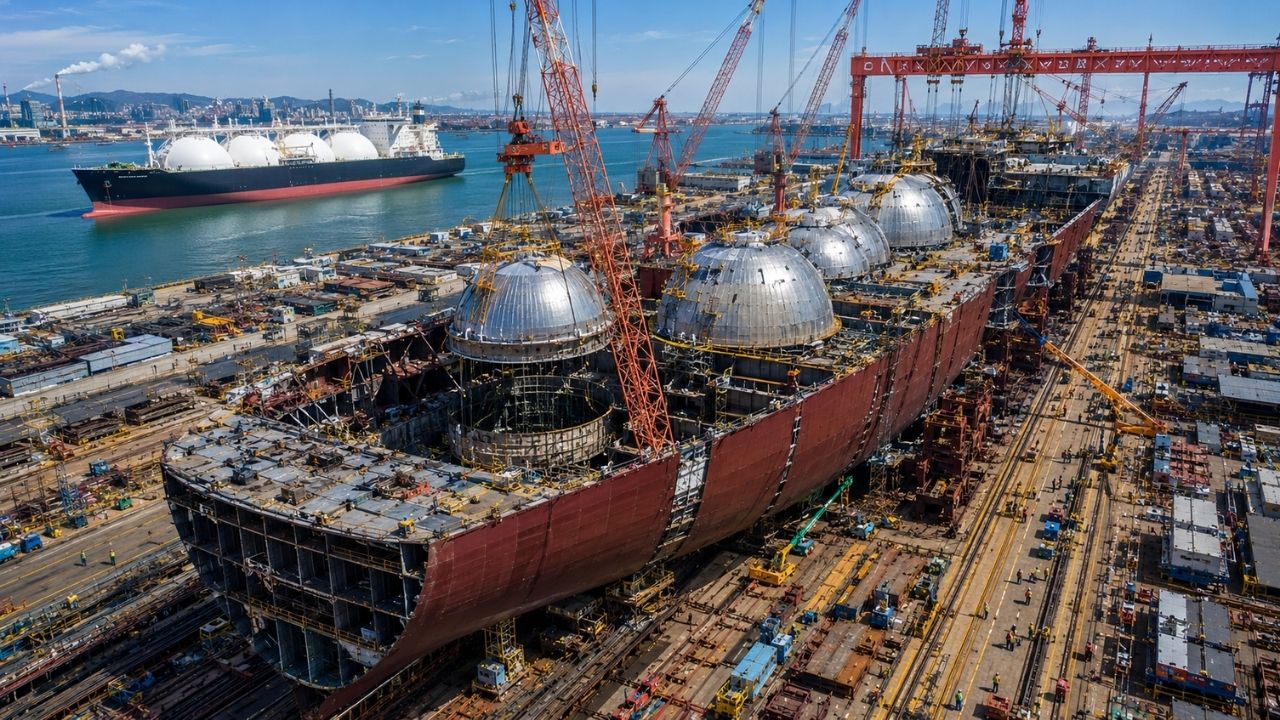
China begins construction of the world’s largest LNG ship, a 344-meter giant capable of supplying 4.7 million homes for a month, carrying 271,000 m³ of gas, and placing QatarEnergy in the largest naval order ever recorded in world history.


Partners in LNG Carrier Ship Construction
MOL explained that there is a limited number of shipyards globally capable of building high-quality LNG carriers. These ships are crucial for stable LNG transportation. In this context, MOL emphasizes that Chinese shipyards are an “important partner.” They ensure diversification and flexibility in sourcing new vessels.
US Policies and Geopolitical Risks: Determining Factors in MOL’s Choice
“MOL will continue to carefully evaluate the use of Chinese shipyards that meet its quality and safety standards, along with South Korean shipyards,” the company stated. This evaluation will occur “while adopting a comprehensive view of future US political trends and geopolitical risks, to meet the global demand for LNG transportation.”
US policies regarding vessels built in China or owned/operated by entities linked to the country are a point of concern. These policies, set to take effect from October 2025 with annual reinforcements in April, include tariffs. The charges can range from US$ 18 per net ton to US$ 120 per container. There are exemptions for specific cases, such as ships carrying cargo for the US government.
Constant Monitoring and MOL’s Actions in the Shipbuilding Market
Many shipping companies that order LNG carriers from Chinese shipyards are closely monitoring these trends. This includes the US consideration of additional port fees for vessels built in China.
Meanwhile, MOL has demonstrated that it will continue its operations with Chinese partners in other segments. Earlier this month, the company placed an order with Dalian COSCO KHI Ship Engineering in China for a new large crude oil tanker (VLCC) powered by LNG.