






 Portuguese
  Spanish


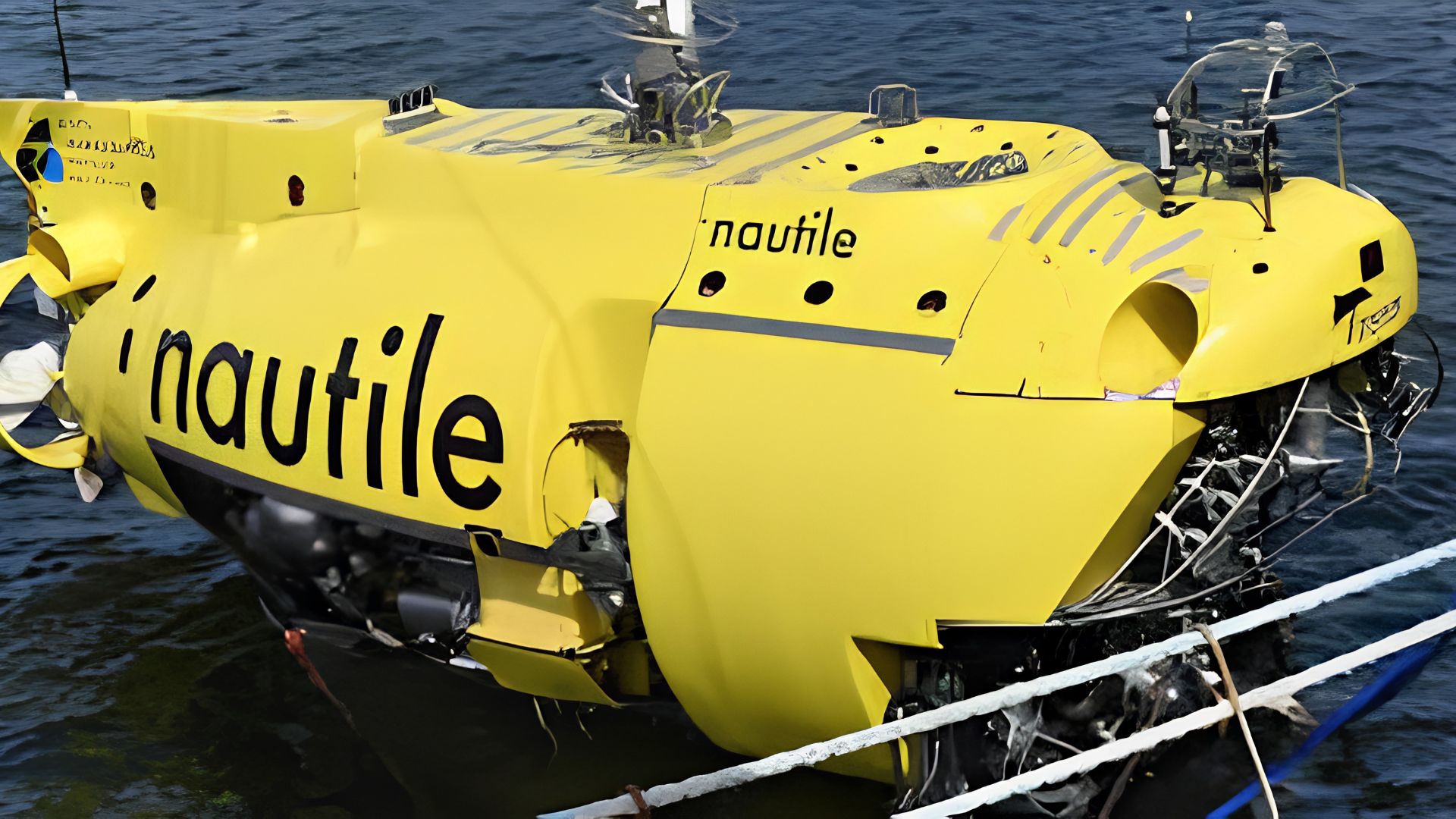

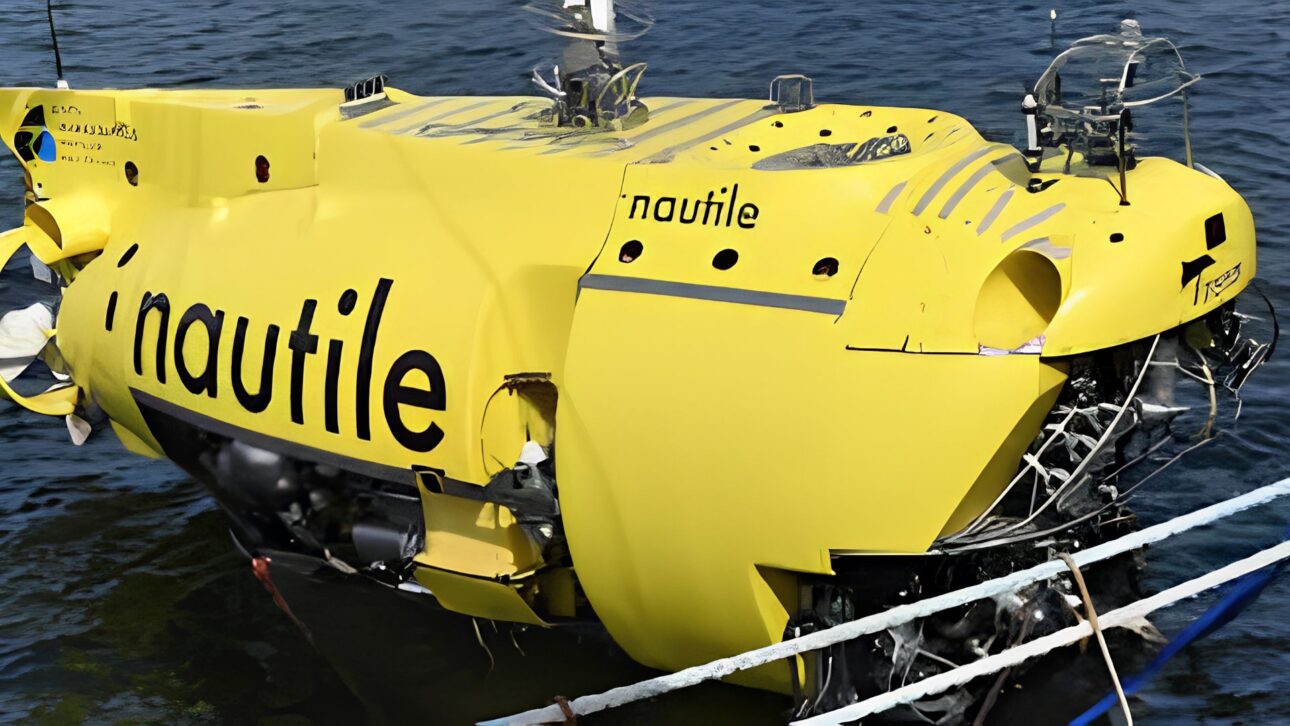
Nautile is a French scientific submarine capable of reaching 6,000 meters depth, exploring 97% of the ocean floor, and investigating historical shipwrecks.
While most of humanity lives close to the surface, there is a gigantic world hidden in the depths of the oceans. Below a few thousand meters, sunlight disappears completely, the pressure becomes overwhelming, and few machines can survive. It is precisely in this extreme environment that one of the most impressive scientific submarines ever built operates. Called Nautile, the vehicle belongs to the French institute Ifremer and was designed to take humans down to 6,000 meters depth, a mark that allows access to approximately 97% of the world’s ocean floor.
Since its entry into service in 1984, the submarine has participated in scientific, archaeological, and shipwreck investigation missions that have helped reveal some of the most inaccessible places on Earth.
Built in titanium to withstand pressure capable of crushing conventional structures
The most important feature of the Nautile is its structural resistance. The vessel was built using titanium alloys and has a pressurized spherical cabin approximately 2.1 meters in diameter, designed to withstand the extreme conditions found at 6,000 meters depth. In this region of the ocean, the pressure exceeds hundreds of times the atmospheric pressure at sea level.
-
The FLIP: A 108-Meter Ocean Laboratory That Stood Vertically for 60 Years, Dismantled in 2023

-
North Korean Fiasco: Launch of the Largest Warship Ends in Sinking

-
While giant ships still burn heavy fuel and the maritime sector races against climate targets, Maersk and Vale are starting to bet on ethanol as a new route to reduce emissions at sea.

-
China begins construction of the world’s largest LNG ship, a 344-meter giant capable of supplying 4.7 million homes for a month, carrying 271,000 m³ of gas, and placing QatarEnergy in the largest naval order ever recorded in world history.


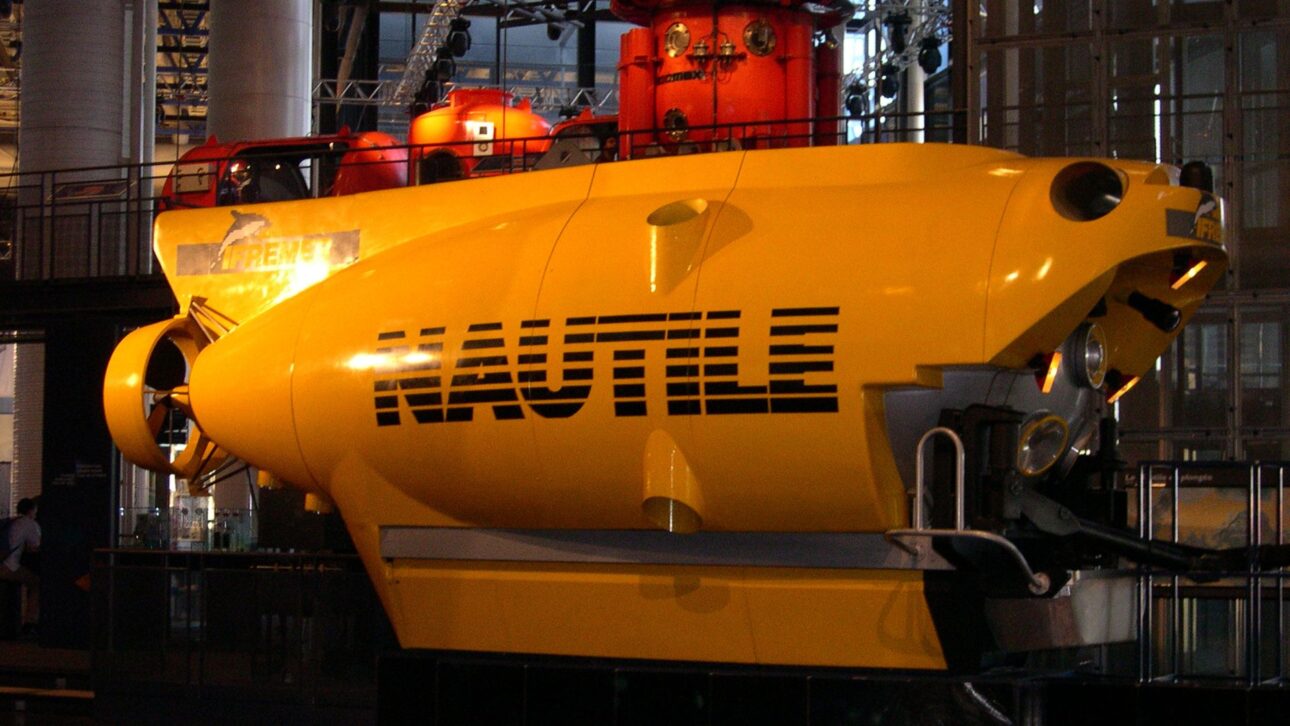
The submarine is about 8 meters long, weighs approximately 18 to 19 tons, and carries a crew of three people: usually a pilot and two specialists or researchers.
This combination of relatively compact size and enormous resistance allows the vessel to operate in regions where few manned vehicles can reach.
The depth of 6,000 meters places the Nautile among the most capable scientific vehicles on the planet
The main differentiator of the Nautile is its operational depth. According to Ifremer, the submarine can reach 6,000 meters, enough to access practically all known oceanic topography, including abyssal plains, underwater mountains, volcanoes, oceanic canyons, and large hydrothermal fields.
For comparison, the point where the Titanic rests in the North Atlantic is located at approximately 3,800 meters deep, far below the reach of most conventional manned vehicles.


The Nautile was specifically developed to work in such environments, where human presence still offers important advantages over fully remote vehicles.
Two robotic arms transform the submarine into a mobile laboratory of the seabed
Observation is not the only function of the Nautile. The submarine has two robotic manipulator arms, capable of collecting geological samples, capturing marine organisms, recovering objects, and performing small scientific interventions on the ocean floor.
In addition to the manipulators, the vessel carries cameras, video systems, high-intensity lighting, scientific sensors, and navigation equipment designed for low visibility environments.
These resources transform the Nautile into a kind of submerged laboratory capable of conducting research directly in the ocean depths.
The submarine participated in the most famous investigations in modern oceanic history
Few scientific vehicles have such a well-known resume. The Nautile gained international prominence for participating in the expeditions conducted at the site of the RMS Titanic wreck.
During these missions, researchers used the submarine to document the state of the wreckage and recover historical artifacts from the ship that sank in 1912.
To assist in these operations, the Nautile even used the small robot ROBIN, specifically developed to access narrow areas of the wreck where the main submarine could not enter.
The images produced during these missions helped make the Titanic one of the most studied shipwrecks in history.
Also helped investigate air accidents and maritime disasters
The work of the Nautile is not limited to scientific research. Over the past decades, the submarine has been used in investigations of maritime and air accidents.
Among the most well-known cases is the search related to the Air France 447 flight, which crashed into the Atlantic Ocean in 2009. The vehicle participated in operations that helped locate important components of the aircraft.

The Nautile was also employed in missions related to the tanker Prestige and in various operations inspecting submerged structures.
This versatility helped establish its reputation as one of the most important deep exploration platforms in Europe.
Six hours of work on the seabed and emergency autonomy exceeding 100 hours
Working thousands of meters below the surface requires extreme planning. According to Ifremer, a typical mission allows approximately six hours of effective work at 6,000 meters depth, in addition to the time needed for descent and ascent.
The submarine was equipped with life support systems capable of sustaining the crew for periods far exceeding the normal operation time in case of emergency. Technical sources associated with the project indicate survival autonomy exceeding 100 hours.
These systems are crucial because, at extreme depths, any rescue operation becomes extremely complex.
Even after more than four decades, it remains a strategic tool for exploring the depths
Although it began operations in 1984, the Nautile remains relevant. France remains the only country in the European Union to operate a manned submarine capable of reaching 6,000 meters depth, and Ifremer continues to invest in modernizing its infrastructure for deep ocean exploration.
Throughout its career, the Nautile has helped reveal historical shipwrecks, investigate underwater volcanoes, study extreme ecosystems, and expand human knowledge about a region that still remains largely unknown.
While satellites observe distant planets and telescopes explore galaxies billions of light-years away, the Nautile continues to remind us that one of the most mysterious territories on the planet is still here on Earth, hidden thousands of meters below the ocean’s surface.


