Portuguese
  Spanish


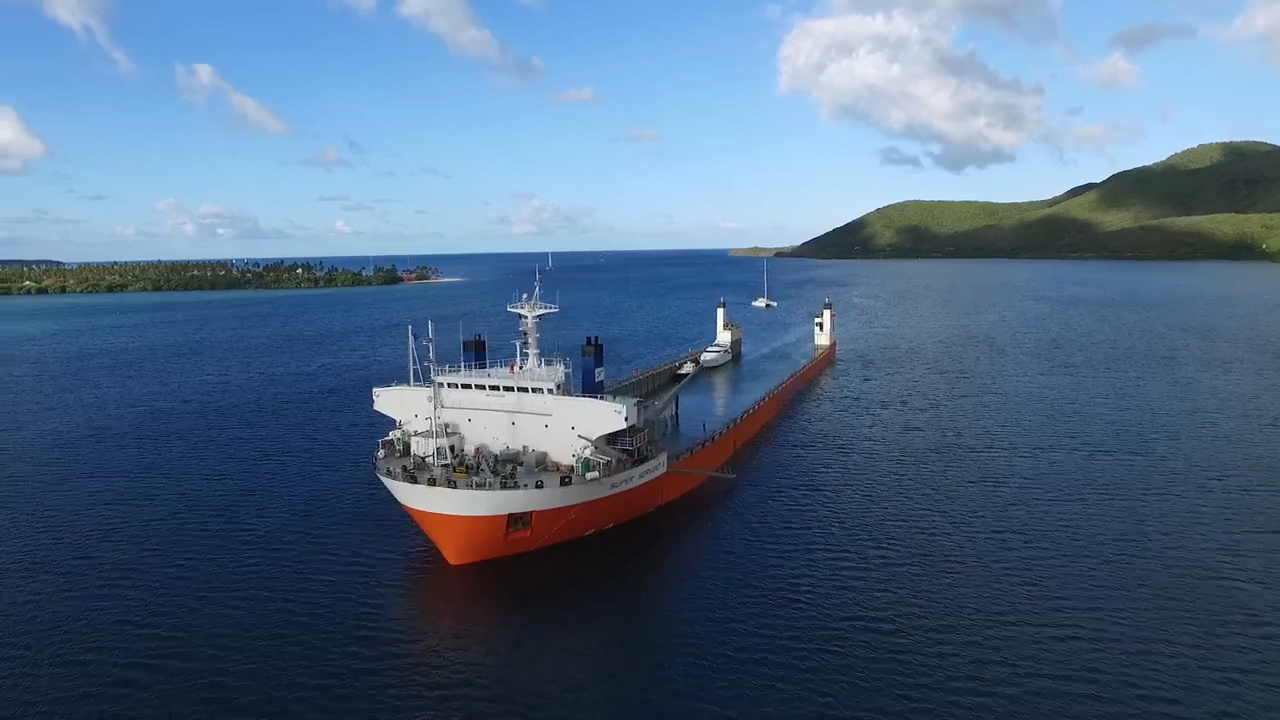


Yacht Servant is the largest semi-submersible ship dedicated to yacht transportation, with 214 meters, 46 meters beam, and 6,380 m² deck area.
There is a ship in the world of luxury maritime transport that does not carry containers, oil, cars, or ore. It was built for a much more unusual function: to partially sink on purpose, receive superyachts floating over its own deck, and then emerge with million-dollar vessels secured as if they were common cargo.
This giant is called Yacht Servant, belongs to DYT Superyacht Transport, and is described by the company itself as the largest semi-submersible ship specifically built for yacht transportation. With 214.17 meters in total length, 46 meters beam, 5.2 meters draft, and 6,380 m² of free deck area, the vessel has transformed the transportation of superyachts into an industrial operation of almost surreal scale.
Yacht Servant is a semi-submersible ship created to load yachts without using giant cranes
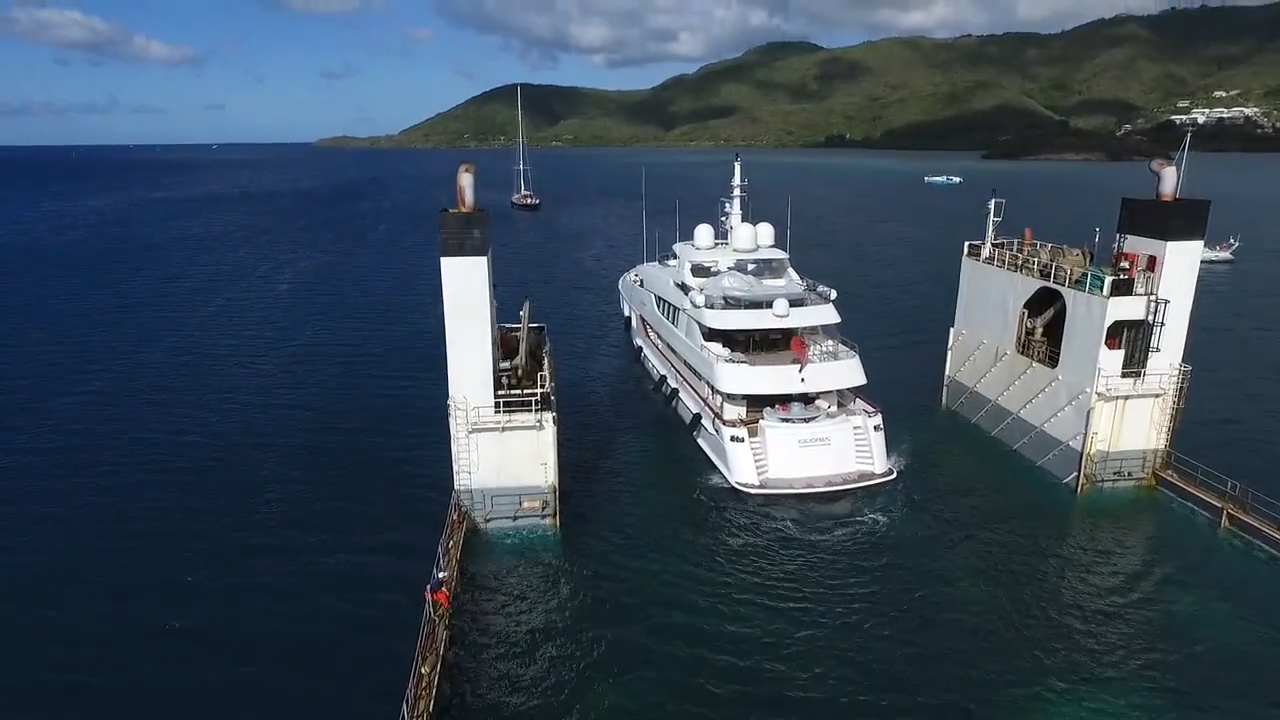
The concept of the Yacht Servant seems simple but requires highly precise naval engineering. Instead of lifting the yachts with cranes, the ship uses the float-on/float-off system, in which the vessel lowers its deck below the waterline to allow yachts to float into the cargo area.
-
The FLIP: A 108-Meter Ocean Laboratory That Stood Vertically for 60 Years, Dismantled in 2023

-
North Korean Fiasco: Launch of the Largest Warship Ends in Sinking

-
While giant ships still burn heavy fuel and the maritime sector races against climate targets, Maersk and Vale are starting to bet on ethanol as a new route to reduce emissions at sea.

-
China begins construction of the world’s largest LNG ship, a 344-meter giant capable of supplying 4.7 million homes for a month, carrying 271,000 m³ of gas, and placing QatarEnergy in the largest naval order ever recorded in world history.


Once the yachts are positioned, the ship removes the water from the ballast tanks, rises again, and leaves the vessels supported on specially prepared cradles. In practice, the Yacht Servant functions as a floating dock that crosses oceans carrying high-value yachts between international routes.


This method is considered one of the safest and most efficient for transporting luxury vessels over long distances because it reduces risks associated with ocean crossings made by the yacht itself, mechanical wear, exposure to storms, and the need for large crews on extended journeys.
214 meters in length and 46 meters beam make the ship the size of a mobile port structure
The numbers of the Yacht Servant help explain why the vessel attracts so much attention. The official DYT technical sheet states 214.17 meters in total length, 204.6 meters between perpendiculars, 207 meters at the design waterline, and 46 meters molded beam.
The free deck area reaches 6,380 m², with a free length of 160.2 meters and a distance of 40 meters between the dock walls. This allows for accommodating multiple vessels in a single crossing, including large yachts and sailboats with deeper drafts.
Sevenstar Yacht Transport
The ship also has significant structural capacity for heavy loads. The official specification states a permissible distributed load of 20 tons per square meter on the main deck, a displacement of 27,860 tons at the design draft, and a deadweight of 12,780 tons.
Operation requires the ship to sink to 13.5 meters to receive vessels on the deck
The most impressive part of the operation is the controlled submersion system. The Yacht Servant’s technical sheet states a maximum summer draft of 5.2 meters, but the maximum submerged draft reaches 13.5 meters, precisely to allow yachts to float into the cargo area.
For this, the vessel uses a ballast tank system with a total capacity of 34,251 m³. These tanks are filled to lower the ship and emptied to bring it back to the surface after the cargo is positioned.
According to DYT, one of the advantages of the Yacht Servant compared to previous vessels in the fleet is operating in shallower depths. While previous semi-submersible ships required about 14 meters of operational depth, the Yacht Servant needs approximately 9 meters, increasing the flexibility of ports and loading areas.
Ship nearly doubled the operational capacity of DYT’s previous fleet
The Yacht Servant was delivered in January 2022 after years of preparation and innovation, according to DYT. The vessel was designed by the Spliethoff Group, DYT’s parent company, and classified by Lloyd’s Register.
DYT and specialized media report that the ship practically doubled the capacity compared to predecessors in the fleet. The deck area of 6,380 m² is also about 30% larger than that of the Yacht Express, a sister ship previously used in yacht transport operations.
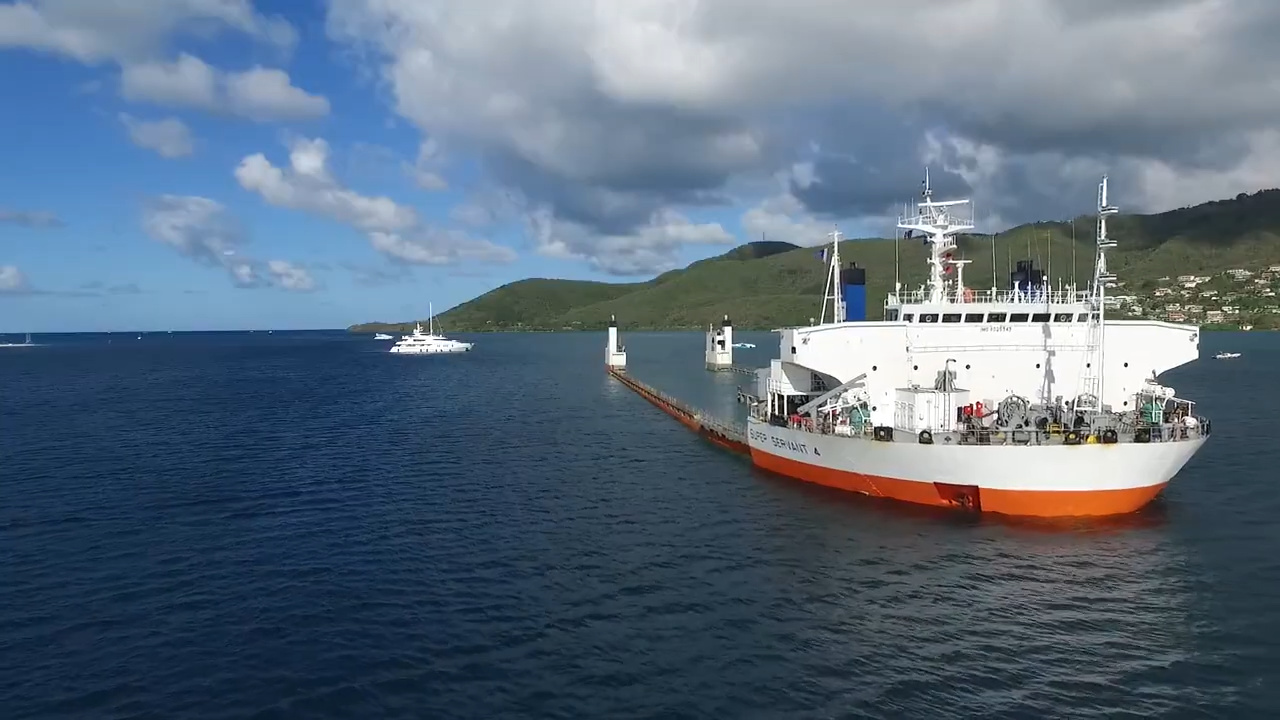
This expansion changes the economics of the operation. With more space available per trip, the ship can transport more vessels in a single crossing, reducing the need for multiple trips to serve yacht seasons in the Mediterranean, Caribbean, Florida, and other luxury maritime destinations.
Energy efficiency and environmental regulations were incorporated into the giant’s design
Despite the size and extremely specialized function, the Yacht Servant was designed with attention to the latest environmental requirements of international navigation. The vessel is described as IMO Tier III compliant, a standard associated with reducing nitrogen oxide emissions in new ships.
The official technical sheet also states that the ship is equipped with scrubbers and SCR, systems aimed at reducing sulfur and nitrogen emissions.
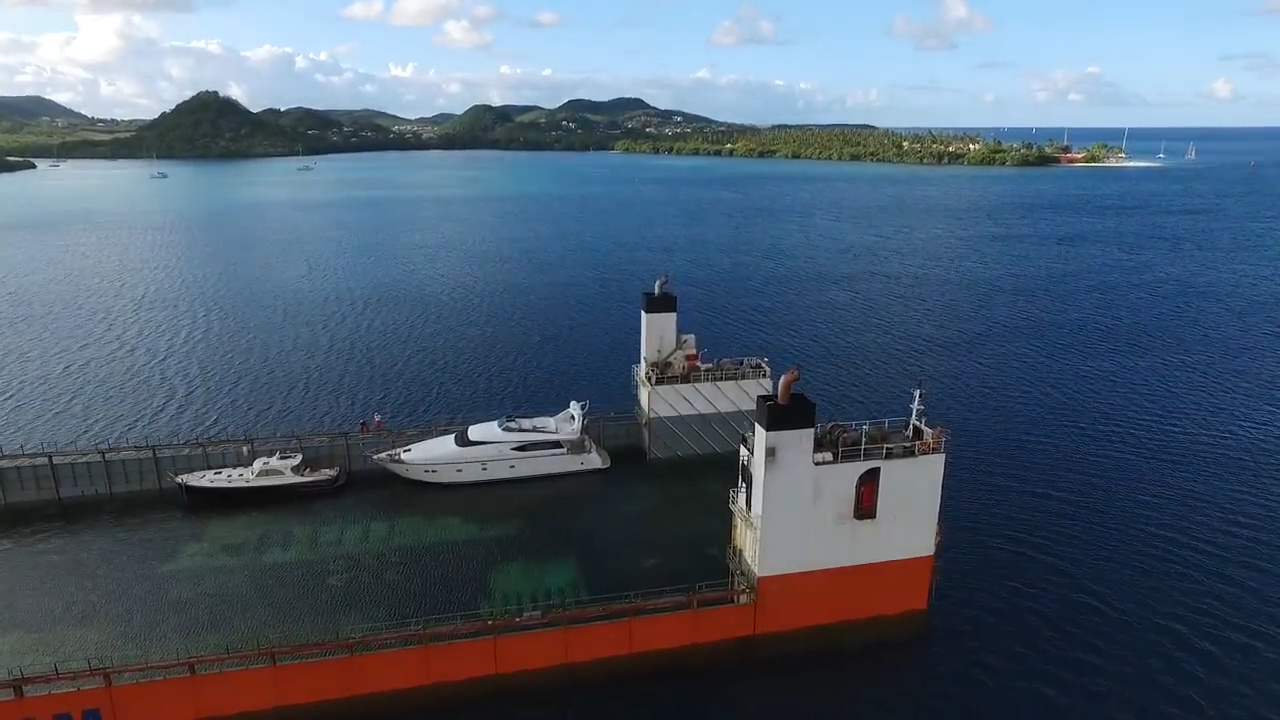
Sevenstar Yacht Transport
Propulsion is provided by two MAK 9M32E engines, with a nominal power of 5,220 kW each, in addition to two CPP propellers and a Kawasaki bow thruster of 1,200 kW.
Specialized vehicles reported at launch that the Yacht Servant would be 32% more fuel-efficient than previous vessels in the category. This data was released along with the ship’s delivery and reinforces the attempt to combine scale increase with relative consumption reduction per operation.
Why superyacht owners place million-dollar vessels on a larger ship
At first glance, it may seem strange to transport a yacht inside another ship, since these vessels are made to sail. But in the superyacht market, crossing oceans on their own is not always the best operational decision.
A long crossing consumes fuel, engine hours, maintenance, crew, and exposes the vessel to adverse weather conditions. For owners who want to move their yachts between international seasons without wearing out their own boat, semi-submersible transport works as a premium logistical solution.
In this scenario, the Yacht Servant becomes a kind of luxury oceanic shortcut. It allows a yacht to be in the Caribbean in one season and in the Mediterranean in another, without having to face the entire crossing with its own propulsion and navigation systems.
A semi-submersible parking for a billion-dollar industry
The superyacht market operates with vessels that can cost tens or hundreds of millions of dollars. Many have customized interiors, helipads, pools, submersibles, entertainment systems, spas, gyms, and advanced navigation technology.
Transporting this type of asset requires precision similar to that of a special cargo industrial operation. Each yacht needs to be positioned, supported, secured, and monitored to avoid damage during the journey. The deck of the Yacht Servant is not just a free surface. It functions as a technical yard adapted for sensitive nautical cargo.

The very existence of the ship shows how maritime logistics has reached a level of specialization little known to the general public. While common cargo ships move goods in bulk, the Yacht Servant transports high-value floating assets, in an operation that mixes naval engineering, luxury, and intercontinental planning.
The ship that transforms the ocean into a private route for superyachts
The Yacht Servant sums up a curious trend in modern navigation: increasingly specialized vessels, made to solve logistical problems that previously seemed impossible or uneconomical. It is not the largest ship in the world, nor the heaviest, nor the fastest. Its differential is something else.
It was built to sink with control, carry yachts as if they were exhibition pieces, and cross oceans like a mobile dock. With 214 meters, 46 meters in beam, 6,380 m² of deck, and a float-on/float-off system, the ship shows that even luxury transportation can take on an industrial scale.
In the end, the Yacht Servant seems less like a common ship and more like a navigating port infrastructure. The simple question remains: in a world where even superyachts hitch rides on larger ships, what will be the next limit of specialized maritime logistics?