Portuguese
  Spanish


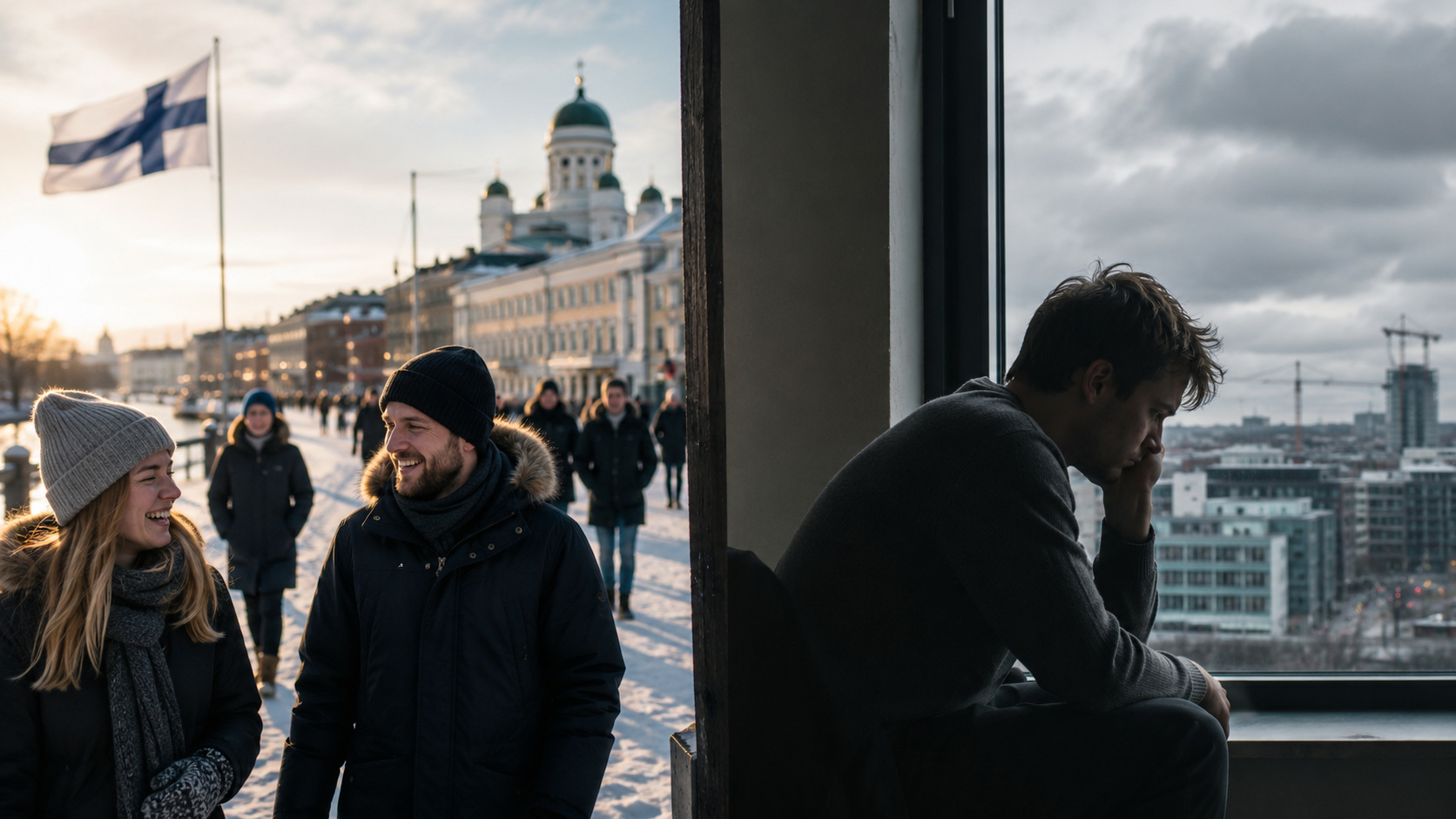

Finland remains the happiest country in the world, but faces 11.6% unemployment, youth crisis, and pressure on the social model that became a global reference.
According to Forbes, Finland is experiencing a contradiction that caught attention in 2025 and 2026. The country achieved for the eighth consecutive year the title of happiest country in the world in the UN’s annual report, but at the same time began to record the highest unemployment since 2015, with 11.6% in April 2026 and a total of 336,000 unemployed. For a country of 5.6 million inhabitants, the number gained immediate political and social weight.
It was in this scenario that Finnish Juho-Pekka Palomaa, 33 years old, drew attention by organizing a kind of ironic party after completing 1,000 days unemployed. The scene took place on the steps of the parliament in Helsinki, with homemade food and light rain, turning a personal drama into a symbol of a bigger question: how did the happiest country in the world reach the worst job market in over a decade.
UN happiness ranking measures strong institutions, but does not measure the economy’s temperature
The UN’s World Happiness Report does not exist to say if everything is going well in a country. It measures dimensions such as GDP per capita, social support, healthy life expectancy, freedom to make choices, generosity, and perception of corruption. This is why Finland has remained at the top since 2018.
-
When Do Brazil and Japan Face Off in the World Cup?

-
Three-Year-Old Fulfills Dream of Joining Garbage Collectors in Brazil, Captivates Thousands Online with Heartwarming Video

-
Nikon Project Uses Dog’s Heartbeat to Capture Photos, Revealing What Truly Makes Dogs Happy

-
In Los Angeles, Young Adult Opts for Garage Living with Bed, Kitchen, and Bathroom to Avoid Rent, Highlighting Comfort and Organization Challenges in Compact Housing



Finland’s strength lies in its institutions. The country offers free education at all levels, accessible healthcare, broad social coverage, and low inequality, elements that do not disappear just because unemployment rises.
The problem is that these structural indicators do not fully capture the daily experience of those who have lost income, are out of the market, or live under strong professional uncertainty.
The apparent contradiction between the happiest country in the world and the highest unemployment in a decade does not mean that the ranking is wrong. It means that it measures a deep layer of institutional trust, while the labor market shows the more immediate economic pressure affecting the daily lives of families.
Unemployment in Finland rose to 11.6% and reached the highest level since 2015
In April 2026, Finland’s unemployment rate reached 11.6%, the highest level since May 2015. The number of unemployed increased by 48,000 compared to the previous year, reaching 336,000 people. The European Commission also projected an average rate of 10.1% in 2026, while in March the indicator was already at 10.5%.
This rise in unemployment began to dismantle the idea of automatic economic stability often associated with the country’s international image.
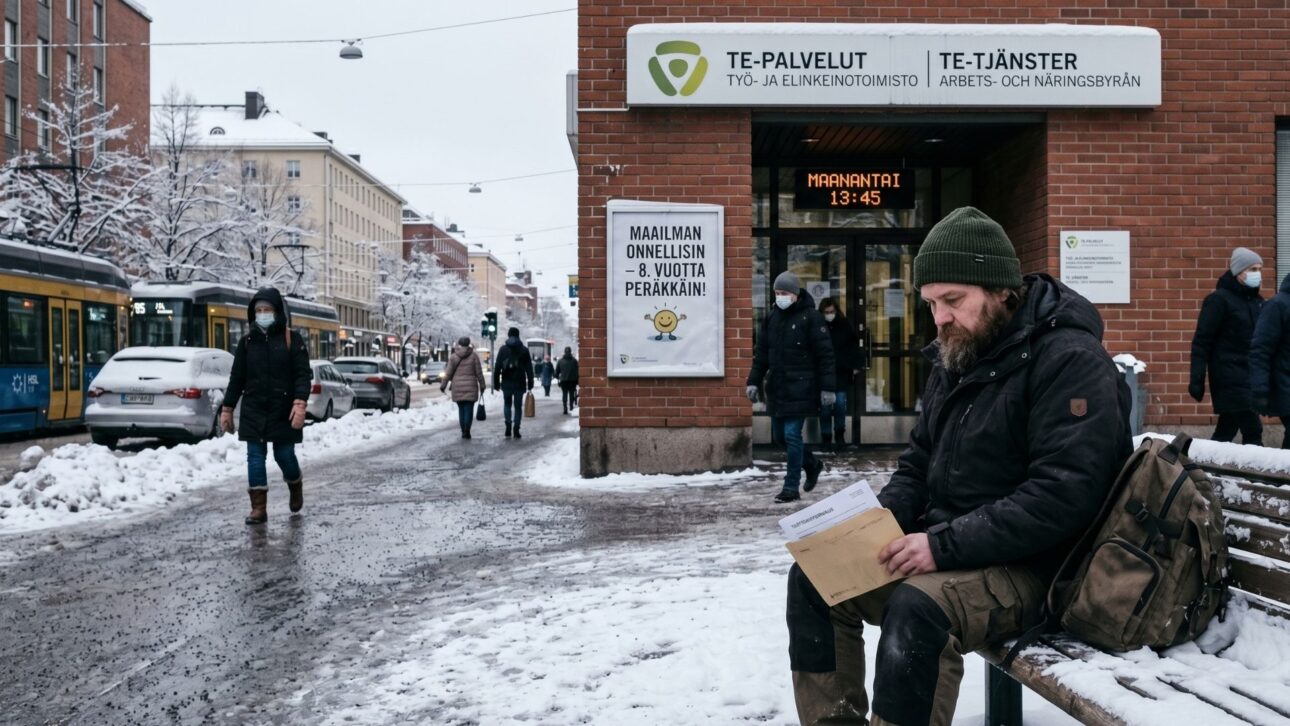
Finland continues to be a reference in well-being, but this has not shielded it from weakening economic activity, decreased demand for labor, and deterioration of consumer confidence.
The case gained attention precisely because the gap between international reputation and market reality became too large to ignore. The country continues to be admired for its public policies, but today faces an employment situation that no government would want to carry.
Minister’s statement on mandatory work for foreigners amplifies social crisis in the happiest country in the world
The controversy gained momentum because the proposal came from Riikka Purra, Finland’s Minister of Finance and leader of the Finns Party, amid the country’s worst recent labor market scenario.
According to the Helsinki Times, on February 17, 2026, Purra advocated that immigrants receiving certain social benefits be subjected to a work obligation inspired by the Danish model, with simple activities like cleaning or branch collection linked to the receipt of benefits.

The formulation sparked criticism because, in practice, it was interpreted by opponents as a defense of unpaid work for foreigners in vulnerable situations, precisely at a time when Finland is already facing high unemployment, social cuts, and a decline in public confidence in securing paid work.
Economic crisis in Finland came from the combination of high interest rates, weak construction, and loss of exports
The Finnish recession did not arise from an isolated shock. It was the result of the overlap of several reinforcing factors between 2023 and 2024. The country’s real GDP shrank by 0.1% in 2024, while historically important sectors began to lose traction.
The paper and pulp industry, traditional in the Finnish economy, underwent restructurings and closures.

The construction industry suffered from high interest rates, especially because Finland has a high share of variable-rate mortgages, which meant the increases by the European Central Bank directly hit families’ pockets and reduced the volume of new projects.
At the same time, trade with Russia, historically significant for the country, was cut off after the invasion of Ukraine. The industrial presence of Nokia, which once had a huge impact on Finland’s GDP, also continued to shrink. The result was an economy with weak activity, shaken confidence, and a slower recovery than expected.
28% Youth Unemployment Became One of the Most Worrying Signs of the Finnish Crisis
The most sensitive data in the Finnish labor market is among the youngest. In April 2026, the unemployment rate among people aged 15 to 24 reached 28%, showing that almost one in four young people seeking work could not find employment.
This number weighs even more in a country that invests heavily in education and professional qualification. Finland built its international reputation precisely on the idea of solid training, broad access to education, and long-term preparation for the market. When unemployment reaches this level among young people, the problem ceases to be merely cyclical and starts to affect the perception of the future.
It is precisely in this group that economic confidence has been showing greater wear. The difficulty of entering the market amplifies the feeling of social blockage and makes the transition between education, income, and autonomy more fragile, a transition that has always been treated as one of the pillars of the Nordic model.
Finland’s Welfare State Protects the Unemployed but Increased the Fiscal Cost of the Crisis
Finland has one of the most generous social protection systems in the world. Those who lose their jobs can receive between 60% and 75% of their previous salary for up to two years, depending on the contributions made to the system. After that, there are still basic benefits that prevent an immediate income collapse.
This means that the country does not abandon those who are out of work. But it also means that a prolonged unemployment crisis puts strong pressure on public accounts.
Maintaining broad protection for 336,000 people is costly, and the government led by Prime Minister Petteri Orpo has been promoting cuts and reforms for two years to try to balance the finances.
The changes included reducing benefits for those who do not accept offered positions, restrictions for young people without a work history, and cuts in housing subsidies. These measures have sparked protests and reignited a delicate debate.
The same welfare state that helps explain why Finland leads the happiness ranking has also come to be seen by the government as financially too pressured to continue functioning without adjustments.