






 Portuguese
  Spanish
  4 min of reading
  0 comments


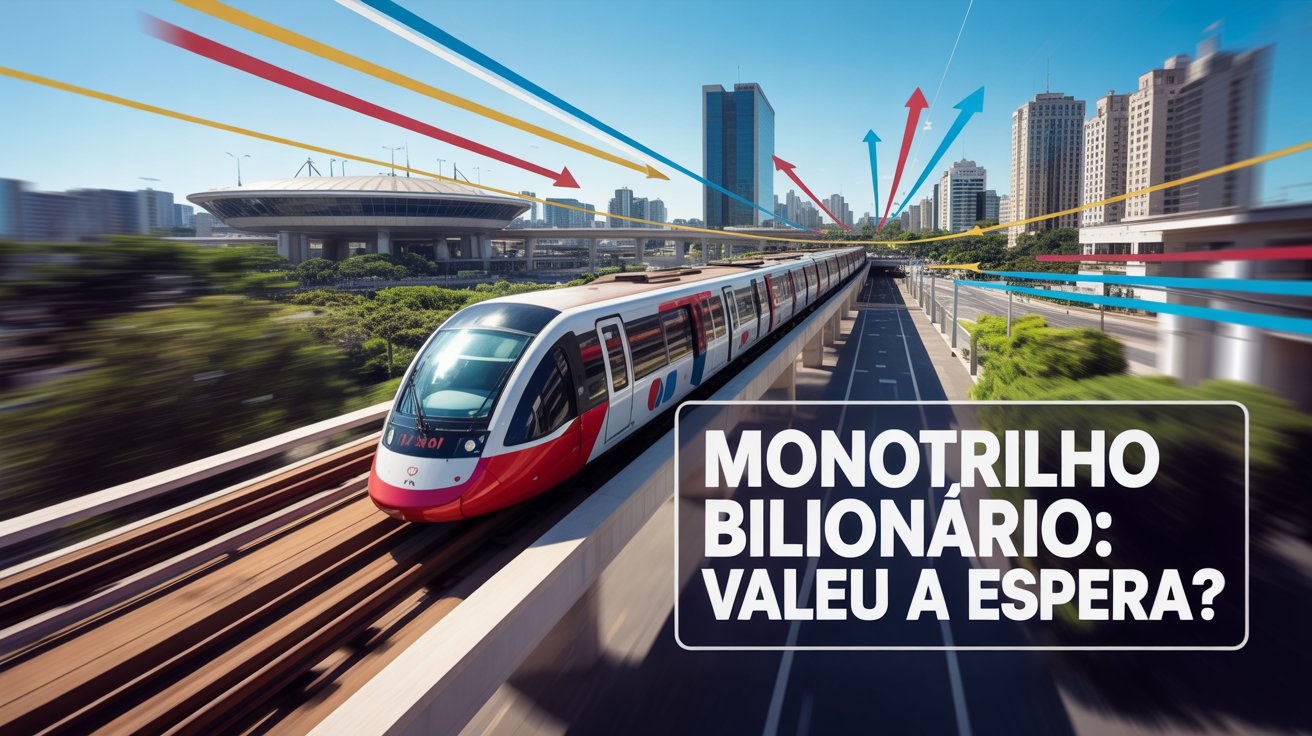
Planned Monorail Project for the 2014 World Cup Advances and Will Be Delivered After More Than a Decade, Connecting Congonhas Airport to Strategic Points in South São Paulo.
With a promise to revolutionize urban mobility in South São Paulo, the Line 17-Gold Monorail will be inaugurated after twelve years of delays, as announced by the São Paulo Metropolitan Company (Metrô) in July 2025.
The project is scheduled for delivery in March 2026, when the system will enter assisted operation, with schedules and intervals adjusted for initial testing.
Line 17-Gold: Delay, Investment, and Impact
Originally designed to meet the demand of the 2014 World Cup, Line 17-Gold was seen as a solution to quickly connect Congonhas Airport to Morumbi Stadium.
-
Brazilian Joins Homeownership Consortium, Faces Decade of Dual Payments Totaling $141,000, Surpassing Traditional Mortgage

-
Land Rover to Halt Production in July, Putting 371 Jobs at Risk, as Chinese Automaker Negotiates to Convert Factory to 100,000 Vehicles Annually by 2027

-
Mexican Pest Threatens U.S. Cattle Herds at Historic Lows, Potentially Boosting Brazilian Beef Exports as Burger Prices Soar

-
Brazilian Freight Bill Progresses in Congress with $5,000 Minimum Wage, 70% Advance Payment, and Fines Up to $1 Million, as Agriculture and Industry Warn of Rising Costs and Legal Uncertainty


The proposal anticipated that the work would be completed within three years, reducing travel time and expanding public transport options in the capital.
Over time, however, the project experienced various interruptions and contractual changes, resulting in delays and increased costs.
According to data from the Government of the State of São Paulo, construction resumed in September 2023 and, by July 2025, reached 83% progress, considering advancements in civil infrastructure, systems, and train procurement.
Connections, Capacity, and Technology of the Monorail
With a total length of 6.7 kilometers, the line will feature eight stations distributed between Congonhas Airport and connections with lines 5-Purple (Metro) and 9-Emerald (CPTM – São Paulo Metropolitan Train Company).
The expectation is that around 100,000 passengers will use the new branch daily, directly impacting traffic in one of the busiest regions of the city.
Unlike traditional underground metros, Line 17-Gold will use elevated tracks, a feature that allows greater visual integration with the urban landscape and takes up less space on the ground.
The adopted model, known as monorail, allows the trains to operate completely automated, with no need for a conductor.
This technology, called CBTC (Communications-Based Train Control), enables shorter intervals between trains and greater operational efficiency.
Construction, Budget, and Recent Progress
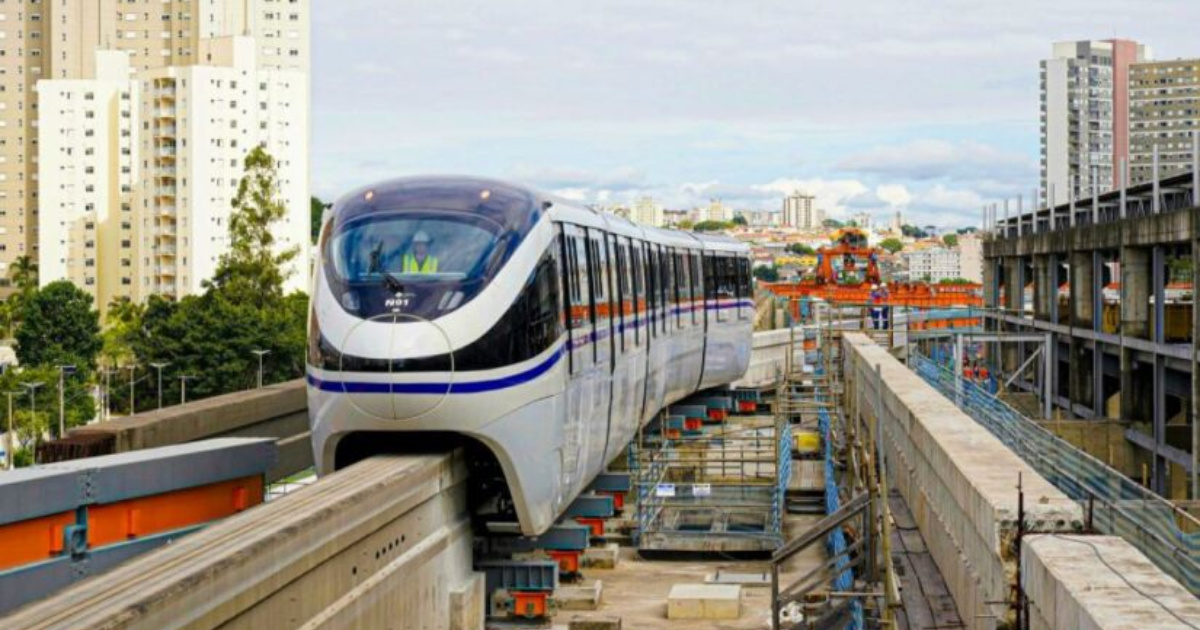
According to Metrô, “tests with the first trains began in March 2025,” marking a new stage of the project.
The first two imported trains arrived in Brazil at the beginning of the year, and since then, have been undergoing assessments on the elevated track, which includes a completed submerged tunnel connecting Congonhas Airport to the first station of the branch.
Currently budgeted at R$ 5.5 billion, the project has undergone a series of revisions to ensure compliance with current safety and accessibility standards, as well as to incorporate more advanced technologies for system control and maintenance.
This amount represents a significant increase compared to the original budget, reflecting the years of delay, scope adjustments, and the economic scenario of the period.
Effects on Mobility and Urban Integration
Urban mobility experts highlight that, in addition to improving the connection between strategic areas of the city, the Line 17-Gold is expected to stimulate real estate and commercial development along the route.
The direct integration with Congonhas Airport is seen as a differentiator, facilitating access for both passengers and terminal employees, reducing reliance on cars and taxis in the area.
According to the Secretary of Metropolitan Transportation of the State of São Paulo, Line 17-Gold is part of a broader project for the expansion and modernization of the São Paulo metro-rail system.
In parallel, the state government is advancing the expansion of lines 5-Purple, 15-Silver, and 6-Orange, in addition to integration projects with buses and bike lanes.
Population Perspectives and Challenges Faced
Even with the progress of the works, the population eagerly awaits the delivery of the monorail, as mobility around the airport has historically been marked by congestion and access difficulties during peak hours.
“The expectation is that the line will bring significant relief to those who use the airport daily,” said a representative of the Brazilian Association of Railway Engineers (ABEF) in a recent interview.
The construction of the monorail for the World Cup illustrates the challenges faced by major infrastructure projects in Brazil, including issues of planning, bidding, and execution.
Despite the difficulties, the resumption of work and the proximity of completion reignite the debate on the importance of modernizing public transport in large cities.
The question remains: with the inauguration of the World Cup monorail, will São Paulo residents finally have an efficient solution for mobility in one of the most congested regions of the city? What are your expectations for the future of urban transport in the city?





Be the first to react!