






 Portuguese
  Spanish
  4 min of reading
  1 comment


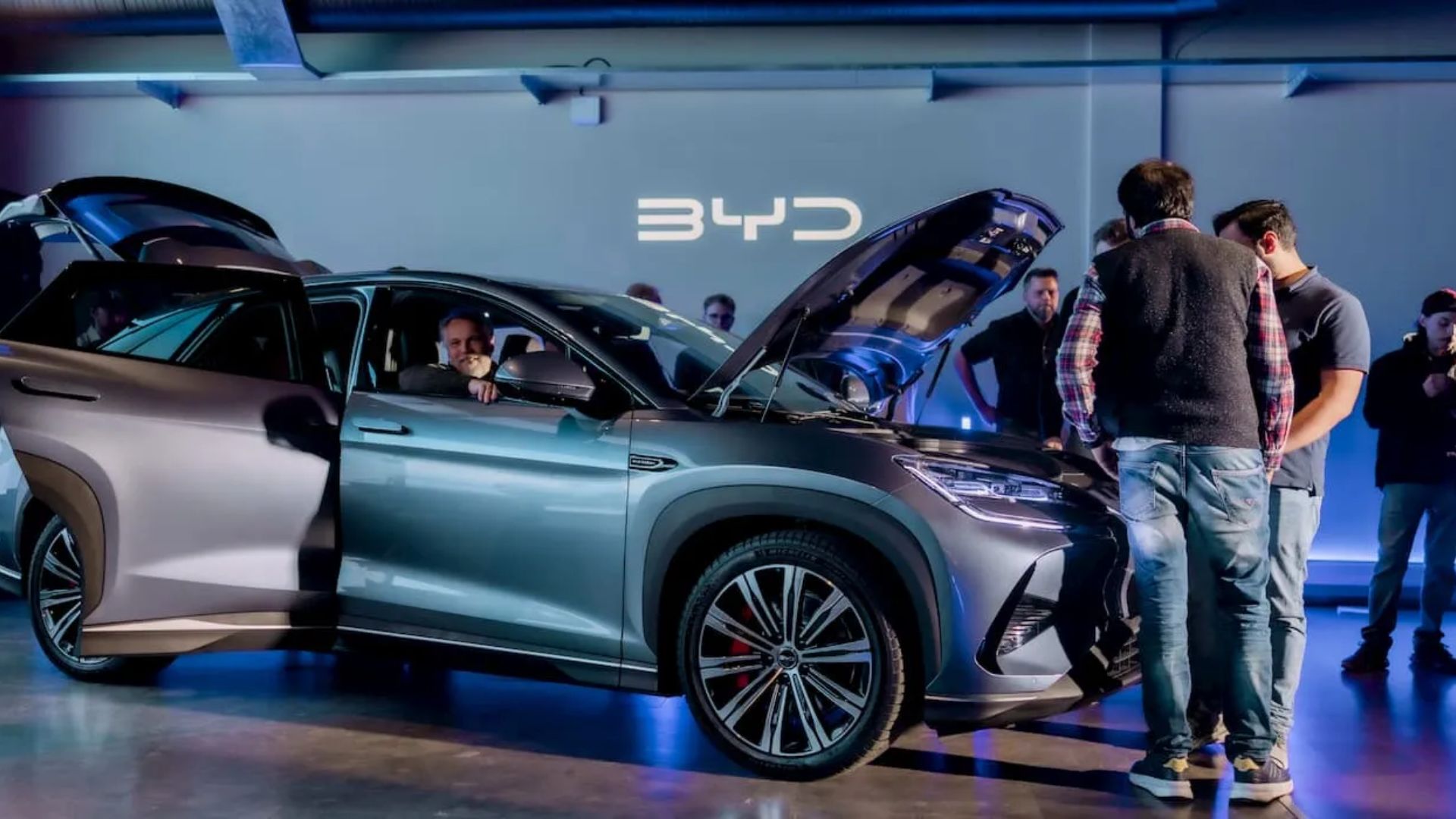


In Less Than A Decade, China Took The Global Lead In Affordable Electric Vehicles While European Automakers Retreated To More Expensive Ranges. The Chinese Advancement Redefines Strategies, Prices, And The Future Of Mobility In The West.
The automotive industry is undergoing a rare inflection point. While European groups retreat from the entry-level electric segment, Chinese brands are filling the gap with small, affordable models that feature competitive technology.
A recent report cited by the Automotive News portal indicates that this shift has been driven by China’s dominance in the battery supply chain, scale gains in production, and software integration—factors that have reduced costs and sped up launches.
In parallel, China has established itself as the world’s largest exporter of vehicles, moving from a supporting role to dictating price and pace in the affordable segment.
-
Land Rover to Halt Production in July, Putting 371 Jobs at Risk, as Chinese Automaker Negotiates to Convert Factory to 100,000 Vehicles Annually by 2027

-
Mexican Pest Threatens U.S. Cattle Herds at Historic Lows, Potentially Boosting Brazilian Beef Exports as Burger Prices Soar

-
Brazilian Freight Bill Progresses in Congress with $5,000 Minimum Wage, 70% Advance Payment, and Fines Up to $1 Million, as Agriculture and Industry Warn of Rising Costs and Legal Uncertainty

-
High Interest Rates and Record Defaults Lead to Surge in Vehicle Repossessions and Crowded Car Auctions in Brazil by 2026


Chinese Turnaround In The Affordable EVs Market
This was not an isolated movement. The supply of electric compacts manufactured in China has grown alongside the decline in average prices of BEVs in the country, extending the advantage over Western rivals.
The combination of large-scale production, battery leadership, and integrated logistics has allowed Chinese manufacturers to deliver entry-level EVs at costs that are hard for European manufacturers to replicate.
The result is also evident in foreign trade. In 2023, China surpassed Japan to take the global lead in automobile exports, a trend reinforced in 2024 and 2025.
Strategy Of European Automakers
Meanwhile, traditional manufacturers are focusing their efforts on SUVs, sedans, and electrified sports cars—segments with higher margins per unit.
The assessment shared in a report by Automotive News is that European and British brands are essentially ceding the affordable electric market to the Chinese advancement.
This perspective, combined with a study from the FIA Foundation, describes a realignment: Western investment is shifting to the top of the price scale, while compacts and subcompacts at lower price points are multiplying with Chinese logos on European streets.
UK As A Barometer Of The Sector
The UK exemplifies the shifting winds. In June 2025, approximately 19,000 vehicles sold in the country were from Chinese brands like MG, BYD, Omoda, and Jaecoo, out of a total of 191,000 registrations that month.
The share reflected a combination of price, increasing supply, and newly established commercial networks.
Additionally, the UK portfolio already boasts about 130 electric models available for sale, of which at least 33 are priced below £30,000, a level currently considered “affordable” by local standards.
Incentives And Infrastructure In The UK
The British government reopened, in 2025, a direct subsidy for 100% electric cars priced up to £37,000, offering automatic discounts at the time of purchase of £1,500 or £3,750, depending on the vehicle’s sustainability criteria.
On August 28, two Ford models became the first to receive the maximum value, raising the number of eligible EVs in the program to 28.
At the same time, the government announced the installation of more than 100,000 new local charging points “in the coming years,” reinforcing the public network’s capability. For structural goals, the country maintains a projection of at least 300,000 public points by 2030.
Small EVs As An Alternative To SUVs
In the debate about the excess size of vehicles in Europe, experts see room for a shift in priorities.
In a statement that gained traction in the UK, Steve Gooding, director of the RAC Foundation, said that “the romance with cars the size of the Fiesta could be reignited if more small, affordable EVs come to market.”
This statement encapsulates the hypothesis that a new wave of affordable electric compacts may curb the growth of the SUVs and bring back the spotlight to urban models.
The Chinese Offensive
The Chinese offensive is not limited to low prices. Brands like BYD are expanding by offering a varied lineup, from compact hatches to sports utility vehicles, with proprietary batteries and competitive onboard electronics.
In European markets, the advancement includes both BEVs and plug-in hybrids, with short development cycles and constant software updates.
Furthermore, part of the sales on the continent is supplied by plants outside China, reducing exposure to tariffs and shortening logistics, without altering the core strategy of scale and cost, as highlighted by Automotive News.


Future Of Western Automakers
Although the current retreat is evident in the entry-level segment, there are counter-movements.
European projects for EVs priced below €25,000–€30,000 are starting to appear, and new emission rules in the European Union, effective from January 2025, pressure for more electric volume.
Still, the time-to-market of Chinese manufacturers and their advantage in the battery supply chain maintain their lead in the short term, especially while European manufacturers prioritize margins in higher classes and await scale gains in cheaper models.
Impacts On The Consumer
For the average buyer, the combination of subsidy, price drops, and increased supply tends to expand the adoption of EVs.
This is even more evident among those transitioning from a used combustion car to a new electric compact.
In the UK, the return of direct incentives and the expansion of public charging can reduce practical barriers, such as acquisition costs and day-to-day convenience.
However, the competitive landscape indicates that those reaping the benefits of this momentum, for now, are Chinese brands, while European brands focus on segments above £30,000.






Apesar de serem chamados de “carros de entrada” e terem os preços menores que os automóveis com motor à explosão, o preço dos eletricos de entrada correspondem a 75 salários mínimos, significando seis anos e três meses do valor de hum salário mínimo brasileiro, guardados em poupança. Apenas assalariados que ganham de 4 salários minimos, conseguem realizar tal proeza. O custo dos carros eletricos de entrada não deveriam passar de 48 salários minimos, jaincluidos os impostos.