






 Portuguese
  Spanish


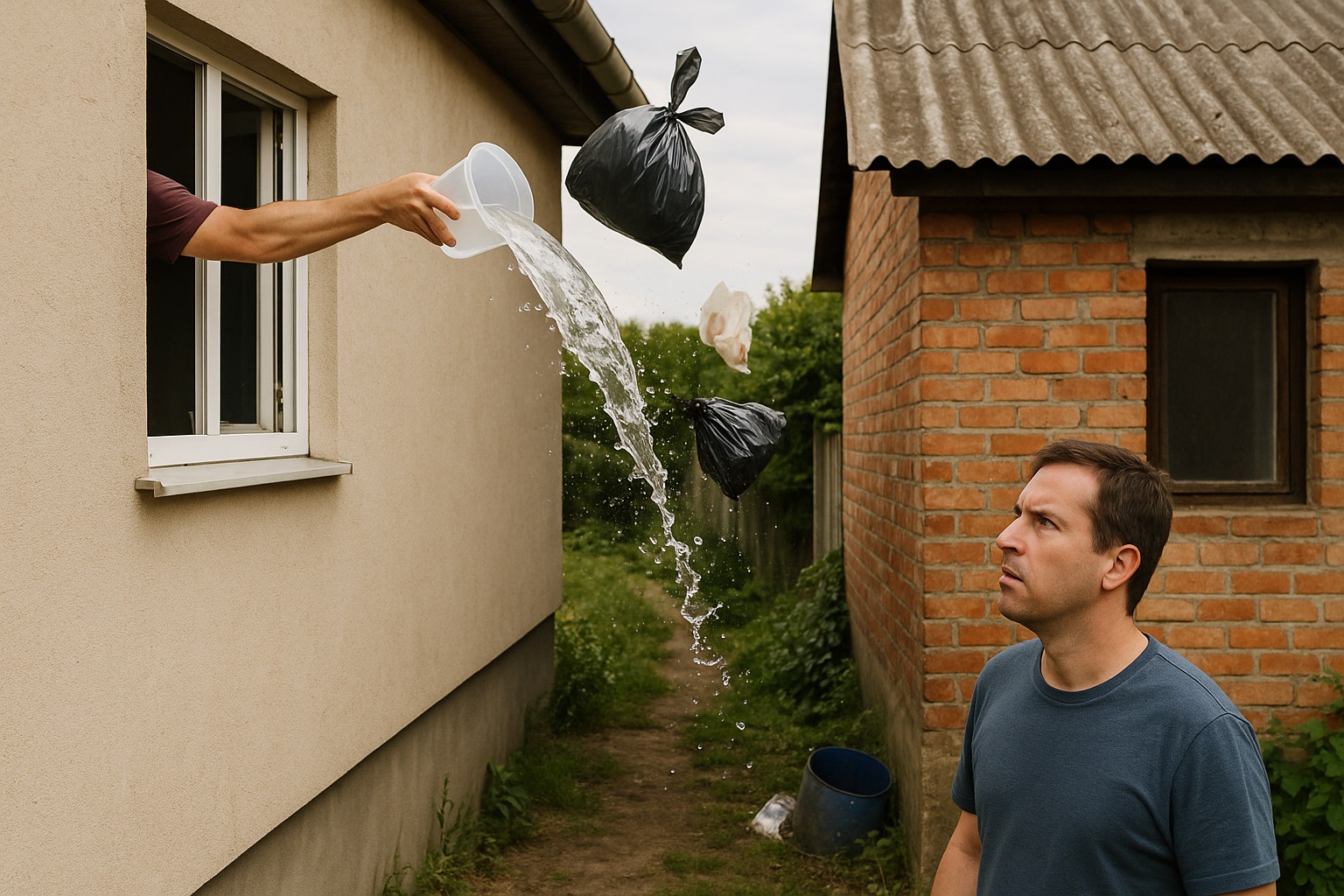


Resident Who Throws Water, Garbage, or Objects onto Neighboring Property May Be Condemned to Compensate, Fined by the Condominium, and Even Face Criminal Charges.
Coexistence among neighbors requires balance. The Brazilian Civil Code establishes that each owner has the freedom to use their property, but they cannot cause harm or inconvenience to the neighbor. When a resident throws waste water, garbage, debris, or objects onto a neighboring property, they exceed the limits of regular property use and commit an unlawful act.
Article 1,277 of the Civil Code is clear: an owner can demand that their neighbor cease any disturbances that compromise safety, peace, and health. Article 1,279 allows the courts to impose reparative and compensatory measures. In practice, this means that those who dispose of waste on someone else’s land may be ordered to pay compensation and may even face administrative fines imposed by the municipality or the condominium.
Case Law Confirms Compensation for Garbage and Objects Thrown onto Neighboring Property
The jurisprudence of the Superior Court of Justice (STJ) and state courts has already established that the act of throwing garbage, water, or objects onto neighboring property constitutes civil liability. In recent decisions, residents were required to compensate neighbors for damages caused by debris and water thrown into yards, which led to infiltrations and bad odors.
-
Brazil Approves Proposal to Cap Vehicle Tax at 1% of Car Value

-
Brazilian Senate Approves Bill to Automate Child Support Payments Directly from Debtors’ Accounts

-
Brazilian Congress Advances Bill to Ensure Full Pension Benefits for Families Receiving Reduced INSS Death Benefits
-
Unusual Traffic Signs in Brazil: Wheelbarrow Ban, Crosswind Warning, and Customs Stop




In a case judged by the TJ-SP, a resident was condemned to pay compensation for moral damages after throwing household waste into the neighbor’s yard for months, affecting the salubrity of the residence. The court understood that the conduct constituted a serious violation of neighborhood rights.
Another case, reviewed by the TJ-MG, recognized that throwing waste water onto a wall and neighboring land not only causes material damage but also compensable moral damage, as it undermines the well-being and dignity of the affected family.
When the Act Becomes an Administrative and Criminal Offense
Beyond civil liability, throwing garbage or objects onto neighboring property can constitute an administrative offense, subject to fines stipulated in municipal urban regulations and condominium bylaws.
In extreme situations, the conduct may be categorized under Article 132 of the Penal Code, which punishes those who expose others’ lives or health to direct and imminent danger. If the thrown object causes bodily injury, the resident may also face charges for assault. In other words, liability is not only civil: it can extend to the criminal realm.

Condominiums Have Strict Rules Against Conduct That Affects Neighbors
In condominiums, the rules are even more severe. The Condominium Law (Law No. 4,591/1964) and Civil Code, Article 1,336, IV, state that a condominium owner must use their unit without harming the safety, peace, and health of others.
Throwing water, cigarette butts, bottles, or any objects out of windows can result in heavy fines, which may reach up to 10 times the value of the condominium fee in cases of recurrence, as provided in Article 1,337 of the Civil Code.
Decisions from the TJ-RJ and TJ-SP have already confirmed high fines imposed by condominiums on residents caught throwing objects out of windows, deeming that the act harms the community and jeopardizes everyone’s safety.
Experts Highlight That the Law Protects Safety and Dignity
According to condominium lawyer Márcio Rachkorsky, “there is no absolute right of property. A resident who throws garbage or objects onto neighboring property abuses their right and is held civilly and administratively accountable for it.”
Urban planner Patrícia Samora adds that “these acts affect not only the aesthetics or property but also the health and safety of people. That’s why legislation and the courts treat the subject with rigor.”
Responsibility and Limits of Property Rights
The message of the law and the justice system is unequivocal: the right to use property does not authorize practices that harm neighbors. Throwing water, garbage, or objects onto neighboring land is disapproved conduct that can lead to compensation for material and moral damages, condominium fines, and even criminal proceedings.
More than imposing penalties, the legal framework seeks to reinforce a basic principle of coexistence: property must fulfill its social function and cannot be an instrument of disrespect toward others.


