






 Portuguese
  Spanish


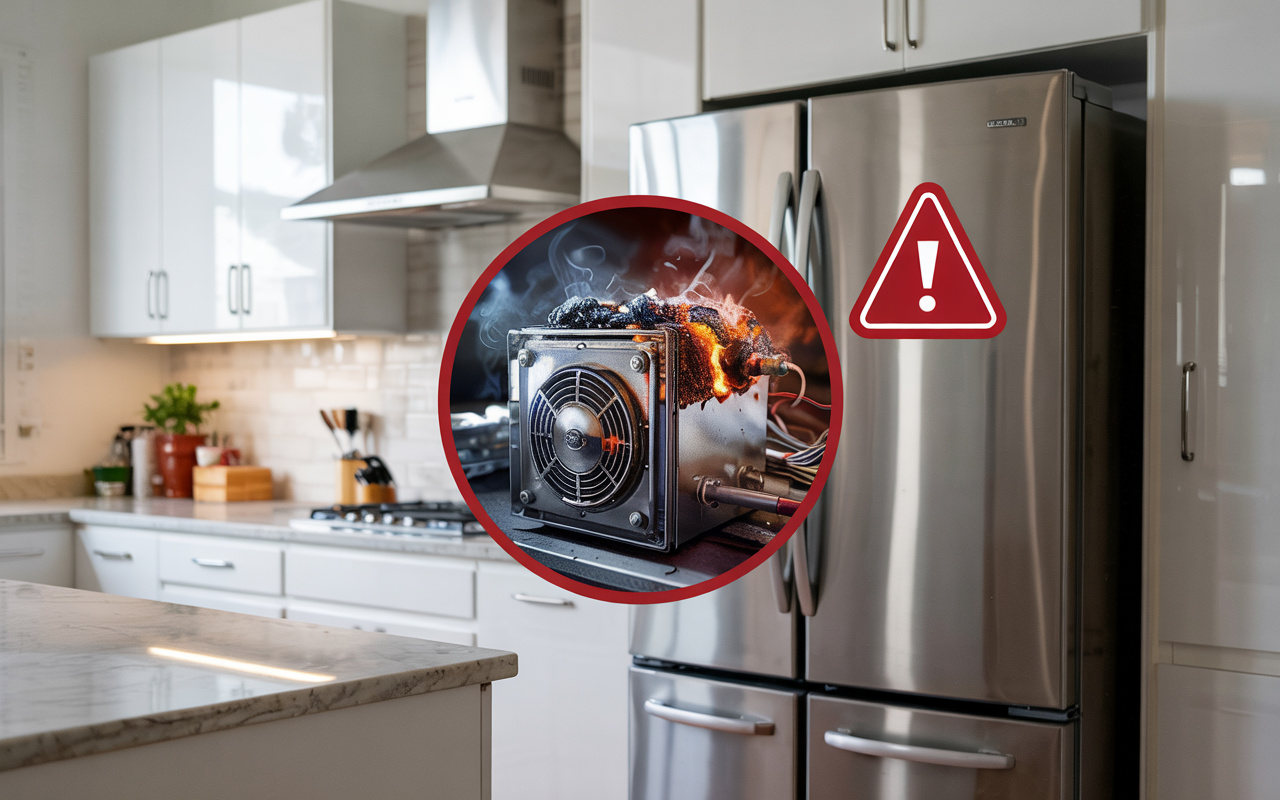

Refrigerator Stopped Working? Learn How the Refrigerator Motor Works, the Main Signs of Failure, Whether It’s Worth Repairing the Burned Motor, and Tips to Avoid Losses.
The refrigerator is one of the most important appliances in any home. Therefore, when it stops working, the disruption is immediate. Most of the time, the problem lies in the refrigerator motor, also known as the compressor, which is responsible for keeping the entire refrigeration system running. If your refrigerator isn’t cooling, making strange noises, overheating, or has a burnt smell, it may be that the motor is faulty. Below, you will understand how the motor works, learn to identify the signs of trouble and find out if it’s worth repairing.
How Does the Refrigerator Motor Work?
The refrigerator motor is the heart of the appliance, responsible for pumping the refrigerant gas throughout the system. It operates in a continuous cycle of compression, condensation, and evaporation:
- The motor compresses the refrigerant gas, increasing its pressure and temperature;
- The hot gas passes through coils at the back and releases heat into the environment;
- As it loses heat, the gas condenses and turns into liquid;
- This liquid passes through a thin tube, experiences a drop in pressure, and evaporates back to gas inside the refrigerator’s internal compartments;
- The evaporation process absorbs heat from the food, cooling it down.


This cycle repeats several times a day, controlled by a thermostat (in older models) or an electronic panel (in newer models). If the motor fails, the entire refrigeration system is compromised.
-
Teen Transforms Brazilian Dump Site into Playground, Wins $12.5K to Expand Project

-
Elderly Man Who Experienced Water Shortages in Childhood Dedicates Sundays to Free Plumbing Repairs, Highlighting Hidden Household Waste

-
AI is Transforming the Job Market, but Expert Highlights 5 Human Skills That Will Become More Valuable Over the Next Decade

-
Microgreens Gain Popularity in Healthy Diets, Showcasing How Small Indoor Gardens Can Transform Home Routines



What Are the Signs That the Refrigerator Motor Is Faulty?
Detecting the signs early can prevent the motor from burning out completely and reduce losses. The main symptoms are:
Refrigerator Not Cooling
When the refrigerator stops cooling, the problem may be the motor. It could be burned out or operating inefficiently, compromising the refrigeration cycle. Other possible causes include a faulty thermostat or dried-out door seal.
Tip: If you hear the motor trying to turn on repeatedly but it can’t, unplug the refrigerator and call a technician immediately.
Refrigerator Making Strange Noises
Popping, loud buzzing, or unusual vibrations may indicate that the compressor is straining to work. Continuous noise may also be a sign of internal wear or that the motor is about to burn out.
Refrigerator Is Overheating
It is normal for the back of the refrigerator to be mildly warm, but overheating is a warning sign. This can happen due to dirt accumulation on the coils, lack of ventilation, or an internal motor defect.
Burnt Smell
If you smell plastic or burning wires coming from the refrigerator, unplug it immediately. This may indicate overheating of the motor or a short circuit in the wiring.
Leaks (Water, Oil, or Gas)
- Water: may be excess ice melting due to motor failures.
- Oil: a leak at the back indicates a serious failure in the compressor since the oil lubricates the motor.
- Refrigerant Gas: difficult to detect, but if the refrigerator isn’t cooling even with the motor running, there could be a leak. This overloads the motor and can lead to overheating.
The Refrigerator Motor Burned Out: What to Do?
If the motor stopped working, follow these guidelines:
- Unplug the refrigerator immediately to avoid further damage or electrical risks;
- Call a specialized refrigeration technician to assess the defect;
- If the appliance is under warranty, contact the authorized service and have the receipt ready.
❌ Attempting to repair the motor yourself is dangerous and almost always unfeasible. It is a complex component that requires tools and professional experience.
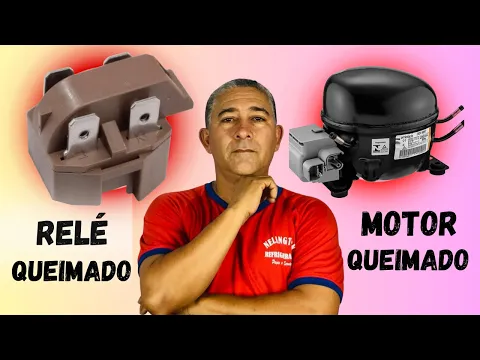
Is It Worth Repairing the Burned Refrigerator Motor?
This is a common question, and the answer depends on several factors:
- Age of the Appliance: if the refrigerator is over 10 years old, it may be more advantageous to buy a new one. Besides the motor, other parts may be worn out;
- Repair Cost: depending on the model, repair may cost between R$ 500 and R$ 1,200. Compare this with the price of a new refrigerator;
- Energy Consumption: older models consume more energy. A new refrigerator may reduce your electricity bill in the long run;
- Repair Warranty: check if the technician offers at least 1 year warranty on the replaced motor.
If the refrigerator is relatively new and the repair is guaranteed, the repair is worth it. But if the cost is too high, it may be time to invest in a more modern and efficient appliance.
How to Avoid Problems with the Refrigerator Motor?
Some simple precautions prolong the motor’s lifespan and prevent losses:
- Clean the rear coils every 6 months to prevent thermal overload;
- Check the door seal: if it is dried out, replace it. Air leaks force the motor;
- Install the refrigerator in a ventilated location away from heat sources;
- Do not overload the appliance with excessive food;
- Avoid opening the door frequently: this forces the motor to work harder;
- Use a voltage stabilizer in areas with power outages to protect the compressor;
- Perform preventive maintenance every 1 or 2 years with a technician.
Final Tip
If the refrigerator isn’t cooling, makes unusual noises, overheats, or has a burnt smell, do not ignore the signs. The sooner you contact a technical service, the greater the chances of saving the motor and avoiding larger expenses.
Taking care of the motor is taking care of the heart of your appliance, ensuring greater durability, energy savings, and well-preserved food.


