






 Portuguese
  Spanish


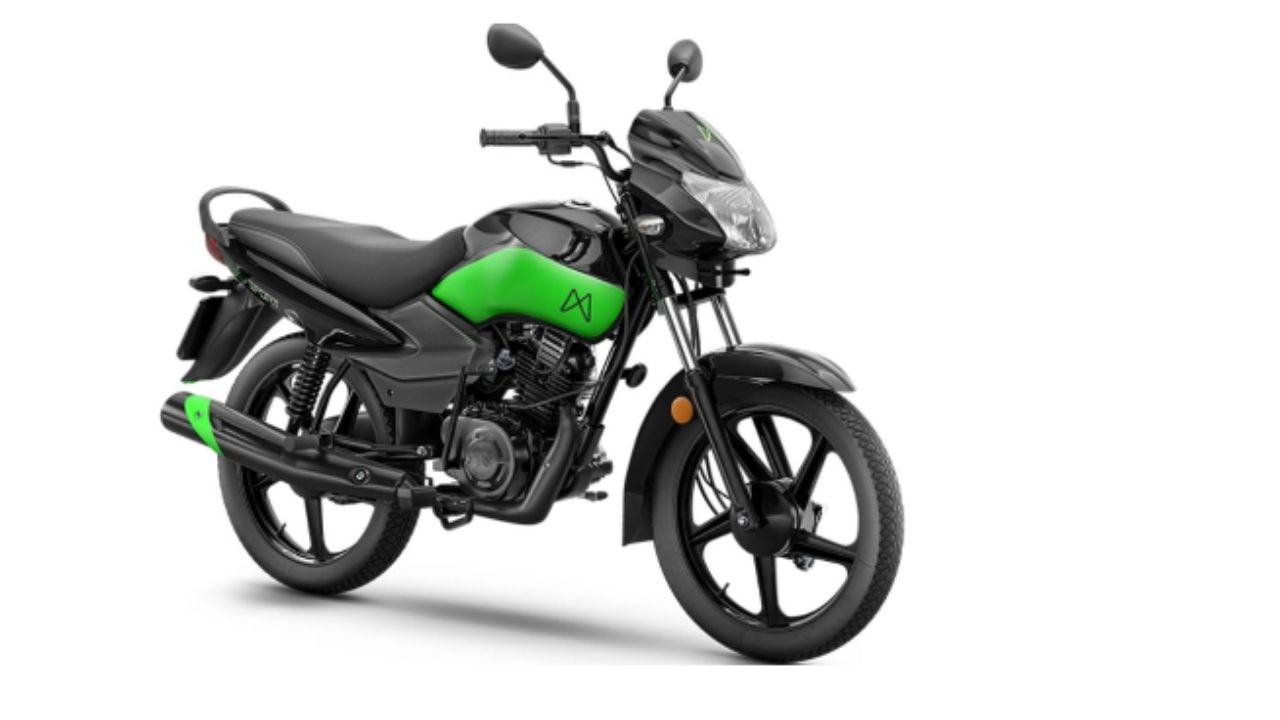


Originating from the Giant TVS and Aggressive Pricing Strategy, Model Broke Japanese Hegemony and Is Already the 5th Best-Selling in the Country by 2025
The Brazilian motorcycle market is experiencing a historic disruption in 2025, driven not by a traditional Japanese manufacturer but by the Mottu Sport 110i. The model, which many believed to be just another timid attempt to enter the country, has established itself as a sales phenomenon by directly targeting the most contested segment: entry-level motorcycles aimed at work. With a promise of high efficiency and low cost, it challenges decades of established leadership.
Contrary to initial rumors, the Mottu Sport 110i does not have Japanese origins. According to information from Mobiauto, it is developed by the Indian giant TVS Motor Company, one of the largest manufacturers in the world. This partnership enabled the Brazilian startup Mottu to offer a robust product at a price that shocked the market: R$ 9,990 upfront at launch. Coupled with a declared consumption of up to 65 km/l, the model has become the preferred tool for thousands of delivery workers, reconfiguring the national sales ranking.
Indian Engineering Focused on Hard Work
The strategy behind the success of the Mottu Sport 110i is based not only on low price but on a precise reading of the needs of the Brazilian worker. The model is a adaptation of the TVS Sport 110i, designed to withstand severe use conditions. Its 109.7 cm³ engine prioritizes torque at low RPM, ideal for the “stop-and-go” of cities and for tackling hills with load, at the expense of top speed.
-
End of an era in Brazil: beloved sedan by Brazilians is discontinued despite having a 2.0 engine with 151 hp, CVT transmission, 466-liter trunk, and up to 650 km of range.

-
New Law Proposal in Brazil Could Heavily Penalize Drivers: Dangerous Overtaking May Become a Serious Offense with Fines Increased Tenfold and a 12-Month License Suspension; Update on 2026 Progress

-
Electric Revolution: Watts W125 Motorcycle Offers 160 km Range, 90 km/h Speed, and Affordable Price Starting at $3,000
-
General Motors Replaces Over a Thousand Workers with 50 Cobots at Electric Vehicle Plant, UAW Union Criticizes Move Amid Industry’s Automation Push



In addition to the robust mechanics, the functional design stands out. While direct competitors, such as the Honda Pop 110i, offer small fuel tanks (around 4.2 liters), the Mottu Sport 110i comes with a 10-liter tank. For a delivery worker who travels hundreds of kilometers a day, this means fewer stops to refuel, translating directly into more productive time and greater profit at the end of the day.
The Truth About the 65 km/l and the Real Cost
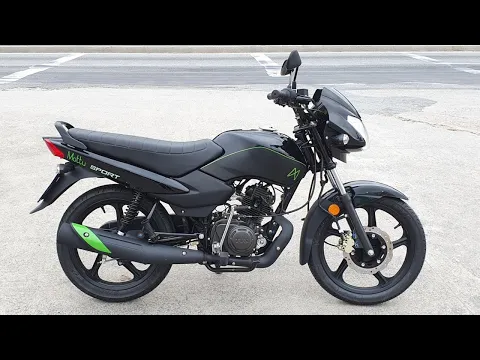

The magic number of “up to 65 km/l” is the main marketing lure of the Mottu Sport 110i. However, tests under real conditions of intense urban use indicate an operational average close to 55 km/l. Although slightly lower than the lab number, this mark still represents a technical tie with the market’s most economical rivals, keeping the model in the elite of energy efficiency.
The great competitive advantage, therefore, is not just about getting more kilometers per liter but the combination of this efficiency with the range provided by the larger tank. The total cost of ownership becomes unbeatable when considering the acquisition price below R$ 10,000 and the savings generated by the reduced need for frequent maintenance, proven during the phase in which the model operated only by rental.
The End of Absolute Hegemony in the Top 7
The impact of this strategy is measurable and alarming for traditional manufacturers. The Mottu Sport 110i is already positioned as the 5th best-selling motorcycle in Brazil by 2025. This achievement is not isolated; it represents a structural change in consumer behavior that seeks tools for work.
The portal Motonline highlights the magnitude of this achievement by noting that the Sport 110i is the only “non-Honda” motorcycle to appear on the list of the seven best-selling of the year. By breaking this hegemony, Mottu proved that brand loyalty can be overcome by economic rationality, especially in a scenario where acquisition and operating costs define the financial survival of many self-employed professionals.
Do you agree that price and efficiency are becoming more important than brand tradition in Brazil? Do you believe this change is definitive? Share your opinion in the comments; we want to hear your views on this market revolution.








A moto é uma droga. Virou fenômeno pq o brasileiro está endividado e empobrecido, e o os impostos abusivos do Brasil tornam as motos, com alguma mínima qualidade, inacessíveis.